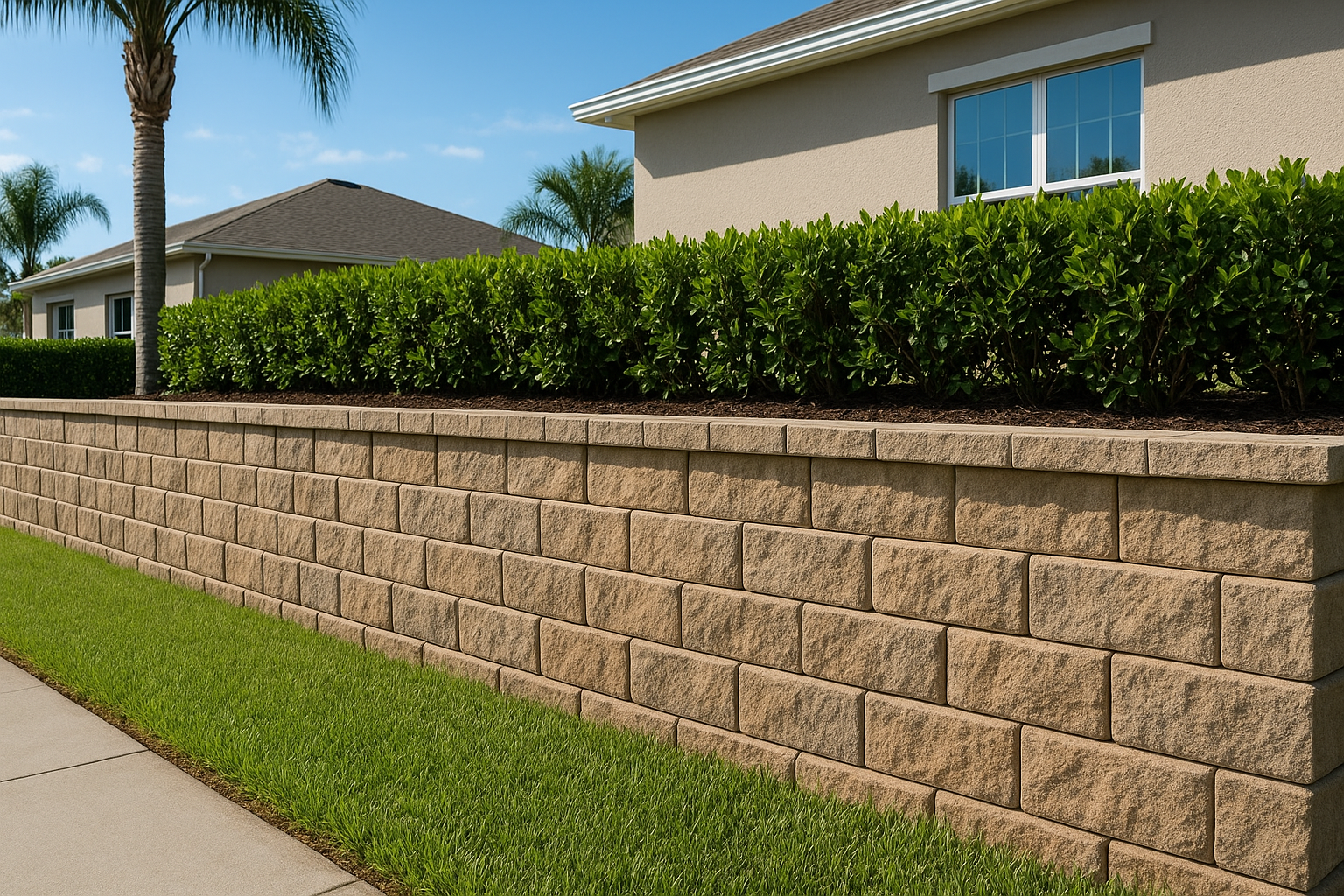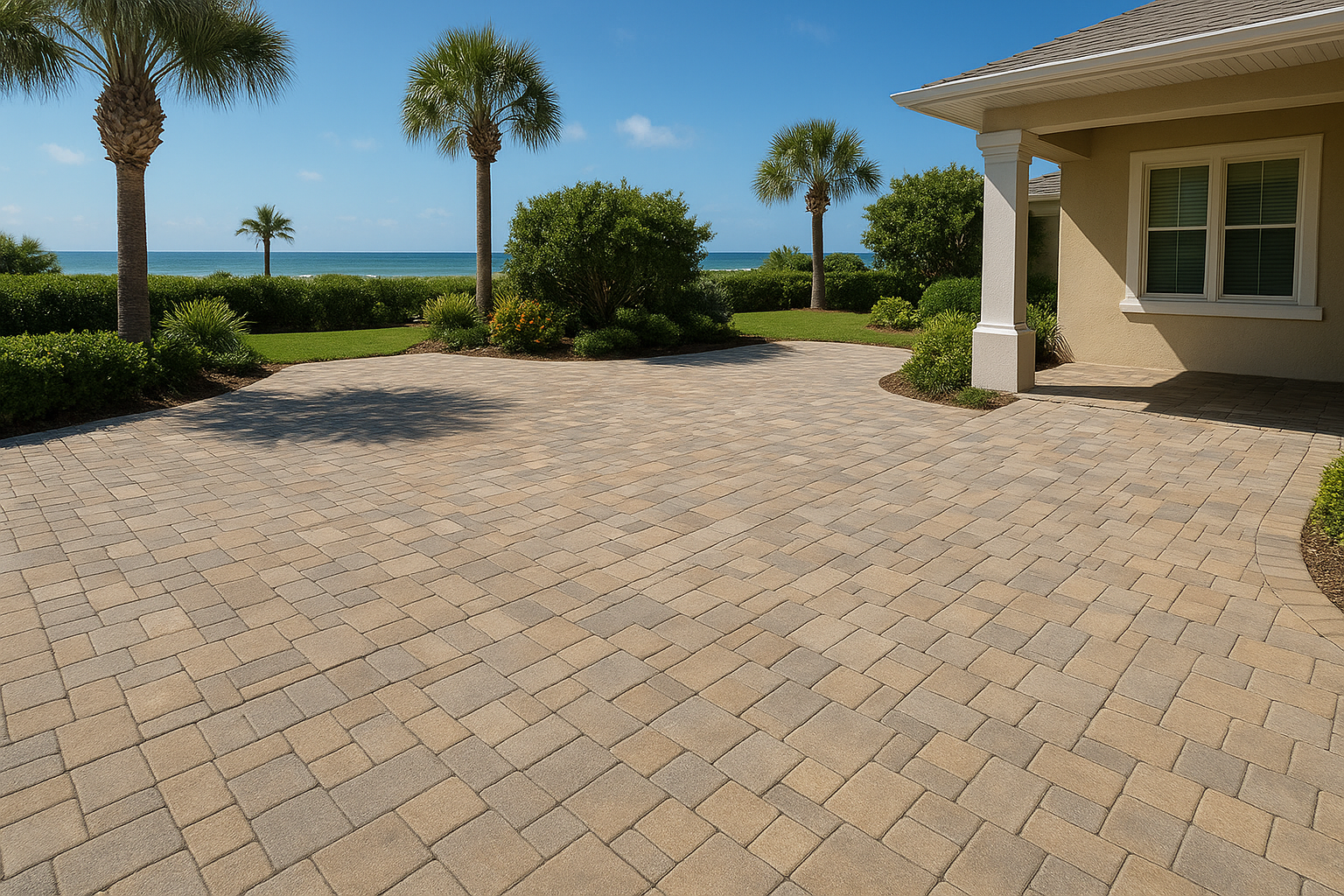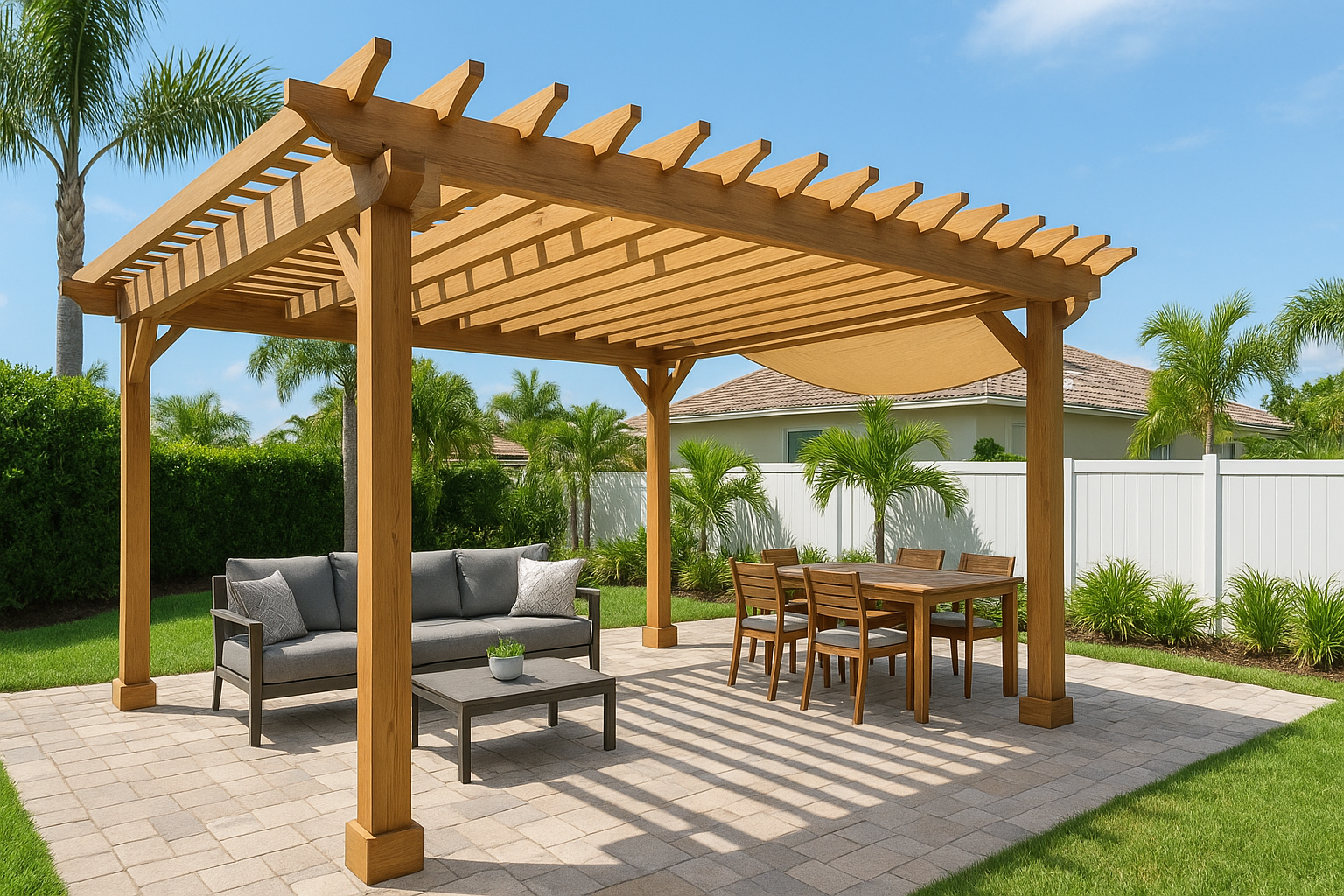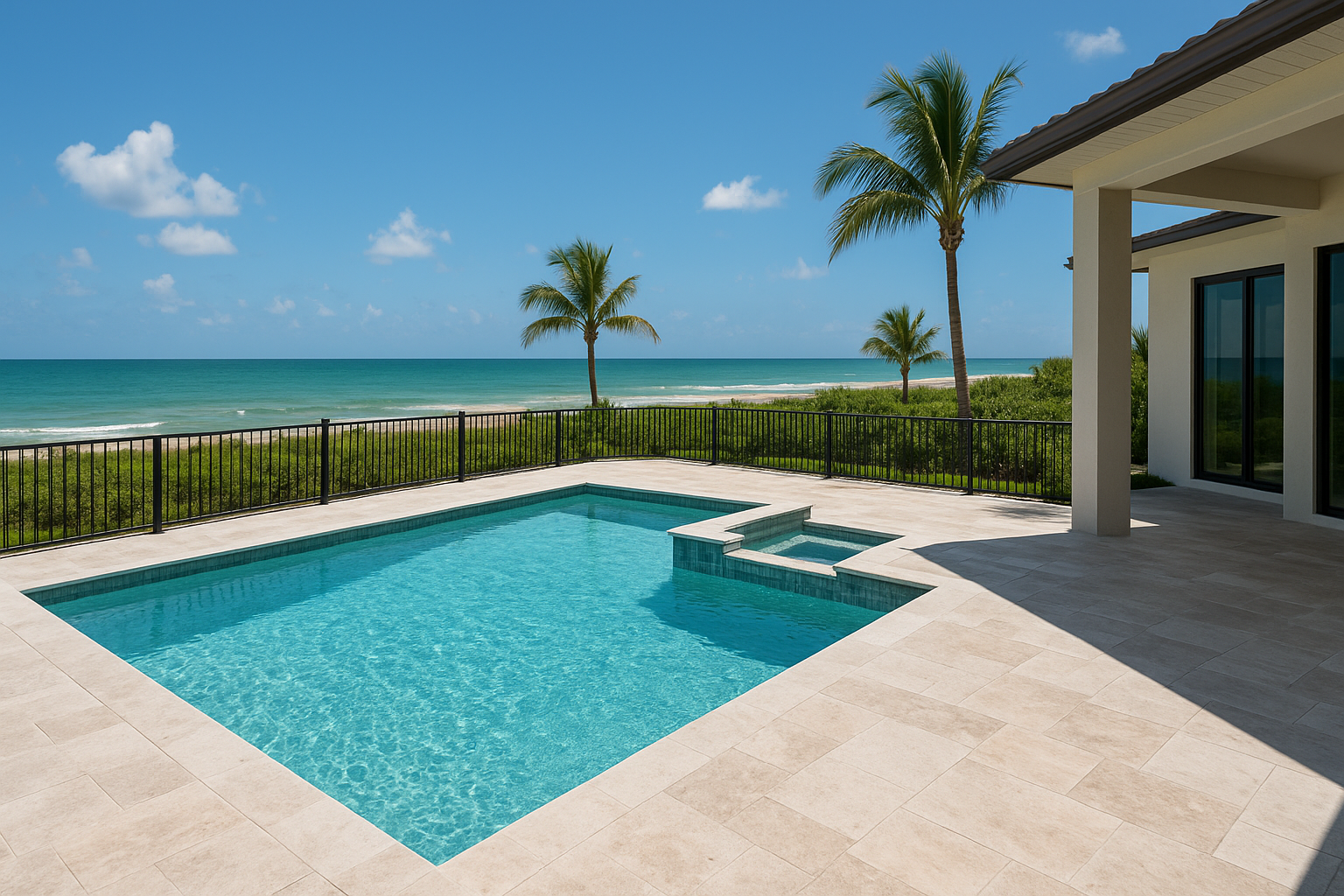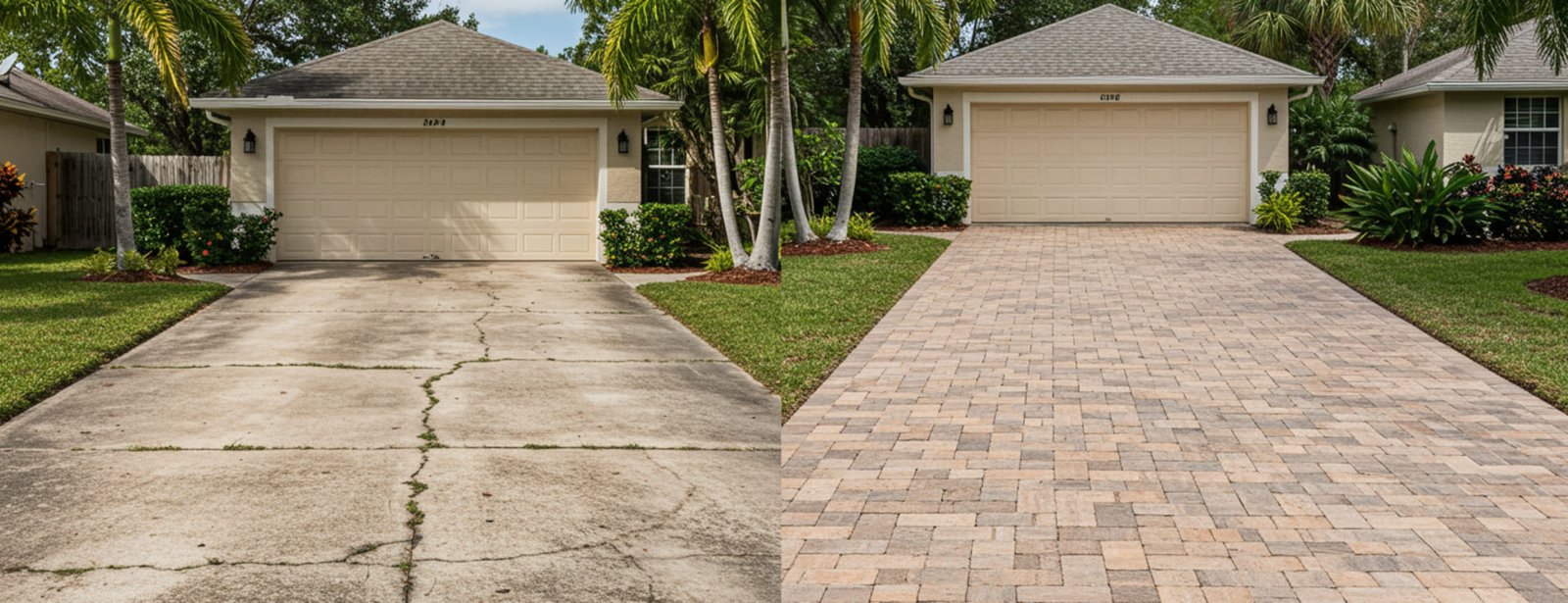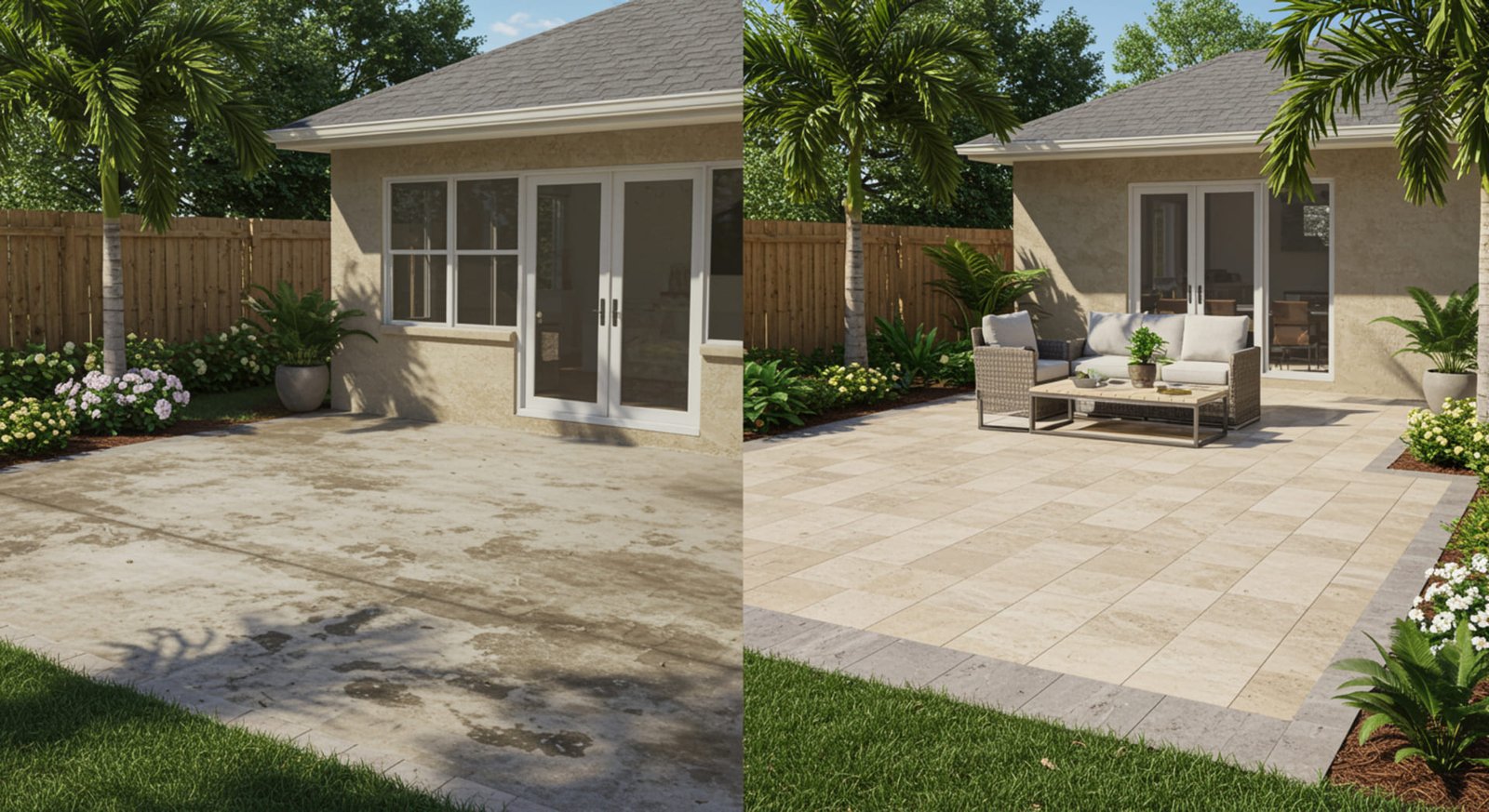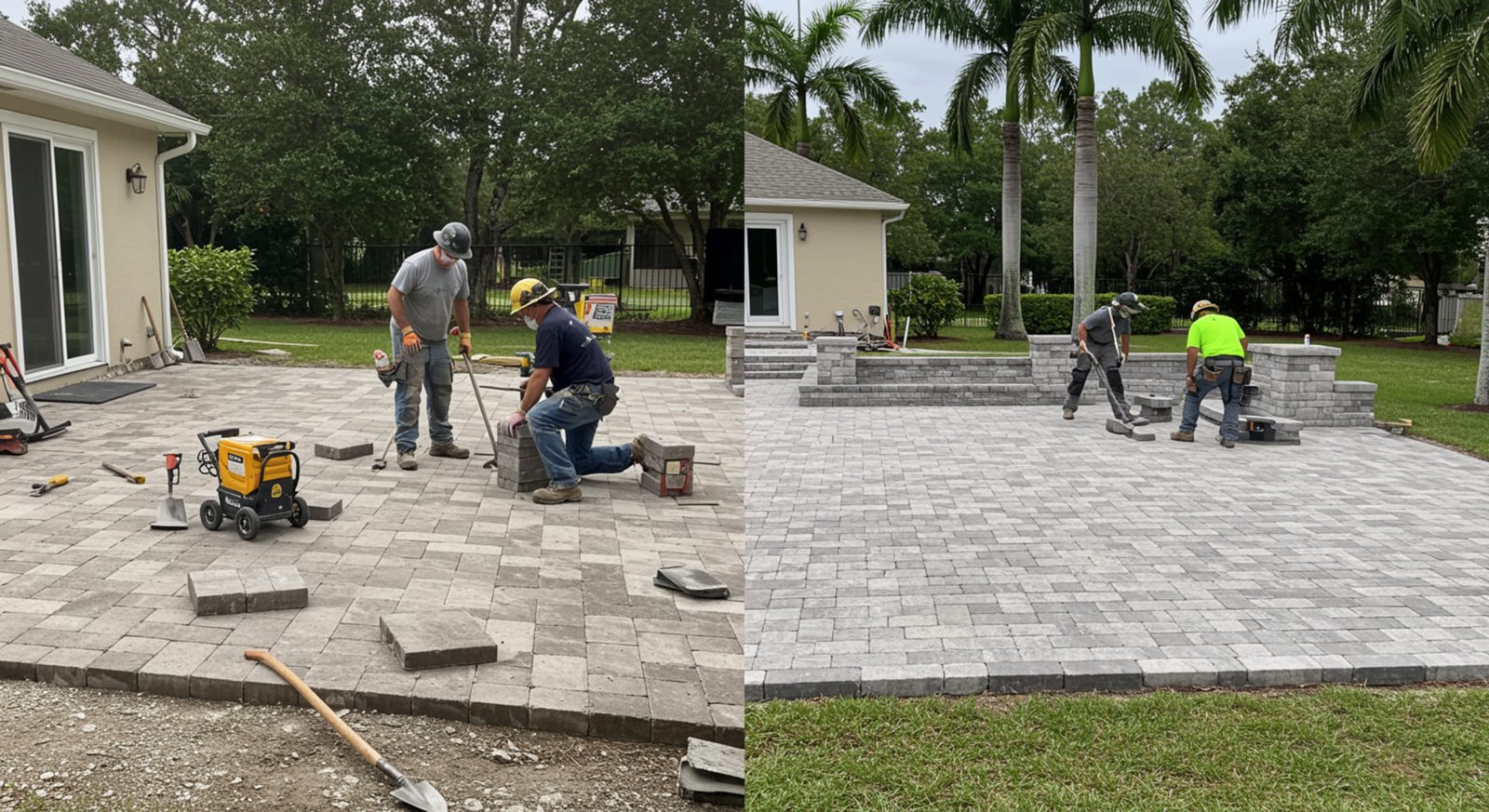
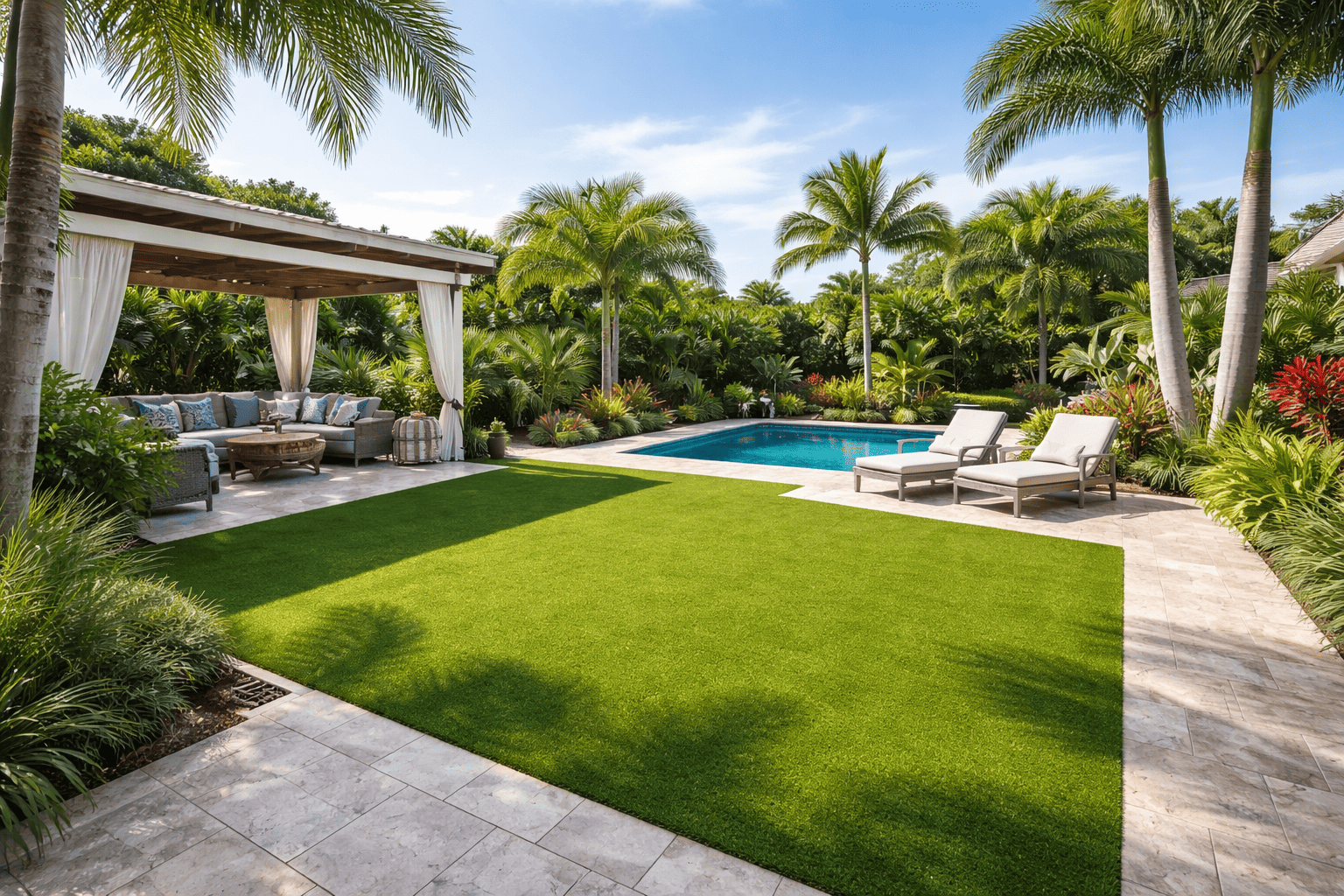
A strong backyard makeover Brevard County homeowners actually enjoy every day usually starts with one honest observation: most underused yards do not have one single problem. Instead, they have several small problems working together. The layout may feel empty. The drainage may be inconsistent. The grass may require more upkeep than the family wants. In addition, the space may lack shade, structure, and a clear reason to spend time outside. Therefore, the best backyard transformations are rarely about adding one feature in isolation. They work because the entire yard begins to function as one coordinated outdoor living plan.
This project-story guide breaks that idea down through a realistic makeover approach for Brevard County. First, it looks at what the original yard was missing. Next, it explains why pavers, low-maintenance turf, and a shade element often work so well together in Central Florida conditions. Then, it walks through the installation sequence, the design logic, and the daily-use improvements that turn a plain backyard into a genuinely livable space. If you are planning your own renovation, the goal here is not just inspiration. It is clarity about what makes a layout look better, work harder, and stay easier to maintain over time.
What the Space Needed Before the Makeover
Many backyards in Brevard County start with a familiar pattern: a broad patch of grass, a fence line, and very little else that gives the space purpose. At first glance, that seems flexible. However, in practice, it often means the yard has no defined circulation, no visual anchor, no shade strategy, and no durable surface for furniture or entertaining. As a result, the family may technically have outdoor square footage, but the yard still feels unfinished and gets used only occasionally.
That kind of space usually needs more than a cosmetic refresh. It needs a plan that gives each area a role. For example, one section may need to become a seating zone. Another may need a cleaner walking path. Another may need simpler maintenance so the homeowners stop fighting weeds, patchy grass, or muddy edges after heavy rain. In other words, the makeover should not begin with color or decor. It should begin with function.
The most common problems in underused backyards
When a backyard feels wasted, the same issues appear again and again. First, the usable area may be too soft or too wet to support regular seating. Next, the yard may receive strong sun through the hottest parts of the day, which makes it uncomfortable even when the view is pleasant. Furthermore, the perimeter may lack enough planting structure, clean edging, or visual rhythm, so the whole space reads as empty rather than open. Consequently, the homeowner often spends money on furniture before solving the foundation problems that keep the yard from feeling complete.
| Original issue | What it causes | Why it matters in Brevard County |
|---|---|---|
| Large undefined lawn area | Low daily use and weak visual structure | Heat, mowing, and irrigation demands stay high |
| No durable seating surface | Furniture sinks, shifts, or feels temporary | Frequent storms and wet periods expose weak ground fast |
| Little or no shade | Outdoor time drops during hot months | Central Florida sun makes timing and comfort critical |
| Weak circulation path | Users cut random walking routes through the yard | Traffic patterns damage turf and create muddy edges |
| High-maintenance grass | More watering, trimming, patching, and cleanup | Homeowners often want a lower-effort alternative |
Therefore, a backyard makeover works best when the project team identifies these issues early and solves them in the right order. That sequence matters. A beautiful surface still disappoints if drainage is ignored. Likewise, artificial turf still underperforms if the access path and seating areas are not defined around it. The result only feels finished when each move supports the next one.
The Design Priorities That Shaped the Project
In a project like this, the design priorities should stay practical from the beginning. First, the yard should feel easier to use immediately, not only during special occasions. Second, the new layout should reduce maintenance pressure instead of adding it. Third, the finished plan should create cleaner visual balance between hardscape, turf, fence lines, and shade. As a result, the makeover becomes a long-term improvement rather than a short-lived styling exercise.
Priority 1: Create clear zones
A backyard becomes more usable when the layout answers three questions quickly: where do people sit, where do they walk, and where should the eye land first? Pavers often help solve that problem because they give the seating zone a visible footprint. Likewise, a turf field can create open play or relaxation space without asking the entire yard to serve every role at once. In turn, a pergola or shade structure gives the design a vertical anchor that helps the whole composition feel intentional.
Priority 2: Reduce maintenance without losing appeal
Homeowners in this market often want a yard that looks clean year-round but demands less weekly attention. That is one reason turf can play such a strong role in a makeover. It removes many of the pain points tied to thin grass, mowing, patch repair, and muddy transition areas. At the same time, pavers bring durability and cleaner edges that keep the yard from reading as purely softscape. Consequently, the combination supports both visual polish and easier upkeep.
That strategy aligns well with broader Florida-friendly planning. UF/IFAS guidance on landscape conversion emphasizes that homeowners benefit when they reduce inefficient lawn dependence, use the right layout for the site, and think in terms of a master plan rather than isolated upgrades. In practice, that means the makeover should not ask one surface to do everything. Instead, it should assign each material to the job it does best.
Priority 3: Balance comfort with weather reality
Brevard County backyards deal with strong UV exposure, fast storms, and long warm seasons. Because of that, comfort planning matters as much as aesthetics. A seating area without shade may look nice in listing photos, but it often goes unused during mid-day heat. Similarly, a soft zone without drainage planning can become frustrating after heavy rain. Therefore, the best backyard makeover Brevard County projects treat sun, stormwater, and maintenance as design inputs, not afterthoughts.
Why Pavers, Turf, and Shade Work So Well Together
This mix works because each element solves a different problem. Pavers define the hard-use zone. Turf creates a finished green field with a cleaner maintenance profile. Shade makes the space more comfortable and gives the design a focal point. As a result, the yard stops feeling like a blank rectangle and starts functioning like an outdoor room with circulation, seating, and visual hierarchy.
Pavers add structure and durable use space
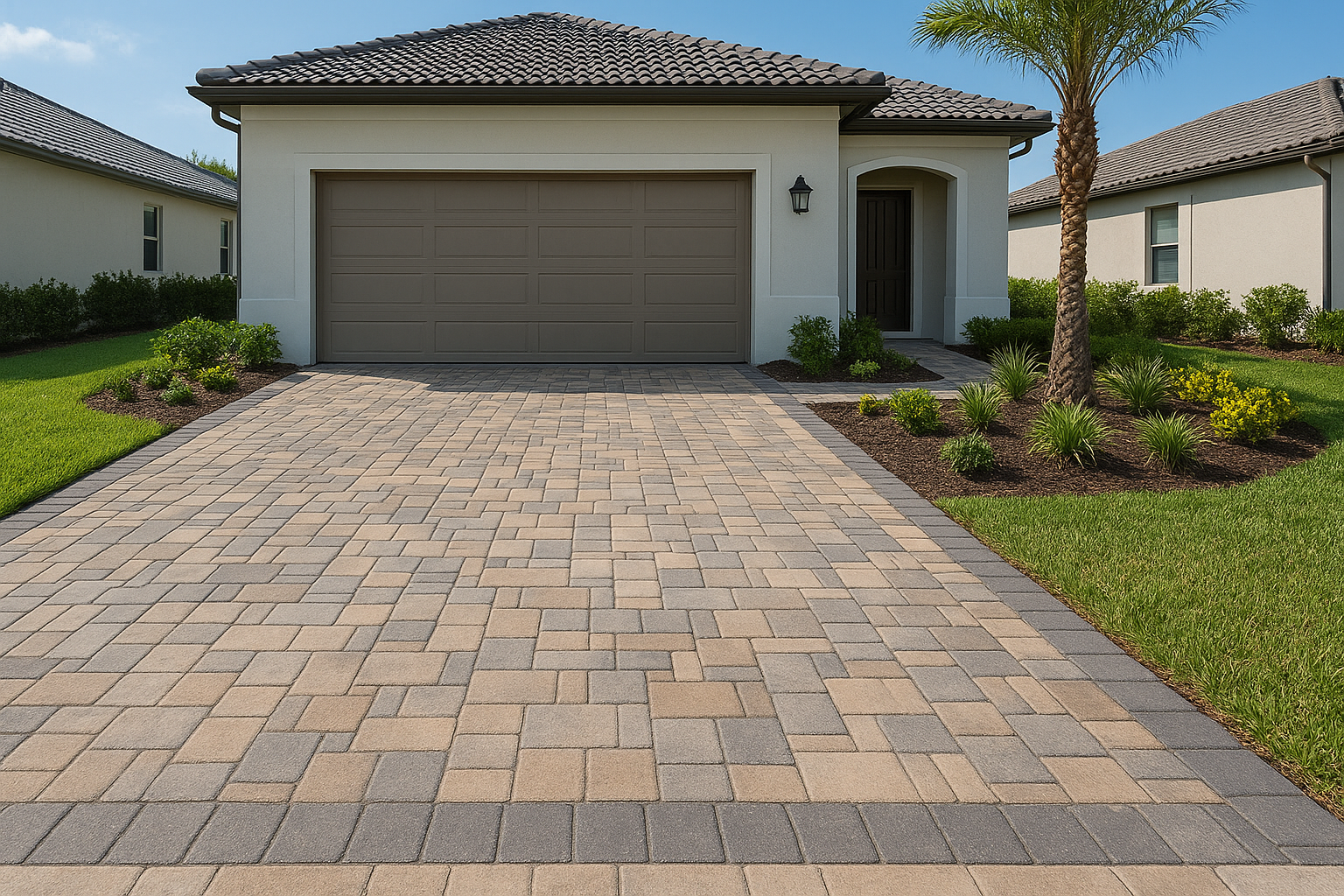
Pavers are especially useful in a makeover because they establish order fast. They create crisp edges, handle furniture better than open lawn, and help the seating zone feel permanent. In addition, they can connect the house to the rest of the yard in a way that improves circulation. That means the renovation feels more deliberate from both the patio door and the far edge of the property. Homeowners browsing our project gallery often notice that the strongest backyards use pavers as the visual and functional base for everything else around them.
Turf creates a clean, low-maintenance field
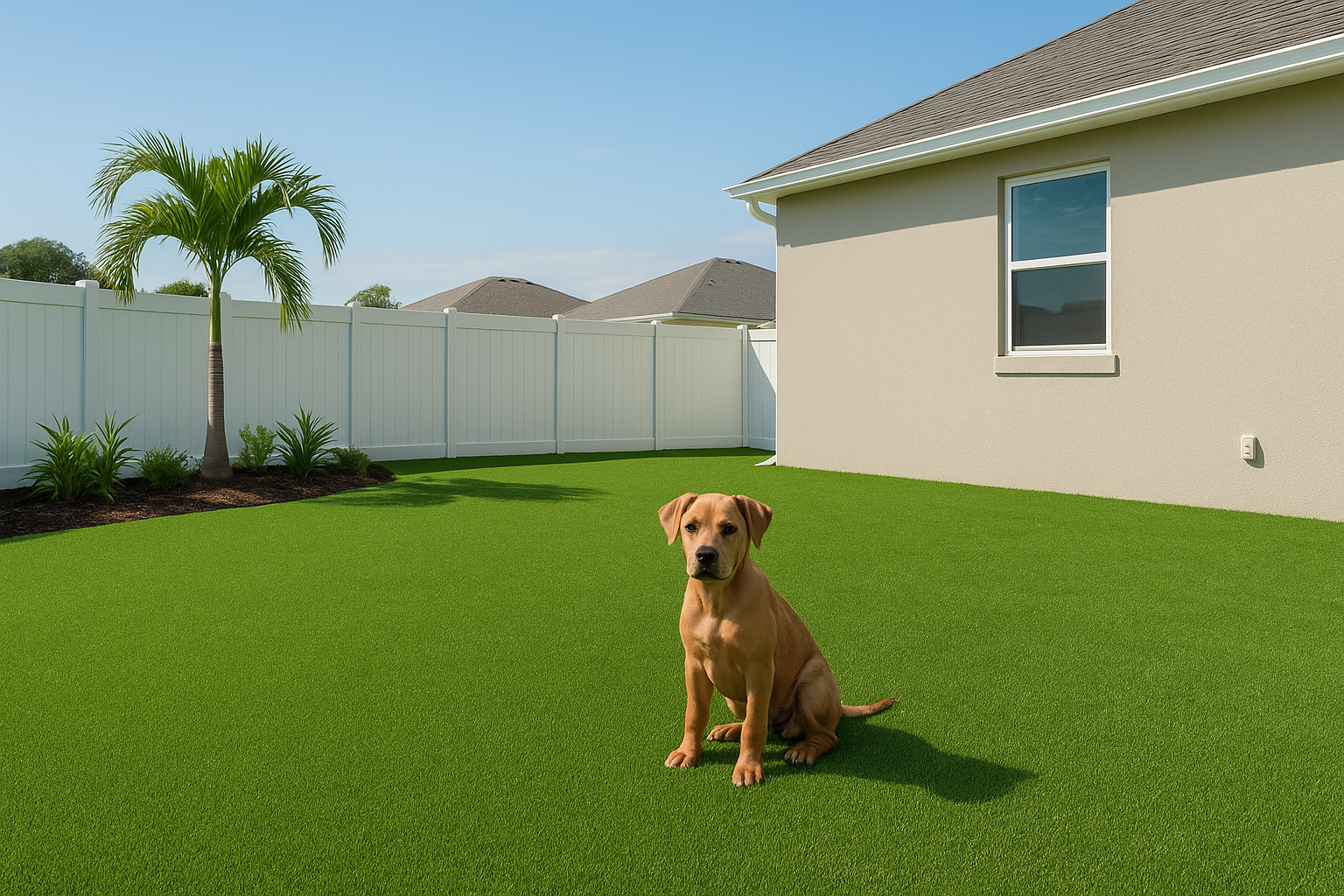
Artificial turf works well when homeowners want consistent color, reduced mud, and simpler weekly maintenance. However, turf should not be treated as a shortcut. It still depends on base preparation, drainage thinking, seam quality, edge restraint, and realistic layout decisions. That is why it performs best when installed as one part of a broader yard plan rather than dropped into a poorly organized space. In this project type, turf supports the makeover because it gives the open zone a neat finish and helps the hardscape stand out more cleanly.
Shade creates comfort and completes the composition
Shade is often the difference between an attractive yard and a usable one. A pergola or similar structure gives the eye an anchor, but more importantly, it makes the seating area feel intentional. It also introduces height, which helps a flat backyard feel layered rather than empty. Therefore, even when the budget is focused on surfaces first, homeowners should think early about where shade belongs. Waiting until the end can force awkward layout changes that the original plan could have avoided.
How the Installation Sequence Improves the Result
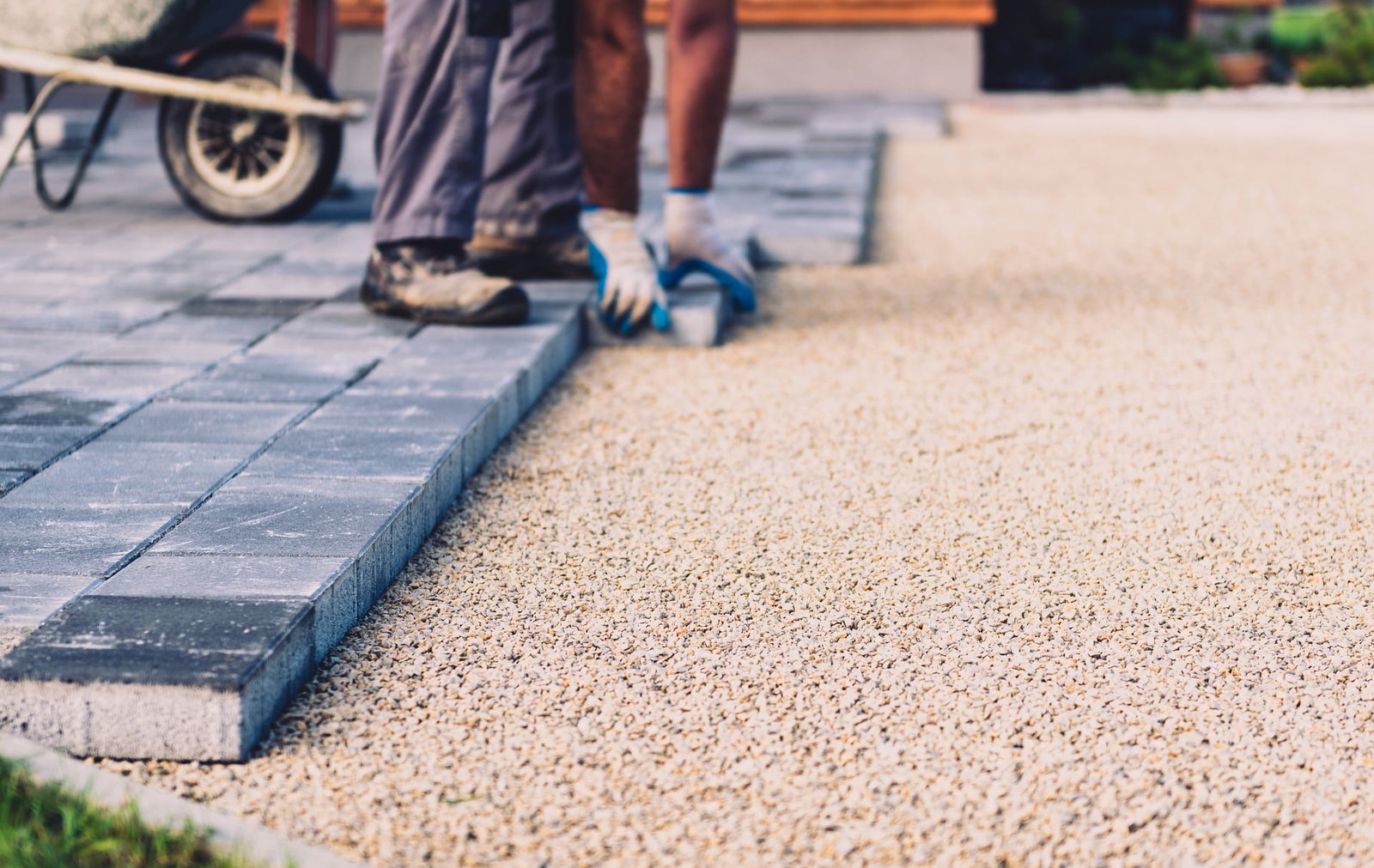
One of the biggest lessons from successful project-story posts is that sequence matters. A makeover that looks seamless at the end usually felt very methodical during construction. First, the team clarifies grade, drainage, and layout lines. Next, the crew prepares the paver zone and the circulation path. Then, turf base work and edge definition are handled so the green field fits the hardscape cleanly. Finally, shade elements, planting refinements, and finish details bring the whole space together. Because of that order, each phase protects the next one instead of creating rework.
| Phase | Main goal | What it protects |
|---|---|---|
| Layout and grading | Confirm slopes, use zones, and access | Drainage performance and long-term stability |
| Paver base and hardscape install | Create durable circulation and seating footprint | Furniture use, edge definition, and visual structure |
| Turf base and finish | Build a clean low-maintenance open zone | Surface performance, cleanup, and appearance |
| Shade and detail phase | Complete comfort and spatial identity | Daily usability and final visual cohesion |
Why layout before materials saves money
Homeowners sometimes pick materials too early and assume the layout will adapt around them. However, that often creates wasted cuts, awkward proportions, or oversized lawn remnants that still have no clear purpose. By contrast, a layout-first approach clarifies what each material must accomplish before quantities are finalized. In turn, the installation becomes cleaner and the final yard usually feels more expensive because the proportions make sense.
What Changed in Daily Usability and Appearance
The best measure of a transformation is not only the after photo. It is how the family uses the yard once the crew leaves. A strong makeover makes casual outdoor time easier. Furniture has a reliable place to sit. Walking routes become obvious. The open area feels cleaner. The space works for guests, quiet evenings, and daily routines instead of only for occasional gatherings. Consequently, the project adds value not just because the yard looks more polished, but because it supports more real-life use.
Appearance changes in parallel. Clean transitions between pavers and turf make the yard feel sharper. Defined geometry makes the property read as more finished. Shade structures and planting edges give depth and rhythm to what may have started as a featureless lawn. Therefore, the visual result feels calm, intentional, and easier to maintain. That combination is exactly why these makeover stories tend to resonate so strongly with homeowners who are still trying to decide which upgrades matter most.
What Homeowners Can Learn From This Type of Project
First, start with function. Do not choose a material before you know where people will sit, walk, and gather. Second, pair low-maintenance goals with layout discipline. Turf alone will not solve an undefined yard, but turf within a well-planned composition can transform how the whole space feels. Third, think about weather early. Shade, drainage, and edge control influence satisfaction just as much as surface style. Finally, build the project as one connected plan whenever possible. That usually creates a cleaner result than treating the patio, lawn, and shade as separate jobs over a long stretch of time.
If you are comparing options for your own renovation, it helps to look at real project patterns rather than isolated feature pages. Our Customer Stories & Projects guide and the broader backyard renovation article are useful starting points because they show how multiple services come together in one finished yard instead of staying disconnected in theory.
UF/IFAS guidance on converting a traditional yard into a more Florida-friendly landscape is also helpful for this type of thinking. Their materials explain why a master plan, better plant placement, reduced unnecessary sod, and climate-aware design choices can improve both beauty and performance over time. Likewise, the Florida-Friendly yard framework reminds homeowners that good design is not only about looks. It is also about using the site more intelligently and protecting long-term maintenance budgets. You can explore that guidance through the UF/IFAS landscape conversion publication and the related Florida-Friendly yard overview.
When It Makes Sense to Plan a Professional Backyard Makeover
If your yard needs multiple changes at once, a professional plan usually saves time and rework. That is especially true when pavers, turf, shade, drainage, or fencing all affect one another. In that situation, the main value of an estimate is not just the price. It is the sequence, scope clarity, and layout logic that show how the finished space will actually function. Therefore, homeowners who want a cleaner process should treat the consultation stage as the point where the whole yard starts making sense, not merely as the moment a contractor hands over a number.
Ready to transform your yard with low-maintenance turf? Contact Golden Outdoor Solutions or call +1 (321) 745-9047 for a free consultation anywhere in Brevard County, browse recent outdoor work in our projects gallery, follow new transformations on Instagram and Facebook, read local feedback on Google reviews, or send a quick message through WhatsApp if you want to talk through your own backyard makeover Brevard County goals.