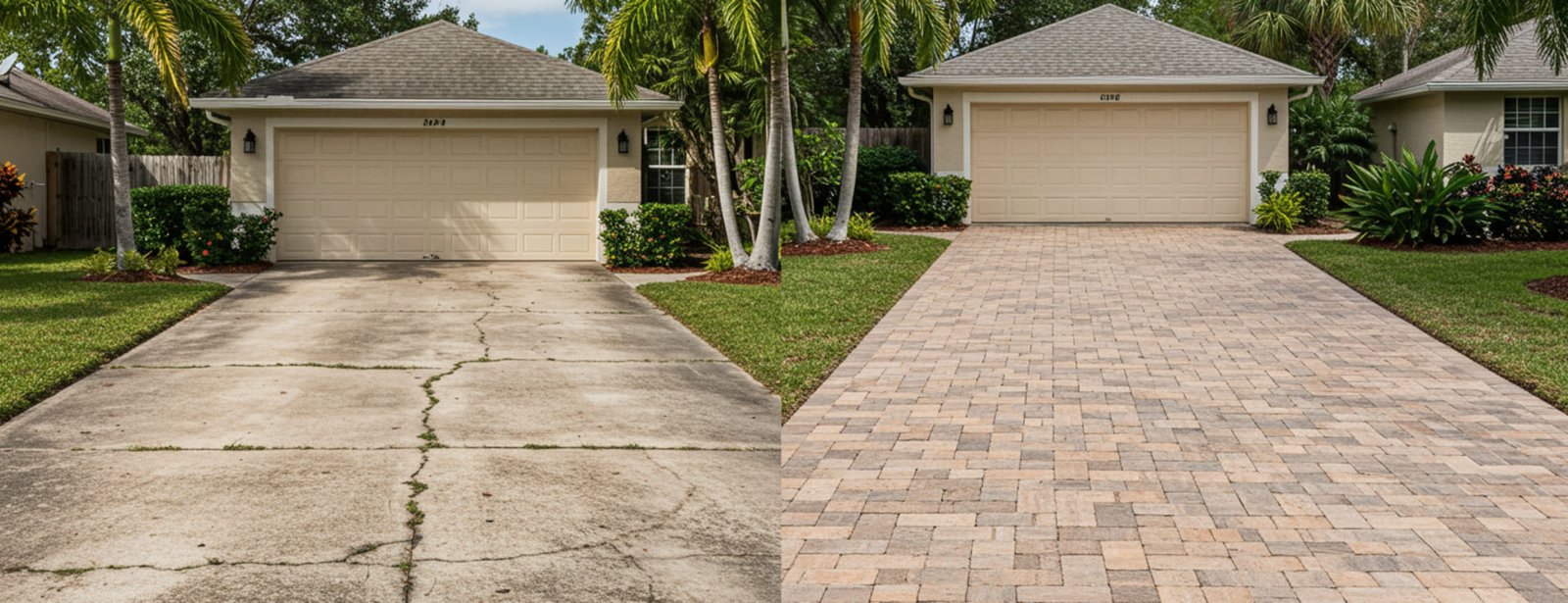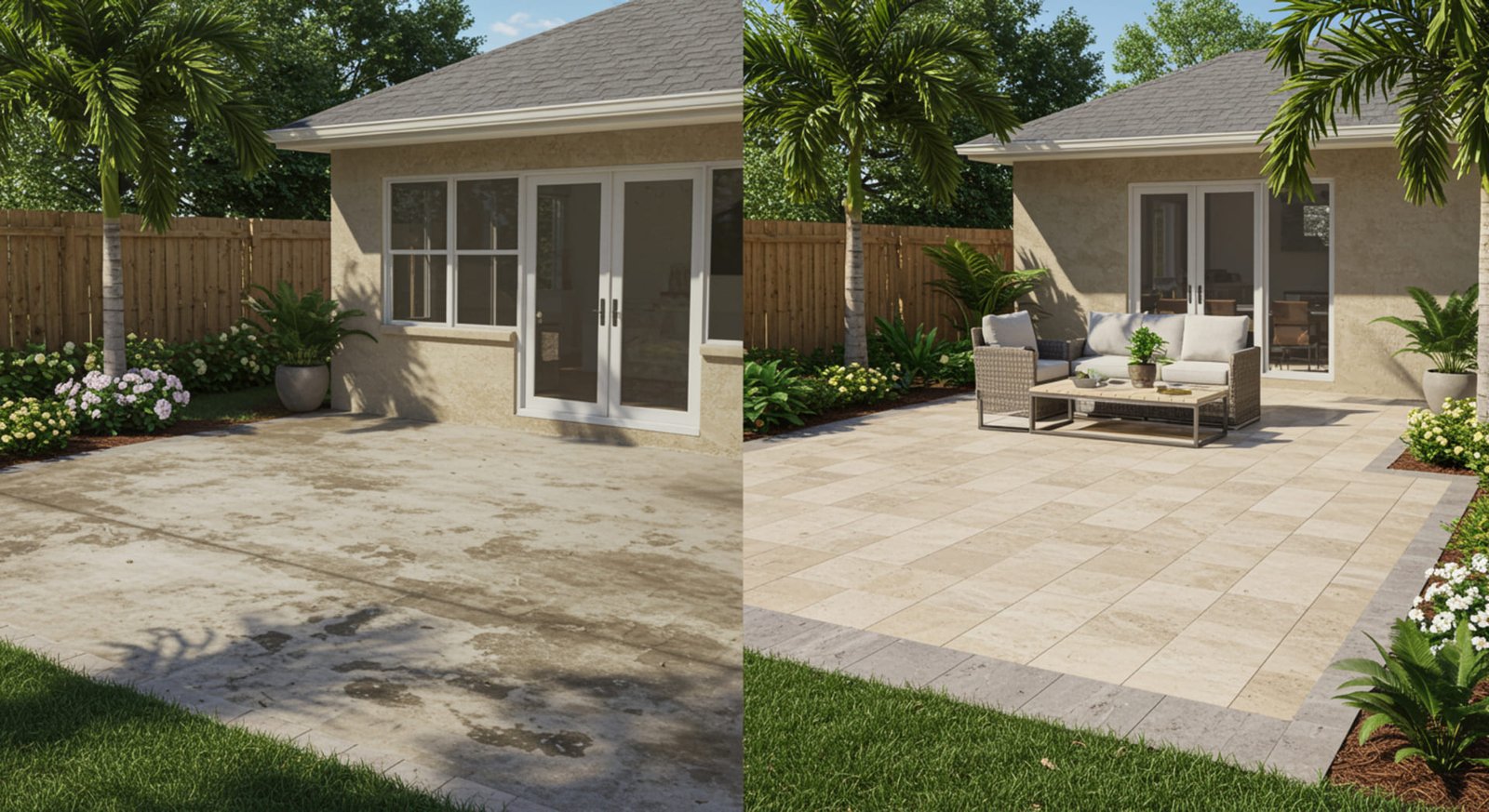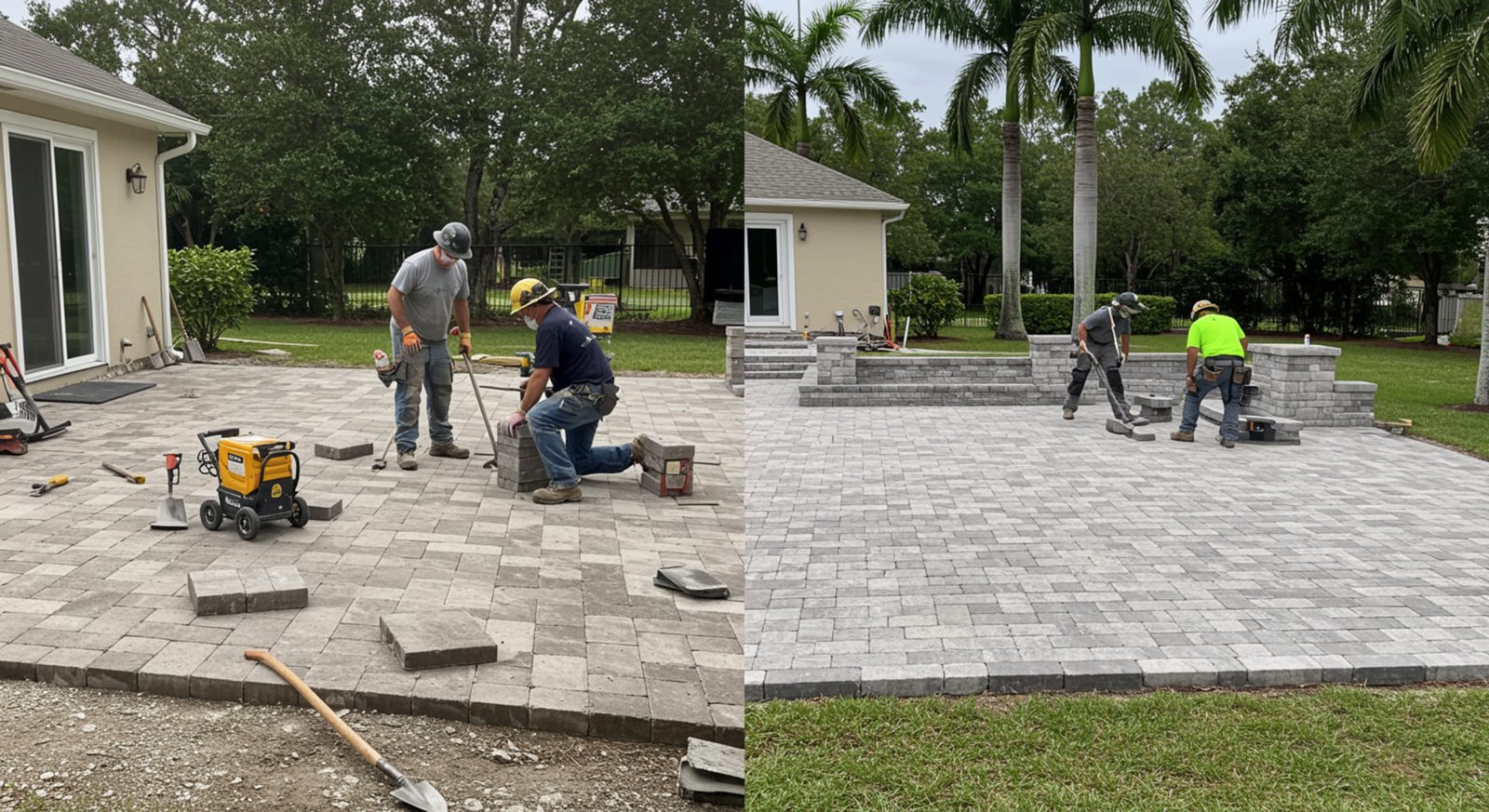
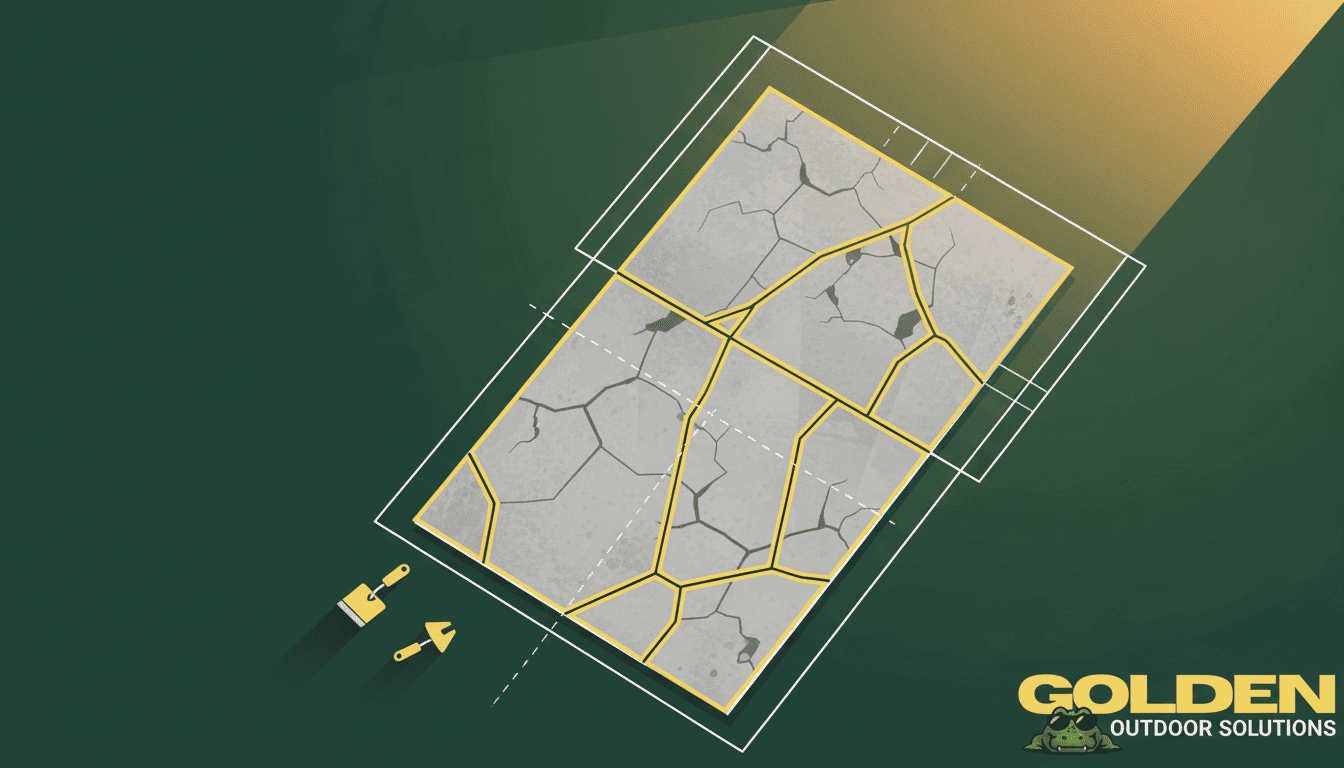
Understanding concrete driveway repair cost in Florida before you call a contractor puts you in a far stronger position when comparing quotes and making decisions. Costs vary based on damage type, surface area, site conditions, and the repair method required — and in Central Florida, local factors like sandy soil, heavy rainfall, and extreme UV exposure influence every one of those variables. However, with a clear picture of what drives pricing, you can budget accurately and avoid overpaying for work your driveway may not need.
This guide covers average repair costs, the most common driveway problems Florida homeowners face, how contractors assess damage, and when repair makes more sense than full resurfacing or replacement. Furthermore, it helps you recognize the warning signs that separate a minor fix from a major structural issue.
Concrete Driveway Repair Cost in Florida: Average Price Ranges
Most concrete driveway repairs in Central Florida fall between $300 and $3,500 depending on the scope of damage and the method required. However, larger projects involving full resurfacing or section replacement can reach $5,000 to $10,000 or more. Therefore, understanding what category your driveway damage falls into is the essential first step before budgeting.
| Repair Type | Typical Cost Range | Best For |
|---|---|---|
| Crack filling (hairline) | $100 – $300 | Surface-level cracks under 1/4 inch wide |
| Crack routing and sealing | $200 – $600 | Wider cracks requiring structural prep |
| Concrete patching | $300 – $900 | Spalled, pitted, or broken surface areas |
| Slab lifting (mudjacking) | $500 – $1,500 | Settled or sunken concrete sections |
| Full section replacement | $800 – $2,500+ | Severely cracked or structurally failed slabs |
| Full driveway resurfacing | $3 – $7 per sq. ft. | Widespread surface damage with solid base |
These ranges provide a realistic planning baseline. In addition, always request an on-site assessment before accepting any quote. Visible surface damage often conceals subsurface issues that only an experienced contractor can identify — and those hidden problems directly affect the final scope and cost of the project.
Why Florida’s Climate Drives Up Concrete Driveway Repair Needs
Florida’s environment accelerates concrete deterioration in ways that homeowners from other states rarely anticipate. First, the sandy soil beneath most Central Florida driveways shifts more than compacted clay soil, causing concrete slabs to settle unevenly over time. Then, the wet season delivers intense rainfall that saturates the soil rapidly, undermining the base layer beneath concrete slabs. As a result, voids form under the slab — and once support disappears, cracks and settling follow quickly.
In addition, Florida’s UV intensity degrades concrete sealers faster than in cooler climates. Consequently, unsealed or under-maintained concrete surfaces become porous, allowing water infiltration that expands existing cracks during repeated wet-and-dry cycles. Furthermore, tree roots near driveways cause heaving and cracking as they grow beneath slabs — a particularly common issue in established Central Florida neighborhoods where mature oaks and palms line residential properties.
Most importantly, the combination of heat expansion during summer and overnight cooling creates thermal stress on concrete surfaces year-round. In other words, Florida concrete driveways face more cumulative stress per year than comparable surfaces in northern states — making proactive maintenance and timely repair even more critical here than elsewhere.
The Most Common Concrete Driveway Problems in Florida
Surface Cracks
Surface cracking is the most frequently reported concrete driveway problem across Central Florida. Hairline cracks — thin fractures under 1/4 inch wide — typically result from normal thermal expansion and surface drying. They are largely cosmetic at this stage. However, left unsealed, hairline cracks allow water infiltration that widens them progressively over multiple wet seasons.
Wider cracks — particularly those exceeding 1/2 inch — often indicate subsurface movement. In contrast to surface-only cracks, structural cracks require routing, cleaning, and flexible sealant application before any overlay or patching. Therefore, identifying crack width and depth accurately determines the appropriate repair method and cost. For a thorough breakdown of crack types and causes specific to Florida, our post on pool deck cracks in Florida covers the same structural principles that apply to all concrete surfaces in this climate.
Concrete Spalling and Surface Pitting
Spalling refers to the flaking, chipping, or peeling of the concrete surface layer. Florida driveways experience spalling from a combination of UV exposure, water infiltration, and chemical interaction — particularly when deicing salts are used near coastal areas. The result is a rough, deteriorated surface that collects debris and accelerates further damage.
In addition, spalling makes a driveway surface uneven and visually worn even when the underlying slab remains structurally sound. Fortunately, concrete overlay systems and resurfacing products restore a clean, durable surface without full slab replacement. As a result, spalling repair typically costs far less than people expect — provided the structural base remains intact and stable.
Settling and Uneven Slabs
Settling occurs when the soil beneath a concrete slab loses density or washes away, creating voids that cause the slab to sink unevenly. Florida’s sandy soil and heavy seasonal rainfall make settling one of the most common structural issues affecting residential driveways in this region. Consequently, uneven slab sections create trip hazards and allow water to pool on the surface rather than drain away properly.
Mudjacking — pumping a cement slurry beneath the slab to fill voids and lift it back to grade — resolves many settling situations effectively. However, severely settled sections with extensive cracking may require full removal and replacement. Therefore, the key question is whether the existing slab can be lifted cleanly or whether structural damage has compromised its integrity beyond recovery. Our article on pool deck settling in Florida explains the same lifting and stabilization principles that apply directly to driveway slabs.
Tree Root Damage
Tree root intrusion causes some of the most significant concrete driveway damage in established Florida neighborhoods. Roots grow beneath slabs, pushing upward and creating raised edges, cracked sections, and uneven surfaces. Moreover, once roots reach a certain size, they continue growing — meaning repairs without root management simply delay the next failure.
In addition to repairing the concrete, addressing the root source directly is essential. This may involve root barriers, selective root pruning by a certified arborist, or in some cases, removal of the offending tree. Most importantly, a concrete contractor and a tree professional should both assess the situation before any repair plan finalizes — because concrete work alone will not prevent recurrence if root growth continues unchecked.
Drainage Failures and Water Damage
Poor drainage causes water to pool on driveway surfaces, accelerating both surface deterioration and subsurface erosion. Florida driveways that slope toward the home’s foundation create particular risks — not just for the concrete, but for the foundation itself. Therefore, any driveway repair assessment should evaluate drainage patterns as carefully as surface damage.
Furthermore, driveway drainage solutions — including channel drains, French drains, and regrading — often form a necessary part of a complete repair project. Fixing surface damage without correcting drainage guarantees that the same problems return within a few years. For a detailed look at drainage solutions and their costs in Florida, our guide on driveway drainage solutions in Florida covers every practical option available to Central Florida homeowners.
What Affects Concrete Driveway Repair Cost the Most
Damage Severity and Scope
Damage severity is the primary cost driver for any concrete driveway repair. Minor surface cracking requires minimal material and labor. In contrast, structural cracking, significant settling, or large spalled areas demand more preparation, stronger repair compounds, and longer labor time. As a result, the same 500-square-foot driveway can carry repair costs ranging from $400 to $4,000 depending entirely on the extent of damage.
Repair Method Selected
The repair method directly determines both material and labor costs. For example, simple crack filling uses inexpensive polyurethane or epoxy filler applied with minimal equipment. However, full resurfacing requires grinding, priming, mixing, applying, and finishing an overlay — a process that demands skilled labor and professional-grade materials. Therefore, matching the repair method to the actual damage level avoids overpaying for unnecessary work.
Access and Site Conditions
Site accessibility affects labor time and equipment costs significantly. Driveways with tight landscaping, low overhangs, or restricted equipment access require more manual labor and longer setup time. In addition, driveways that require drainage correction or tree root removal before repair work begins add both scope and cost to the overall project. Most importantly, these conditions become visible only during an on-site assessment — which is why in-person quotes are always more reliable than phone or online estimates.
Concrete Driveway Repair Cost in Florida: Material Quality
Material quality creates measurable cost differences between contractors. Budget repair products — thin crack fillers, standard-grade patching compounds — cost less upfront but typically fail faster under Florida’s conditions. In contrast, polymer-modified overlays, high-strength epoxy systems, and professional-grade sealers cost more initially but deliver significantly longer service life. Furthermore, quality materials resist UV degradation, water infiltration, and thermal expansion more effectively than economy alternatives.
Therefore, when evaluating quotes, always ask which specific products a contractor plans to use. A lower bid built on inferior materials will cost more over a five-year period than a higher bid using proven, professional-grade systems. Most importantly, experienced contractors in Central Florida know which products perform in local conditions — and that knowledge directly affects the durability of your finished repair.
Repair vs. Resurfacing vs. Replacement: How to Choose
One of the most common questions homeowners ask is whether to repair, resurface, or fully replace a damaged concrete driveway. The answer depends on the condition of the underlying slab, not just the surface.
First, if damage is limited to the surface — hairline cracks, minor spalling, or cosmetic staining — targeted repairs or resurfacing deliver excellent results at a fraction of replacement cost. Then, if the slab shows widespread structural cracking, major settling, or significant subsurface void formation, resurfacing alone will not produce a durable result. In that case, full slab replacement — while more expensive — prevents the same problems from reappearing within a short timeframe.
In addition, full resurfacing makes economic sense when surface damage covers more than 30 to 40 percent of the total driveway area. At that point, patching individual areas costs nearly as much as resurfacing the entire surface — and produces a far less uniform result. Furthermore, resurfacing restores consistent color, texture, and protection across the entire driveway simultaneously. Our dedicated resource on concrete driveway resurfacing in Florida walks through the full resurfacing process, timeline, and cost structure in detail.
How to Get an Accurate Concrete Driveway Repair Quote in Central Florida
Getting an accurate quote starts with preparation. First, document your driveway’s damage before the contractor arrives — photographs of cracks, settled areas, and surface deterioration give the estimator a clear starting point. Then, note any drainage issues, tree proximity, and access limitations that may affect the scope of work.
Furthermore, request itemized quotes that separate excavation, material, labor, drainage work, and sealing into distinct line items. Consequently, you can compare proposals on an equal basis rather than guessing what each lump-sum price actually includes. On the other hand, avoid contractors who quote exclusively by phone without visiting the site — concrete driveway repair cost in Florida varies too much based on site-specific conditions to quote accurately without a physical inspection.
In addition, verify that your contractor holds a current Florida contractor’s license and carries general liability insurance. Similarly, ask for references from recent driveway repair projects in your area. A contractor with documented local experience understands Central Florida soil behavior, drainage patterns, and product performance in ways that out-of-area contractors simply cannot match. You can review examples of completed work from our team on the Golden Outdoor Solutions projects page.
DIY Concrete Driveway Repair: When It Works and When It Doesn’t
Some concrete driveway repairs fall within the capabilities of an experienced DIY homeowner. Hairline crack filling, for example, requires basic tools and commercially available polyurethane caulk. Similarly, small surface patches using pre-mixed repair mortar work adequately for isolated pitting or minor spalling on otherwise sound concrete.
However, structural repairs — including slab lifting, large crack routing, full-section replacement, and overlay resurfacing — require professional equipment, skilled technique, and product knowledge that exceeds typical DIY capability. In particular, improperly executed concrete repairs in Florida often fail within one to two wet seasons because the surface cannot handle the thermal and moisture stress without proper preparation and professional-grade materials.
Furthermore, DIY repairs that fail require professional correction — which typically costs more than a professional repair would have cost originally. In other words, the savings potential of DIY work narrows considerably once you account for the risk of rework. Our detailed comparison of DIY vs. professional concrete repair in Florida lays out exactly where the line falls between manageable homeowner repairs and work that genuinely requires professional expertise.
If you want broader context on how professional contractors assess and price outdoor concrete work across the region, the National Association of Home Builders (NAHB) publishes industry cost benchmarks and contractor standards that provide useful reference points when evaluating quotes for any exterior concrete project in Florida.
At Golden Outdoor Solutions, our team specializes in concrete driveway repair and resurfacing throughout Central Florida, and we bring direct local knowledge to every assessment and project we complete. If you are also dealing with a cracked or deteriorating driveway alongside other outdoor surfaces, our resource on outdoor concrete maintenance and repairs in Florida covers the full scope of what a comprehensive maintenance plan should include for Florida properties.
Ready to repair or resurface your concrete? Contact Golden Outdoor Solutions today for a free on-site estimate — you can also explore our completed projects gallery to see real driveway and concrete work across Central Florida. Follow us on Instagram and Facebook for project updates and maintenance tips, and check our Google Reviews to hear directly from homeowners we have served. Reach us anytime via WhatsApp, by phone at +1 (321) 745-9047, or by email at contact@goldenoutdoorsolutions.com — we serve homeowners throughout Central Florida and are ready to assess your driveway and deliver a solution that lasts. 🛠️✨