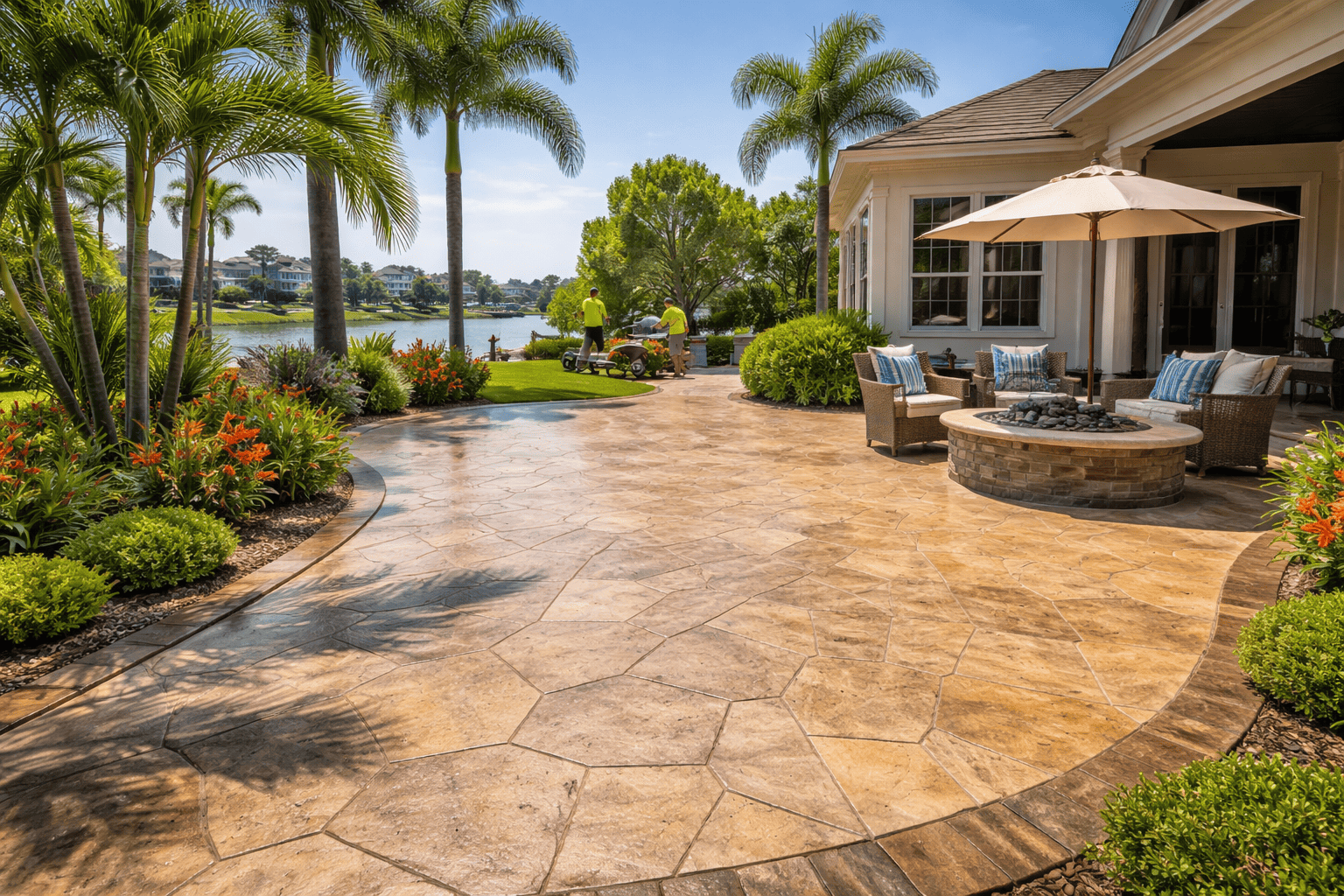
Understanding stamped concrete patio cost Brevard County homeowners usually pay starts with one important truth: the final number is never just about the decorative pattern. Instead, the real price depends on demolition, grading, drainage, concrete thickness, reinforcement, stamp complexity, color method, sealing, and jobsite access. In Brevard County, those details matter even more because patios deal with intense sun, heavy rain, sandy soil movement, and year-round outdoor use. Therefore, a low quote that looks attractive at first can become the most expensive option if the base work or finishing process is weak.
This guide breaks the topic down clearly. First, it shows typical installed price ranges. Next, it explains what pushes cost up or down. In addition, it compares stamped concrete with pavers so homeowners can judge value instead of chasing the cheapest square-foot number. If you are comparing bids for a new patio, an extension, or a full backyard hardscape plan, this article will help you see what belongs in a serious quote and what usually gets left out.
What Stamped Concrete Patio Cost Brevard County Usually Includes
Most homeowners focus on the decorative surface. However, the installed price usually includes several layers of work before stamping ever begins. A professional stamped concrete patio project typically covers site preparation, excavation or surface removal, grading, form setup, compacted base work when needed, rebar or welded wire reinforcement, the concrete pour itself, pattern stamping, color treatment, joint cutting, sealing, and cleanup.
That is why two quotes for “the same patio” can land far apart. One contractor may be pricing a complete installation with stronger prep, thicker concrete, better reinforcement, and a quality sealer. Another may price only the visible slab and leave out the drainage correction or finishing steps that keep the surface looking good over time. As a result, homeowners who compare scope line by line usually make much better decisions than homeowners who compare only the total at the bottom.
Base, slab, and finish are separate cost drivers
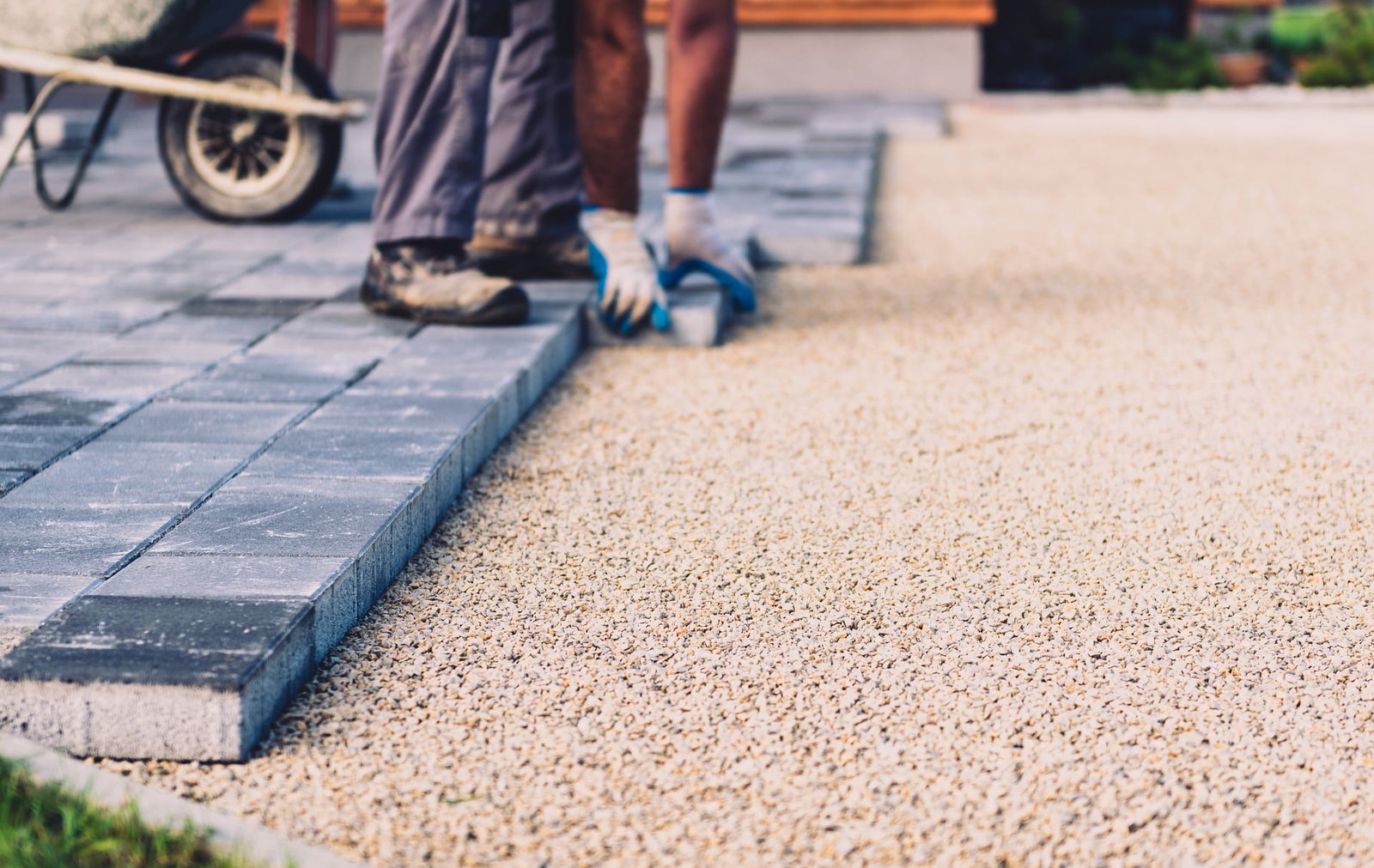
Stamped concrete pricing becomes easier to understand when you separate the project into three parts. First comes the groundwork. That includes demolition, excavation, grading, and subgrade preparation. Next comes the structural slab. That part includes formwork, reinforcement, concrete thickness, and placement. Finally, the decorative finish adds stamping mats, release agents, color hardeners or integral color, detail cleanup, and sealer. Each layer adds labor, material, and risk. Consequently, the most decorated patio is not always the most expensive if the site conditions are simple, and a basic pattern can still cost more when drainage or access is difficult.
Typical Installed Price Range in Brevard County
In today’s market, most stamped concrete patio projects in Brevard County fall between $14 and $24 per square foot installed. Smaller projects with complicated access or premium finish work can run higher. Likewise, larger patios with straightforward layout and easy site conditions can land closer to the middle of the range. Therefore, square footage matters, but it is only one part of the equation.
| Patio size | Basic stamped finish | Mid-range decorative finish | Premium decorative finish |
|---|---|---|---|
| 250 sq ft | $3,500 – $4,500 | $4,500 – $5,750 | $5,750 – $7,000+ |
| 400 sq ft | $5,600 – $7,200 | $7,200 – $9,200 | $9,200 – $11,200+ |
| 600 sq ft | $8,400 – $10,800 | $10,800 – $13,800 | $13,800 – $16,800+ |
| 800 sq ft | $11,200 – $14,400 | $14,400 – $18,400 | $18,400 – $22,400+ |
These figures assume a properly built patio, not a shortcut installation. In other words, they reflect real labor, real reinforcement, and real finishing steps. They do not assume that a crew simply pours a slab over weak soil and adds a pattern before leaving. Because of that, homeowners should treat any very low number as a signal to ask deeper questions rather than as an automatic deal.
The Biggest Factors That Change Price
1. Existing surface removal
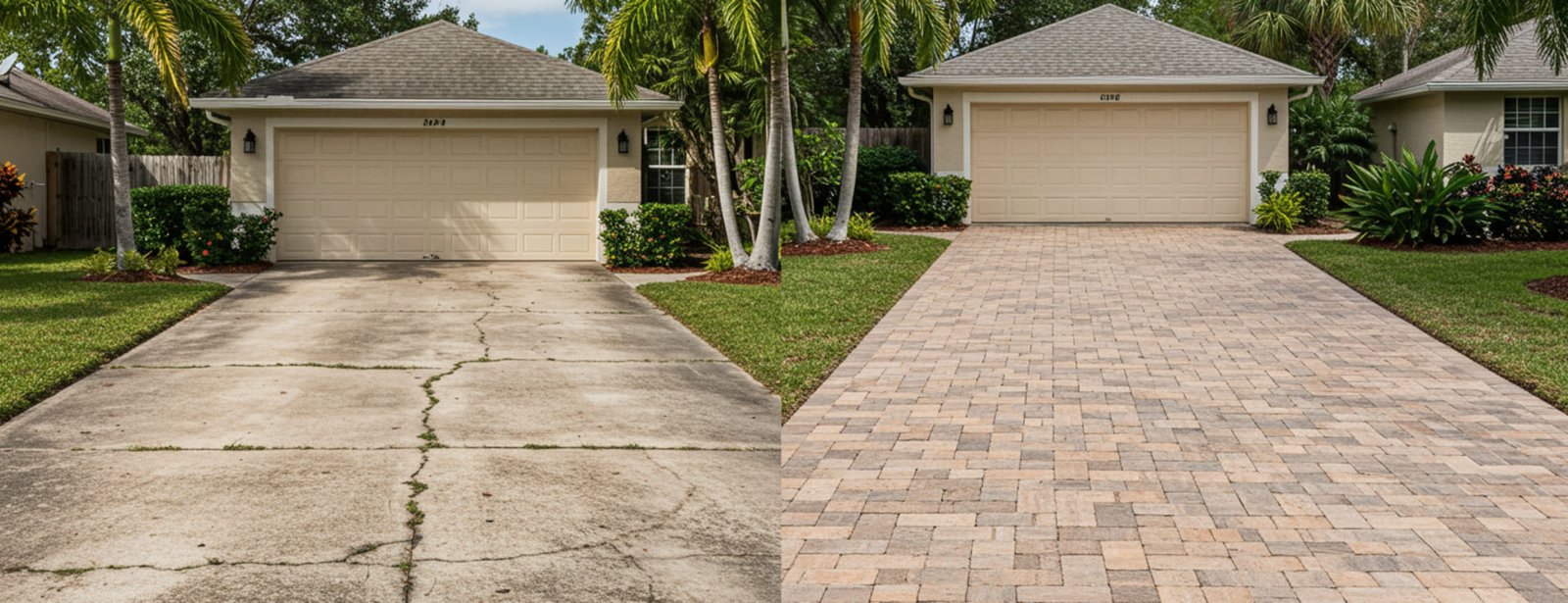
If the new patio replaces old concrete, pavers, grass, or a poorly drained dirt area, removal and disposal change the budget right away. Old slab demolition adds equipment time, hauling, dump fees, and more labor. Similarly, thick roots or a site with a lot of buried debris can slow the prep phase. As a result, replacement patios usually cost more than new patios poured on a clean, accessible footprint.
2. Drainage and grading
Brevard County patios need a drainage plan. Afternoon storms hit fast, and flat yards can trap water near the house if the slab pitch is wrong. Therefore, a quality contractor will pay close attention to slope, downspout discharge, surrounding grade, and runoff direction before the forms ever go in. That extra planning protects the home. It also protects the slab edge and helps reduce future settlement or surface staining. When drainage correction is required, the price rises because the project is solving a site problem, not just adding decoration.
If your yard already struggles with runoff, this detail matters even more. In that case, you may want to review broader backyard or hardscape drainage planning alongside the patio bid. Many homeowners comparing surface options also read our guide on patio pavers vs concrete in Florida because drainage performance often influences material choice just as much as the finished look.
3. Pattern complexity and border work
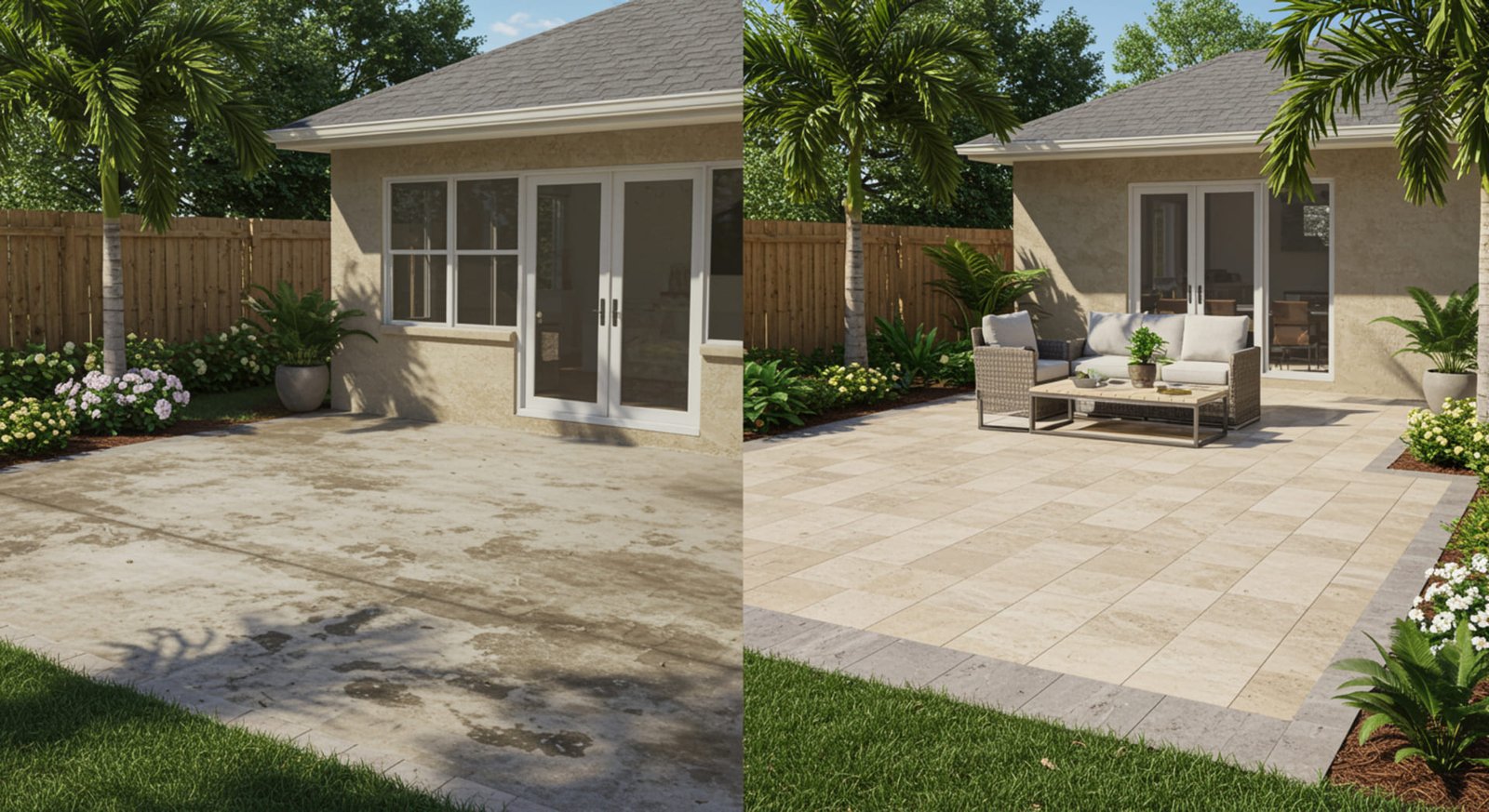
Not all stamped finishes cost the same. A simple ashlar pattern with one color is faster to place and easier to clean than a patio with multiple stamp sets, accent borders, saw-cut bands, or layered color effects. Furthermore, curved edges, steps, seat walls, and built-in transitions increase both layout time and finishing difficulty. That does not mean those upgrades are bad. It simply means they should be priced as design decisions, not as throw-in features.
4. Thickness, reinforcement, and slab specs
Stamped concrete is still concrete. Because of that, slab design matters more than the pattern. Standard residential patios are commonly poured at four inches. However, some areas require more support because of soil conditions, attached features, or traffic patterns. Reinforcement also matters. Wire mesh, rebar placement, fiber mix, control joints, and expansion planning all shape the long-term performance of the slab. A contractor who explains the slab specification clearly is usually giving you a far more useful quote than one who talks only about color and texture.
5. Color method and sealer quality
Some stamped concrete patios use integral color mixed into the concrete. Others use dry-shake hardeners, release agents, stains, or a combination of systems. Each method creates a different look, and each one affects both labor and maintenance. In addition, sealer quality changes the cost and the finish. A cheaper sealer may save money on day one, but it often wears unevenly or dulls faster in Florida sun. Consequently, a patio that looks “premium” on pour day can lose that edge quickly if the finish system is underbuilt.
6. Jobsite access
Backyard access can change labor more than homeowners expect. If a crew must move equipment and materials through narrow side yards, protect pool screens, or work around finished landscaping, installation takes longer. Short pours become slower. Cleanup becomes tighter. Therefore, patio location and access route can move the cost even when the square footage stays the same.
What a Good Quote Should Show
A strong stamped concrete proposal should make the scope easy to understand. First, it should describe the dimensions and the layout. Next, it should define removal or prep work, base or grading needs, reinforcement method, slab thickness, finish pattern, color system, joint plan, and sealer. In addition, it should note whether the price includes demolition, haul-off, cleanup, and permit-related coordination if needed. When those line items are visible, comparing contractors becomes much easier.
- Site prep: excavation, removal, grading, and compaction scope
- Concrete specification: thickness, PSI range, reinforcement, and joint strategy
- Decorative scope: stamp pattern, border detail, and color method
- Protection scope: sealer type, curing plan, and homeowner aftercare guidance
- Exclusions: irrigation relocation, extensive drainage correction, or structural changes if they are not included
On the other hand, weak quotes often hide important details behind vague phrases like “install stamped concrete patio per plan.” That wording may sound fine, but it gives homeowners no real way to compare workmanship assumptions. Therefore, if a proposal feels thin, ask for a revised scope before you judge price.
Hidden Costs Homeowners Miss Most Often
Hidden costs usually appear in one of four places. First, surface removal and haul-off are sometimes priced separately. Second, drainage correction can be excluded until the site is opened. Third, decorative borders or multiple color layers may be discussed verbally but not clearly written into the bid. Finally, sealing and resealing are often misunderstood. Some homeowners assume sealing is included for the life of the patio. In reality, it is usually an installation step plus future maintenance.
Another overlooked expense is repair risk from rushing the process. If a slab is stamped at the wrong moment, finished unevenly, or sealed over moisture issues, the visual defects can be difficult to hide later. That is why labor quality matters so much with stamped concrete. Unlike pavers, which allow piece-by-piece correction, a decorative concrete slab is one continuous surface. A mistake in timing or finish affects the whole field at once.
For homeowners already weighing repair versus replacement, this distinction matters. Sometimes an existing patio is better served by repair or resurfacing rather than by a full stamped replacement. If your current slab has cracking, flaking, or surface wear, our article on concrete patio repair in Florida can help you understand where patching makes sense and where a new decorative slab creates a better long-term result.
Stamped Concrete vs Pavers: Which Delivers Better Value?
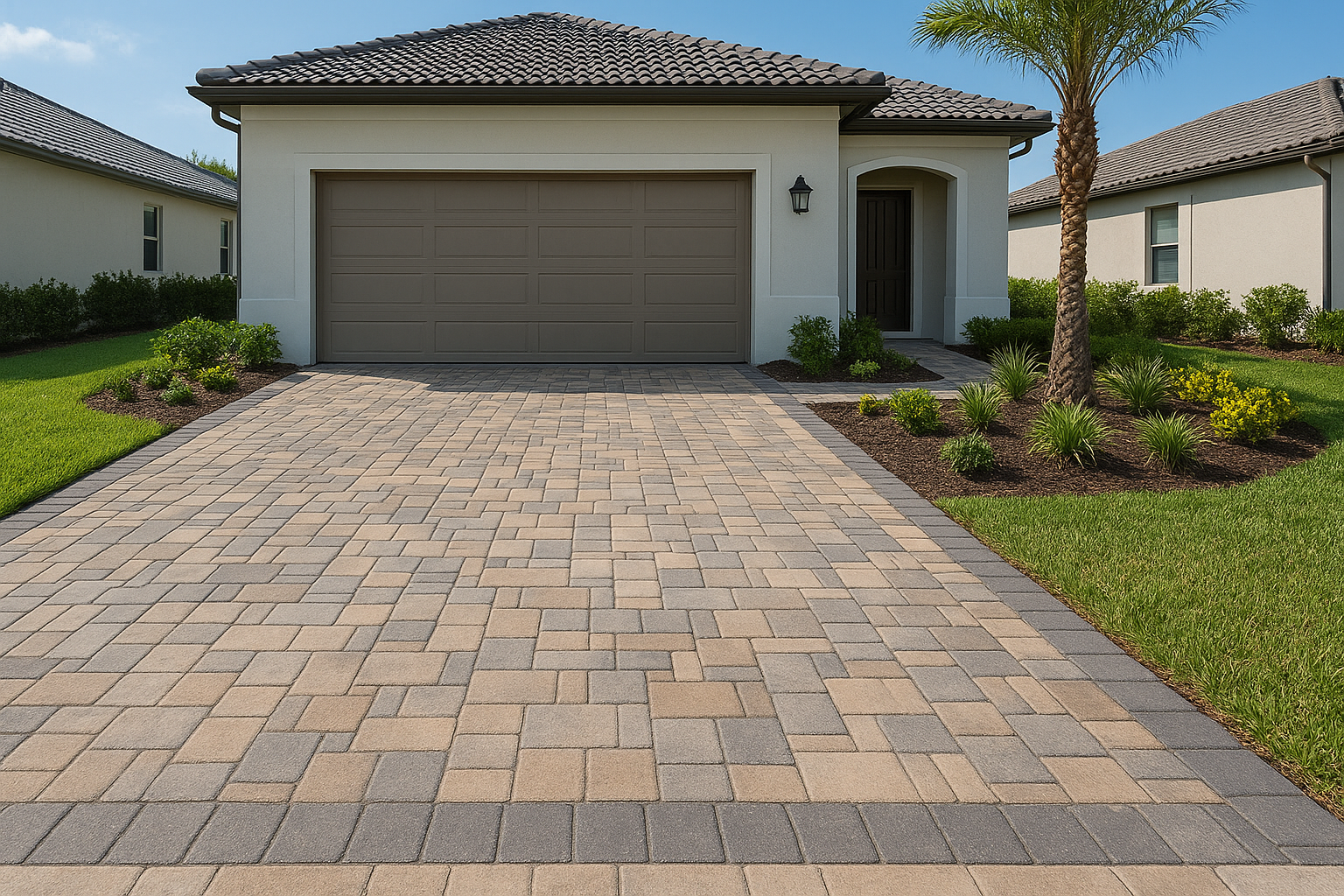
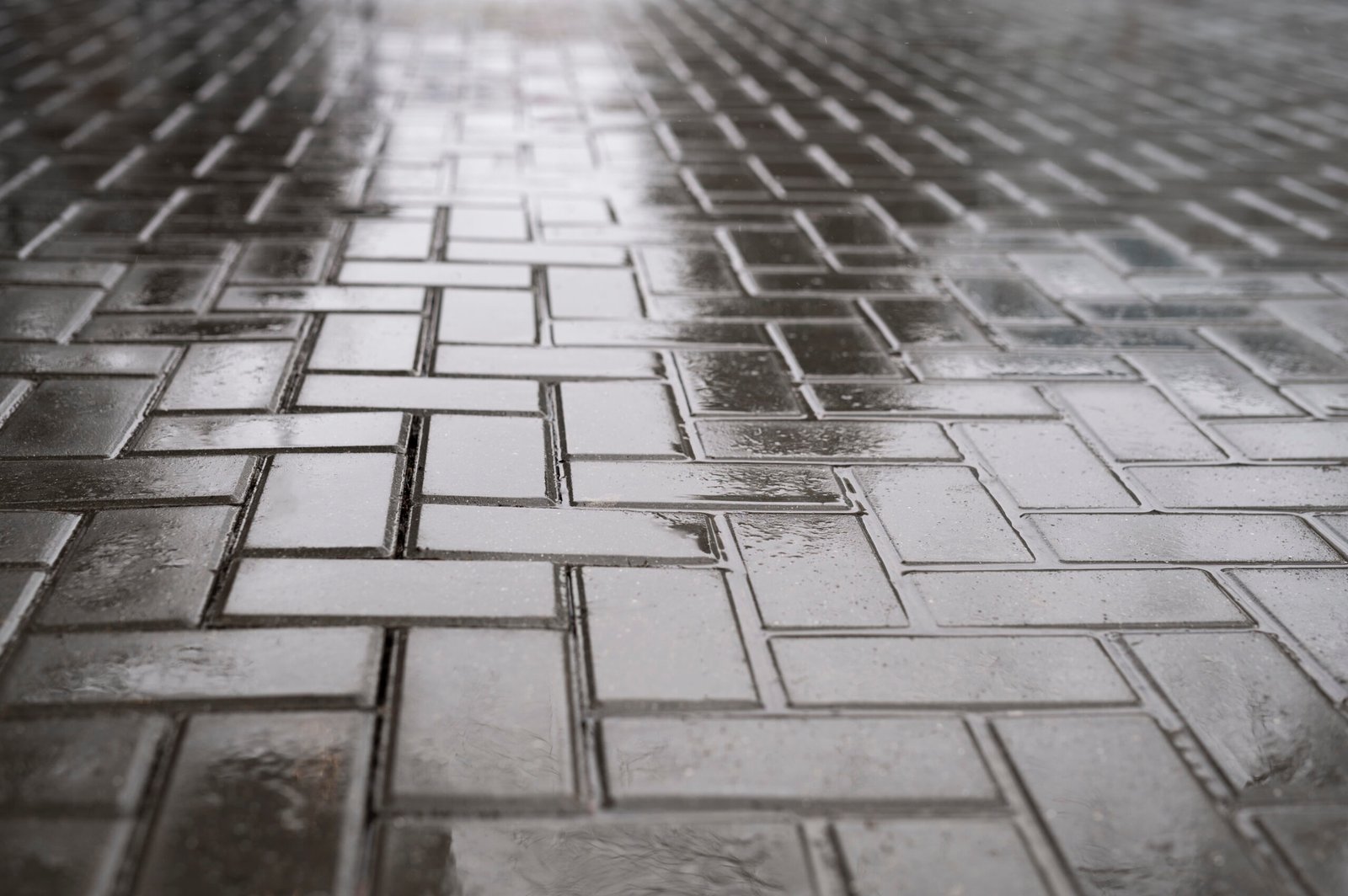
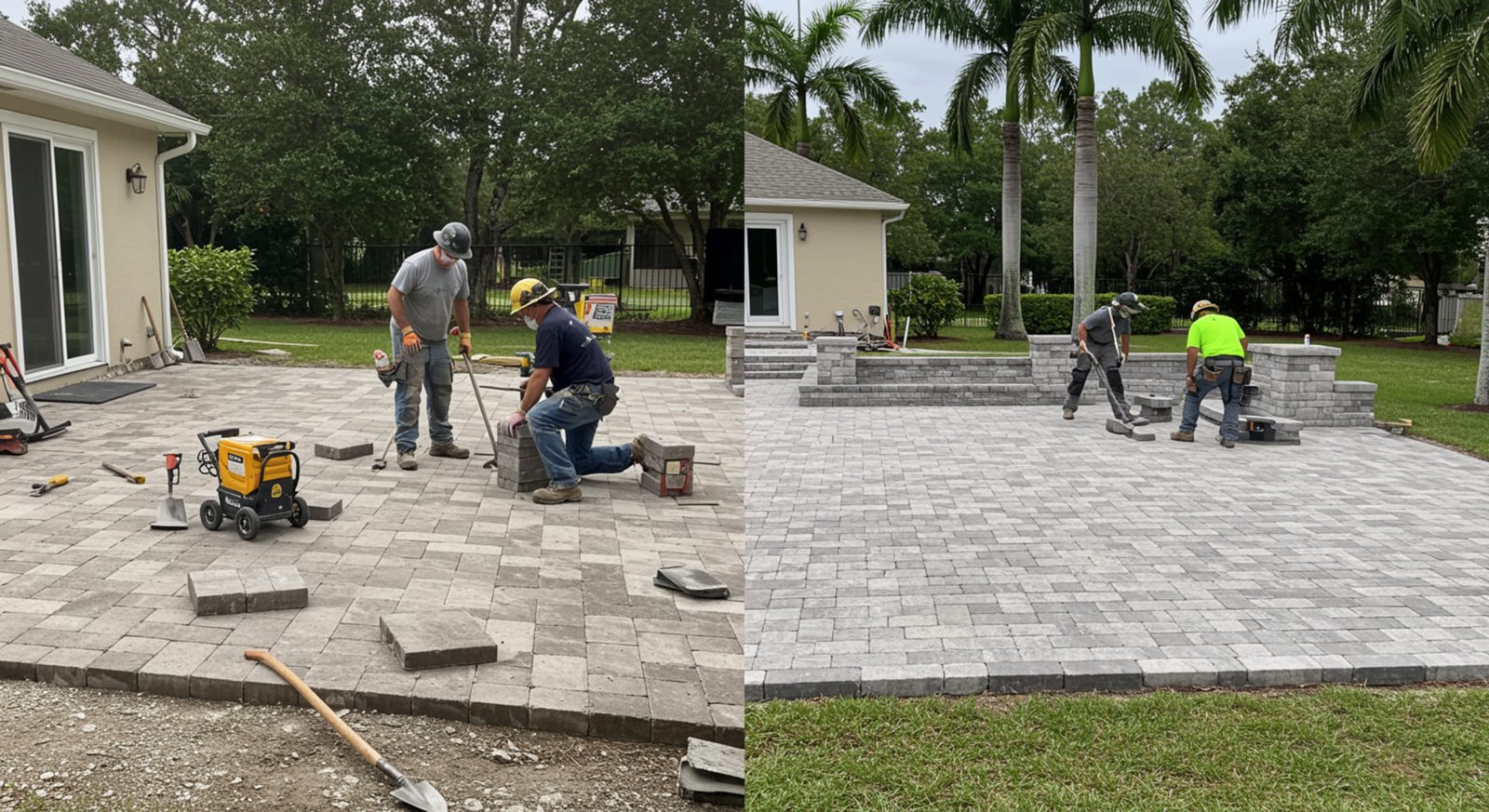
This is one of the most common questions in patio planning. Stamped concrete often wins on upfront cost when compared to premium paver systems. However, pavers usually win on repair flexibility. If a paver area settles or gets stained, sections can be lifted and reset. A stamped slab does not offer that same modular repair advantage. Consequently, the best choice depends on the homeowner’s priorities, not just on the starting budget.
| Factor | Stamped concrete | Pavers |
|---|---|---|
| Upfront cost | Usually lower | Usually higher |
| Design flexibility | Strong surface pattern options | Strong shape and layout options |
| Repairability | More difficult on one-piece slab | Easier section-by-section repair |
| Drainage flexibility | Depends on slab pitch | Depends on base and joint system |
| Long-term visual consistency | Depends heavily on finish and sealer upkeep | Depends on joint maintenance and material quality |
Therefore, homeowners who want a monolithic decorative look often lean toward stamped concrete. By contrast, homeowners who prioritize modular repair and layout flexibility often choose pavers. Neither approach is automatically right or wrong. What matters is matching the surface to the way the space will be used, maintained, and exposed to weather over time.
How to Budget More Accurately Before You Call
Homeowners usually get the best planning results when they define a budget range before requesting estimates. For example, if you know the project needs to stay under a certain number, say so early. That allows the contractor to simplify the finish, reduce border complexity, or phase adjacent work without compromising the slab itself. In other words, budget communication often protects structural quality because it keeps the cuts focused on extras rather than on prep.
It also helps to know whether the patio is a standalone project or part of a larger outdoor build. If you are also planning turf, pavers, a pergola, or drainage work, the patio should be priced in that bigger context. Sometimes combining scopes improves equipment efficiency and labor flow. As a result, the total yard plan can price better than doing the same surfaces in disconnected stages.
Many homeowners begin that planning conversation by reviewing the broader service options first. Our outdoor services page gives a useful overview of how concrete, pavers, turf, fencing, and outdoor living improvements can work together when the patio is not the only priority in the yard.
What Industry Guidance Says About Concrete Workmanship
The American Cement Association’s working-with-concrete guidance reinforces a simple point that homeowners should remember: concrete quality depends on proper placement, finishing, curing, and protection. That matters here because decorative stamping is not just about appearance. It is also about timing, moisture, surface preparation, and finishing discipline. Consequently, a contractor’s process is just as important as the pattern sample book.
That is also why stamped concrete should never be sold like a commodity. Two patios can use similar color palettes and still perform very differently if the slab prep, joint layout, or curing plan changes. Therefore, homeowners should ask about process, not just palette. A crew that explains how it manages prep, pour timing, and sealer selection is usually showing the kind of control that decorative concrete demands.
When It Makes Sense to Get a Professional Estimate
If you are comparing multiple materials, dealing with drainage, replacing an aging slab, or planning a larger backyard renovation, an on-site estimate is the smartest next step. At that point, the goal is not just to get a number. Instead, the goal is to confirm scope, identify hidden site conditions, and decide whether stamped concrete is the best surface for the way your patio will actually be used.
Ready to repair or resurface your concrete? Contact Golden Outdoor Solutions or call +1 (321) 745-9047 for a free consultation anywhere in Brevard County, browse recent outdoor work in the projects gallery, follow new updates on Instagram and Facebook, read local feedback on Google reviews, or send a quick message through WhatsApp if you want help comparing stamped concrete patio cost Brevard County options with a real site plan in mind.