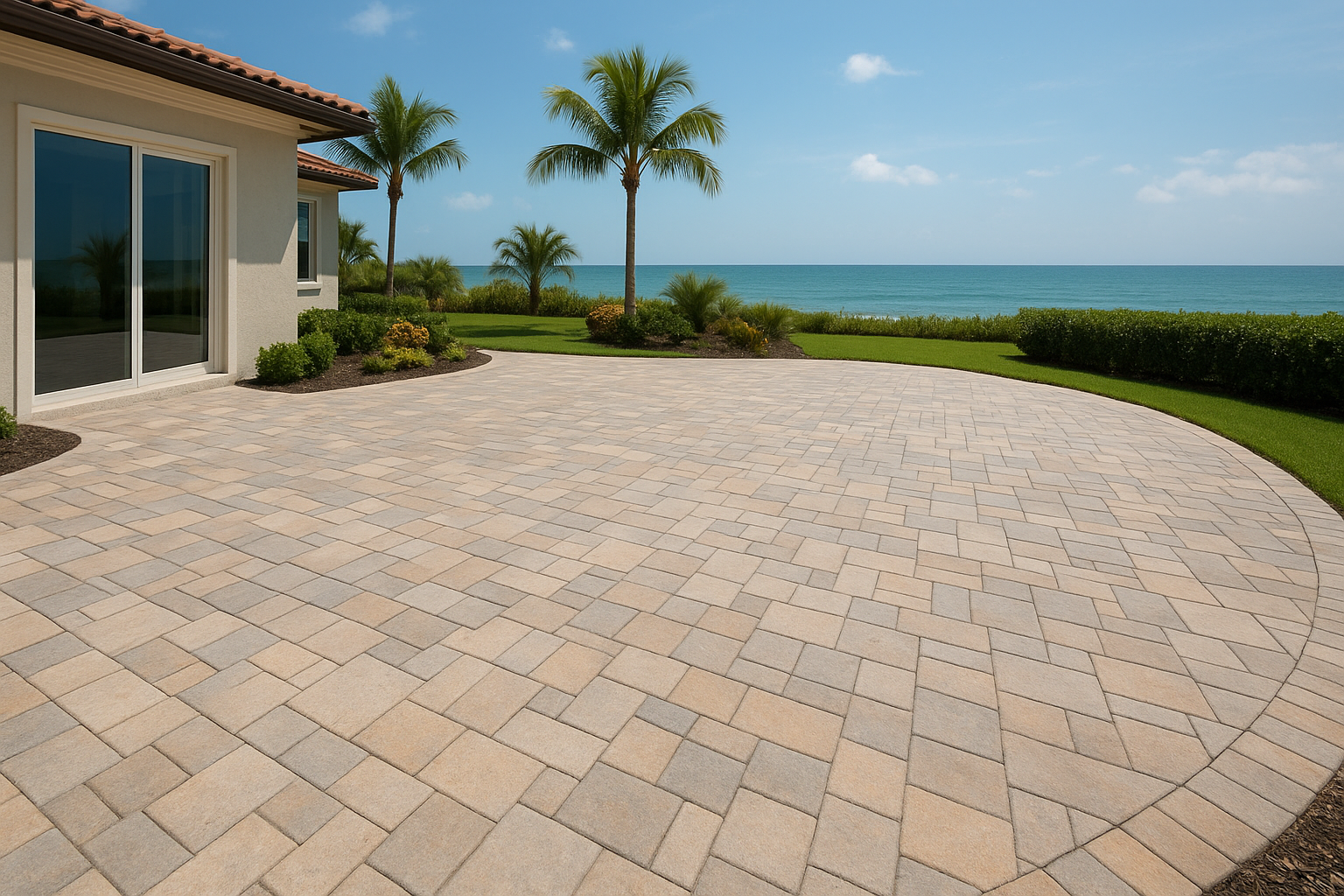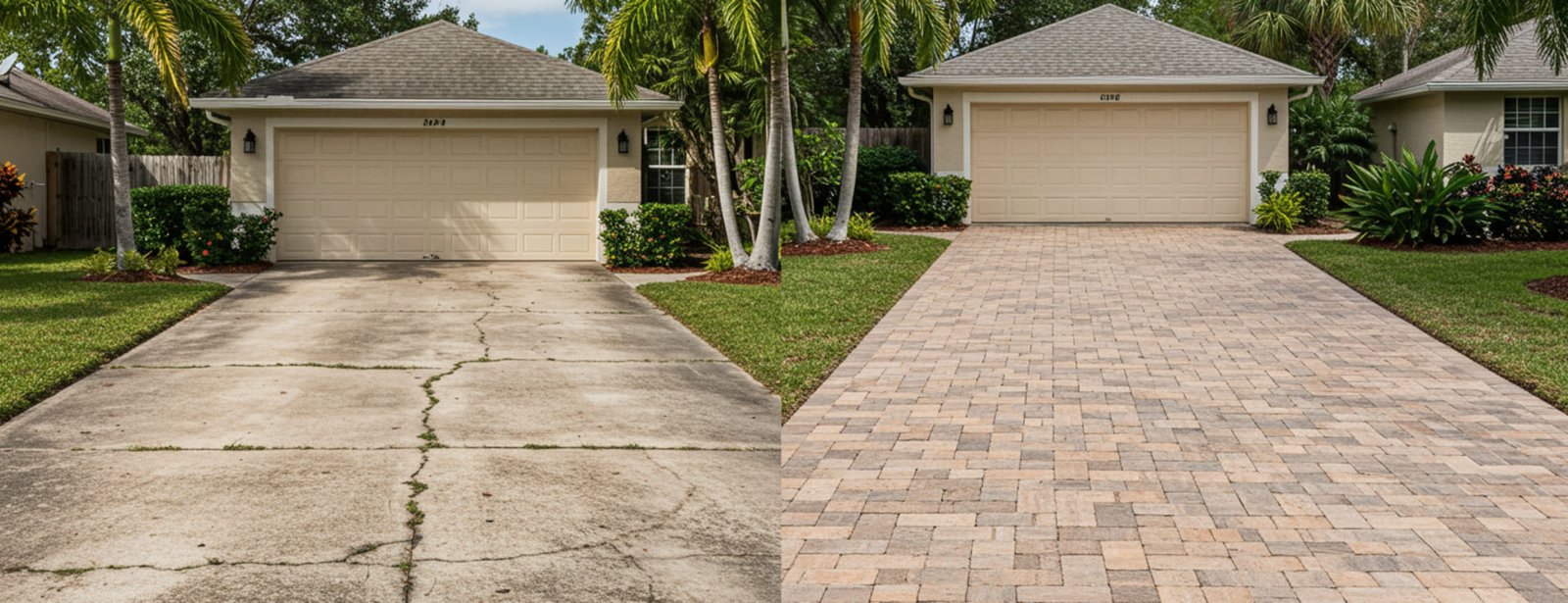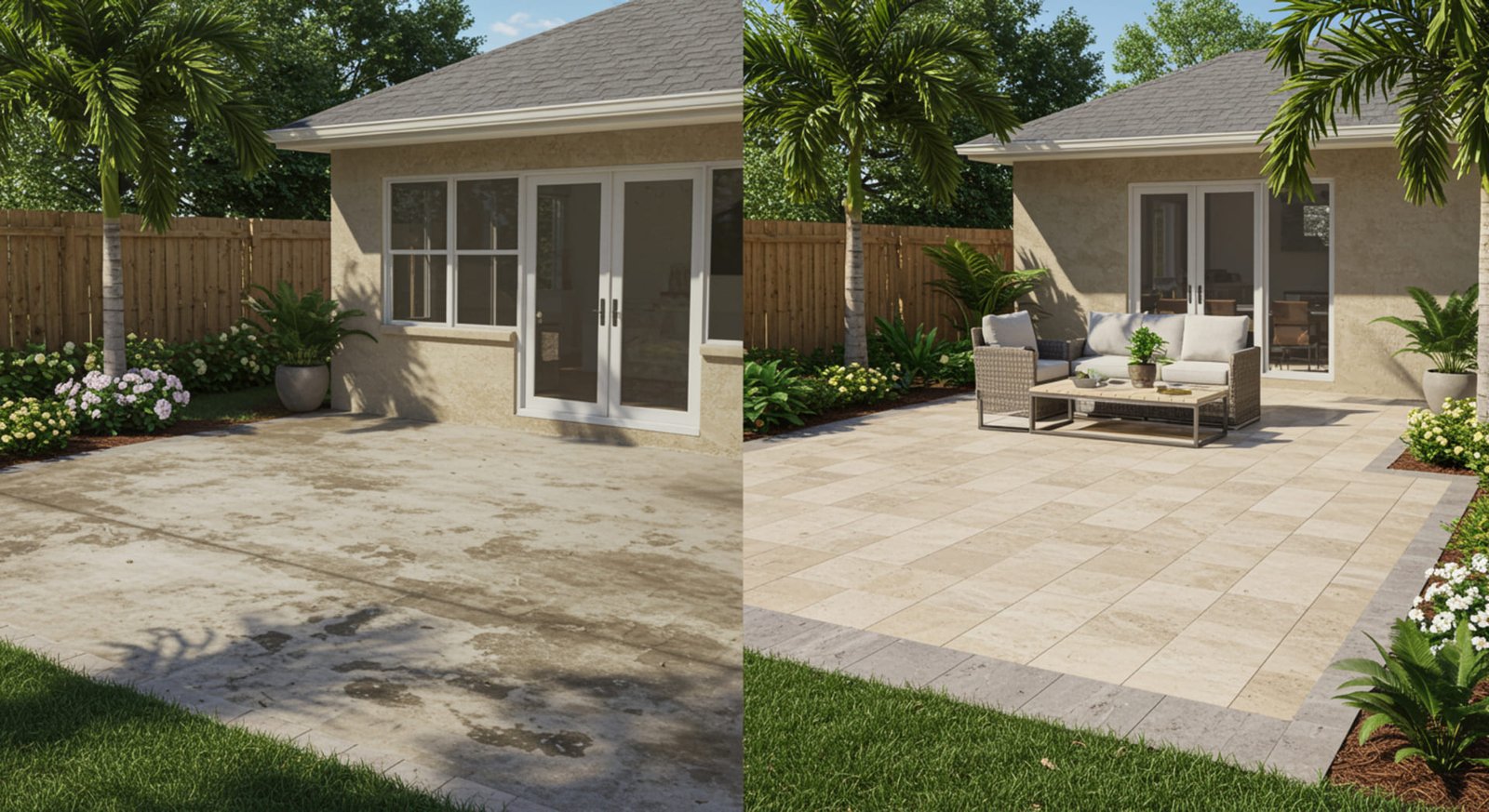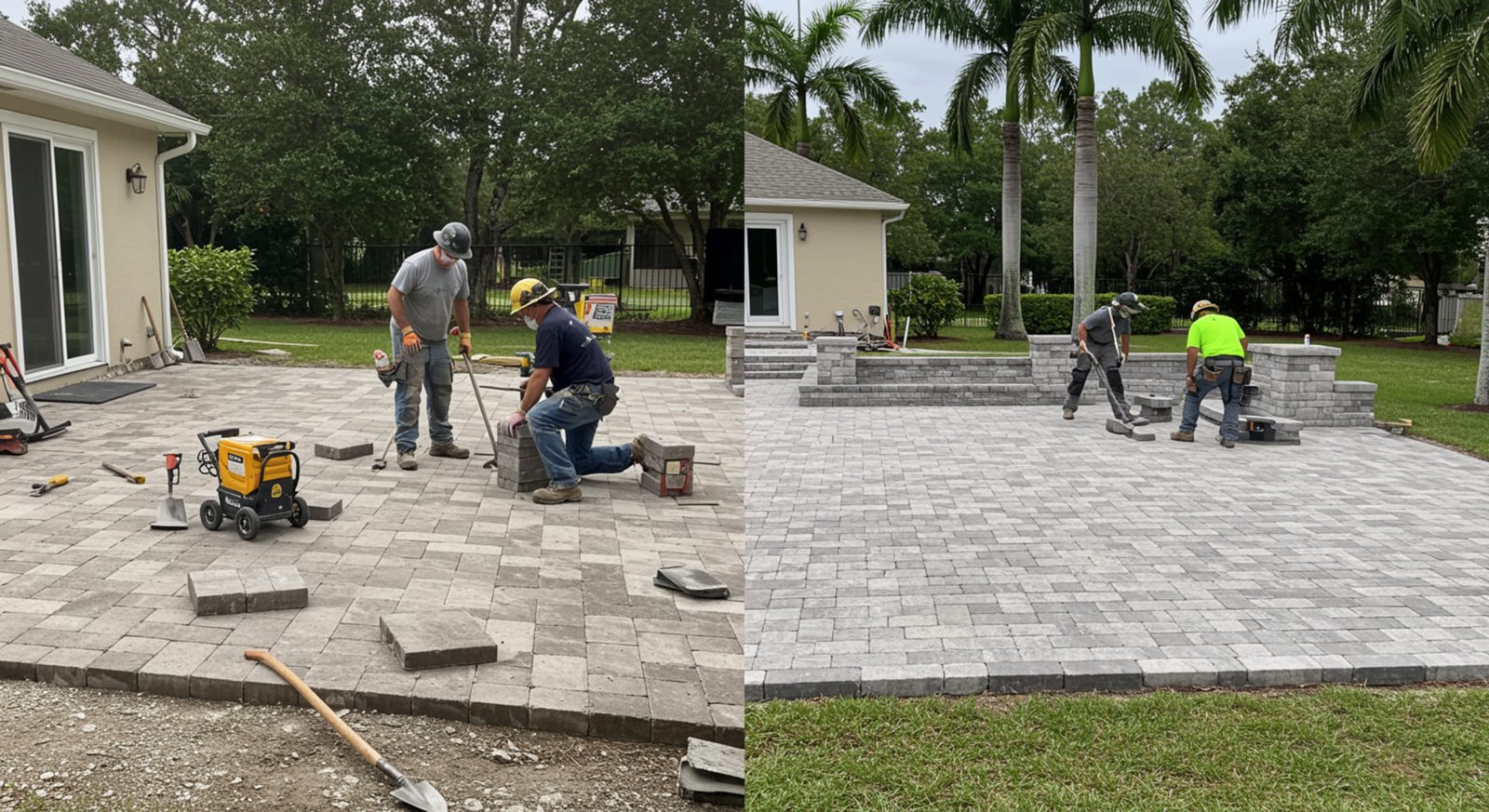
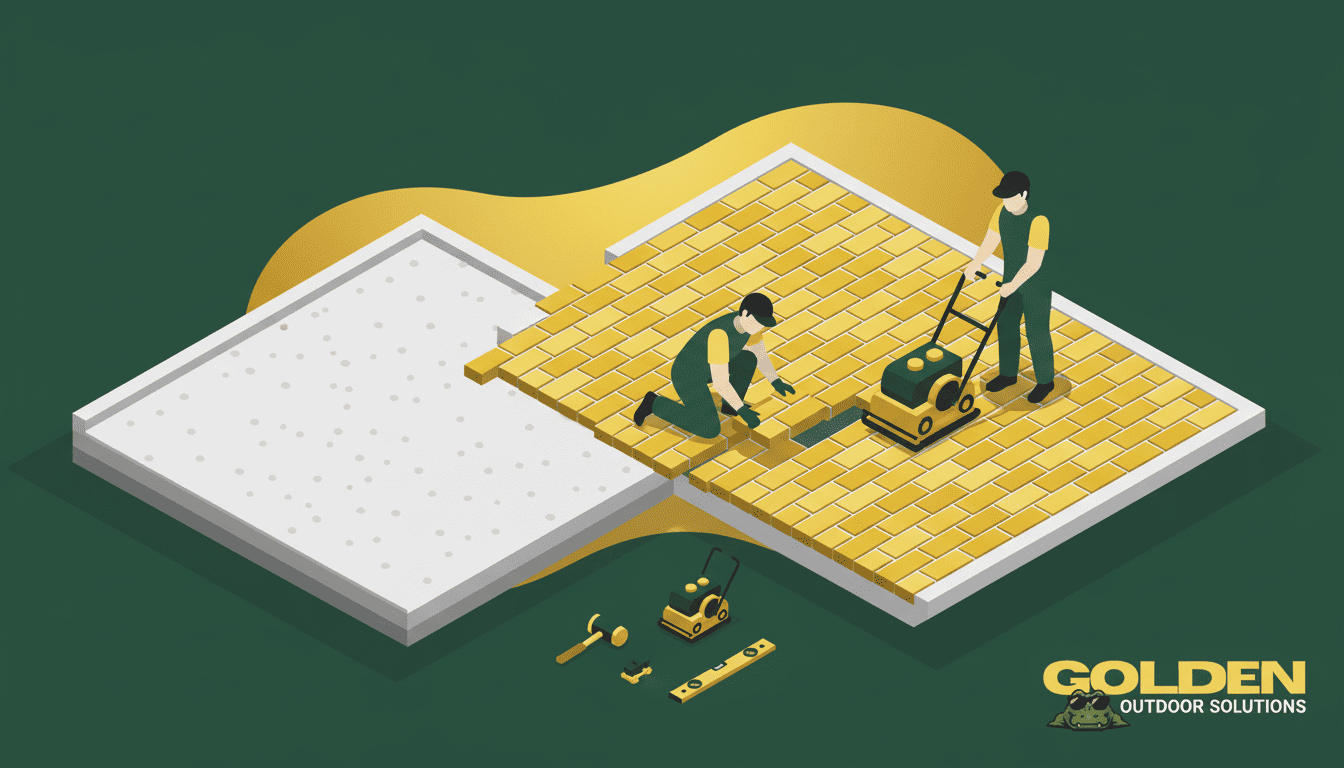
Getting an accurate picture of paver driveway cost Florida homeowners actually pay requires looking beyond the per-square-foot number most contractors advertise. The total installed price depends on paver material, base preparation requirements, driveway size, edge detail, and site-specific conditions that vary significantly across Central Florida properties. This guide breaks down every cost component clearly, compares paver driveways against concrete and asphalt alternatives, and helps homeowners understand exactly what drives price differences between quotes.
Why Paver Driveways Are a Strong Investment in Florida
Florida’s climate creates specific demands on driveway surfaces. Intense heat causes asphalt to soften and deform. Concrete develops cracks under thermal expansion and Florida’s shifting sandy soil. Pavers, however, handle both challenges well because each unit moves independently — absorbing thermal expansion and minor ground movement without cracking the surface as a whole.
Furthermore, pavers offer a repair advantage that poured surfaces cannot match. When a single paver cracks or stains, replacement involves lifting and swapping that unit alone — without patching, grinding, or color-matching the surrounding area. As a result, pavers maintain their appearance over decades of Florida sun and rain with far less maintenance than competing driveway materials. For homeowners focused on long-term value, that combination of durability and repairability makes the upfront cost comparison more favorable than it first appears.
Paver Driveway Cost Florida: Complete Price Breakdown
The total installed cost of a paver driveway in Florida involves five primary cost components. Understanding each one separately prevents budget surprises and helps homeowners evaluate contractor quotes with greater confidence.
Paver Material Cost
Paver material represents the single largest variable in total project cost. Concrete pavers — the most common choice for Florida driveways — range from $2.50 to $6.00 per square foot for the material alone, depending on thickness, finish, and manufacturer. Brick pavers fall between $4.00 and $8.00 per square foot. Natural stone pavers, including travertine and bluestone, range from $8.00 to $20.00 per square foot for material only.
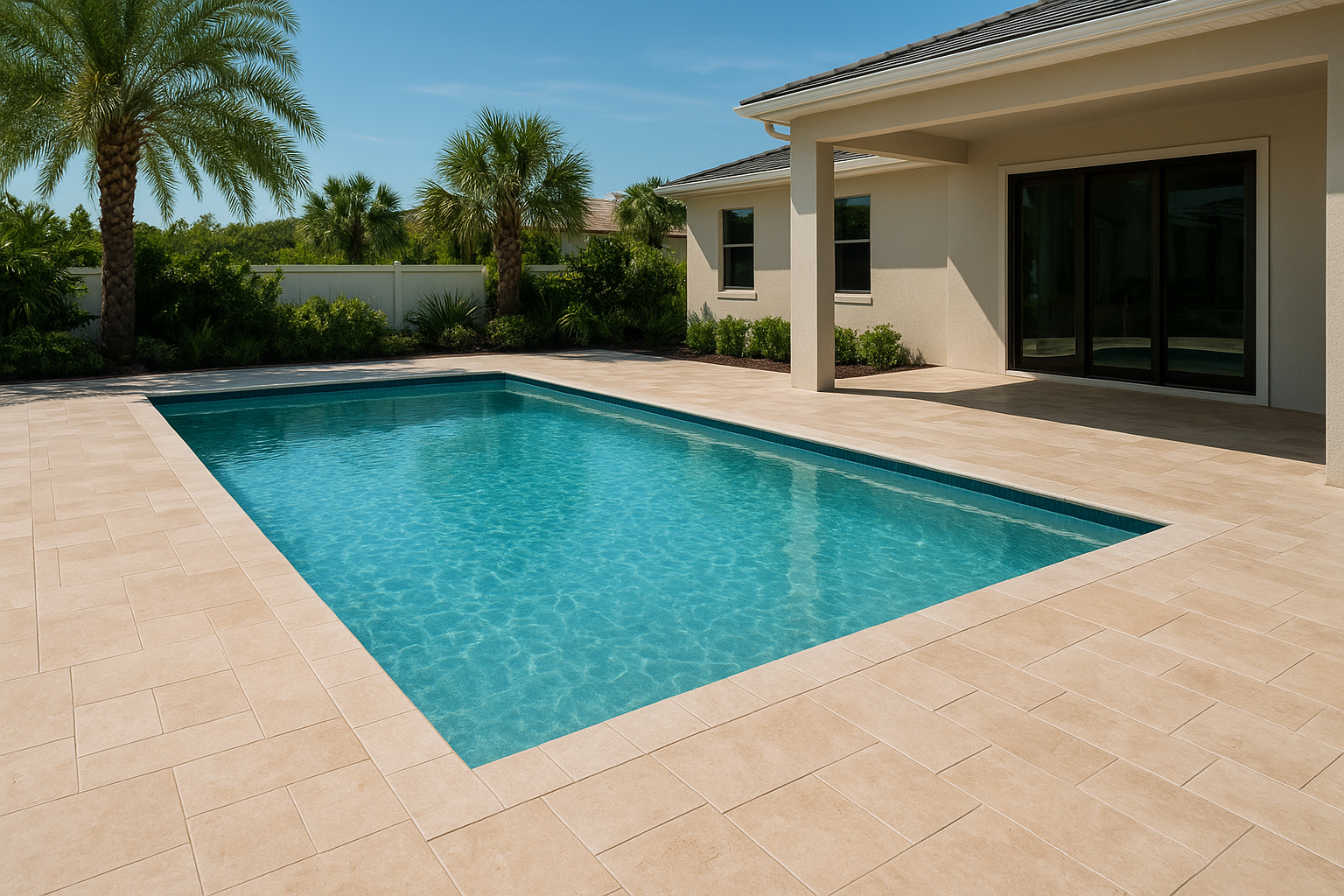
In Central Florida, travertine pavers have grown significantly in popularity for residential driveways. They stay noticeably cooler underfoot than concrete pavers in direct Florida sun — an important comfort factor during summer months. Additionally, their natural color variation and surface texture age gracefully without fading, which concrete pavers with manufactured color coatings cannot always match over time.
Base Preparation Cost
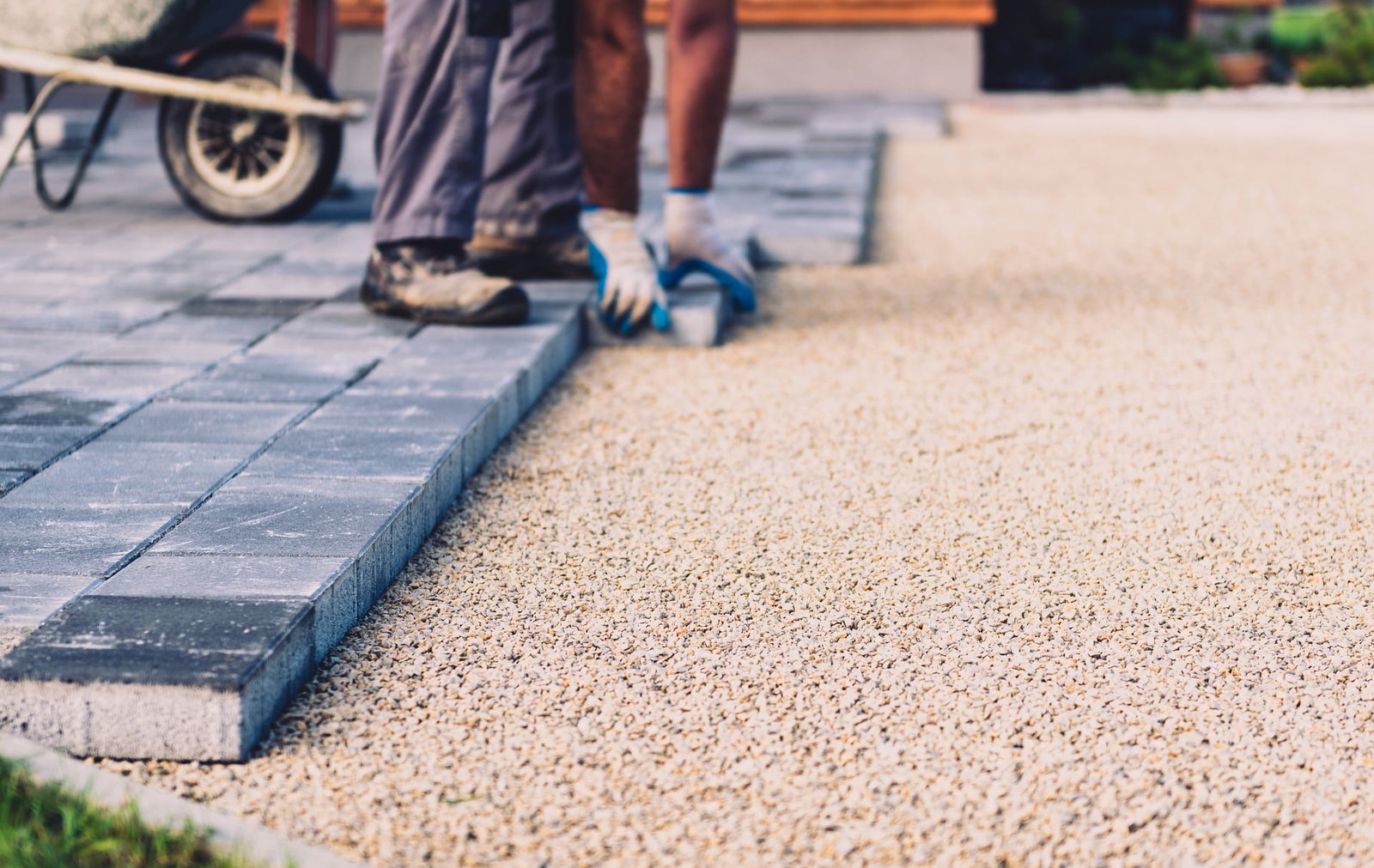
Base preparation is the most critical — and most frequently underpriced — component of any paver driveway installation. A proper Florida driveway base involves removing the existing surface, excavating to the correct depth, grading for drainage, compacting the subgrade, and installing a compacted aggregate base layer. Furthermore, a bedding sand layer goes down immediately before the pavers themselves.
In Central Florida’s sandy soil, subgrade compaction requires particular attention. Poorly compacted sand bases shift and settle unevenly, causing paver surfaces to develop low spots and rocking units within a few seasons. Base preparation typically adds $3.00 to $6.00 per square foot to the total installed price. Contractors who quote significantly below market rates frequently cut corners at this stage — which explains why some paver driveways fail prematurely despite using quality materials.
Edge Restraints and Border Pavers
Edge restraints hold the paver field in position and prevent lateral spreading over time. Plastic or aluminum edge restraint systems secure the perimeter and anchor into the base layer with spikes. Additionally, many Florida driveways incorporate a contrasting border paver course — using a different color, size, or material to frame the driveway edge and add visual definition.
Border work adds both material and labor cost. However, the aesthetic impact is significant — a well-executed border detail elevates a standard paver driveway into a designed feature that improves curb appeal measurably. Edge restraint and border costs typically range from $2.00 to $5.00 per linear foot of driveway perimeter.
Joint Sand and Sealing
Polymeric sand fills the joints between pavers and locks them together once activated with water. It resists erosion, weed germination, and ant infiltration — all of which are active concerns in Florida’s outdoor environment. Polymeric sand adds approximately $0.50 to $1.00 per square foot to the material cost.
Sealing is a separate cost that most homeowners add at installation. A quality penetrating or film-forming paver sealer protects the surface from oil stains, UV fading, and moisture intrusion. In Florida’s sun, sealer application every two to three years maintains both protection and appearance. Initial sealing at installation typically costs $0.75 to $2.00 per square foot depending on product and application method.
Labor Cost
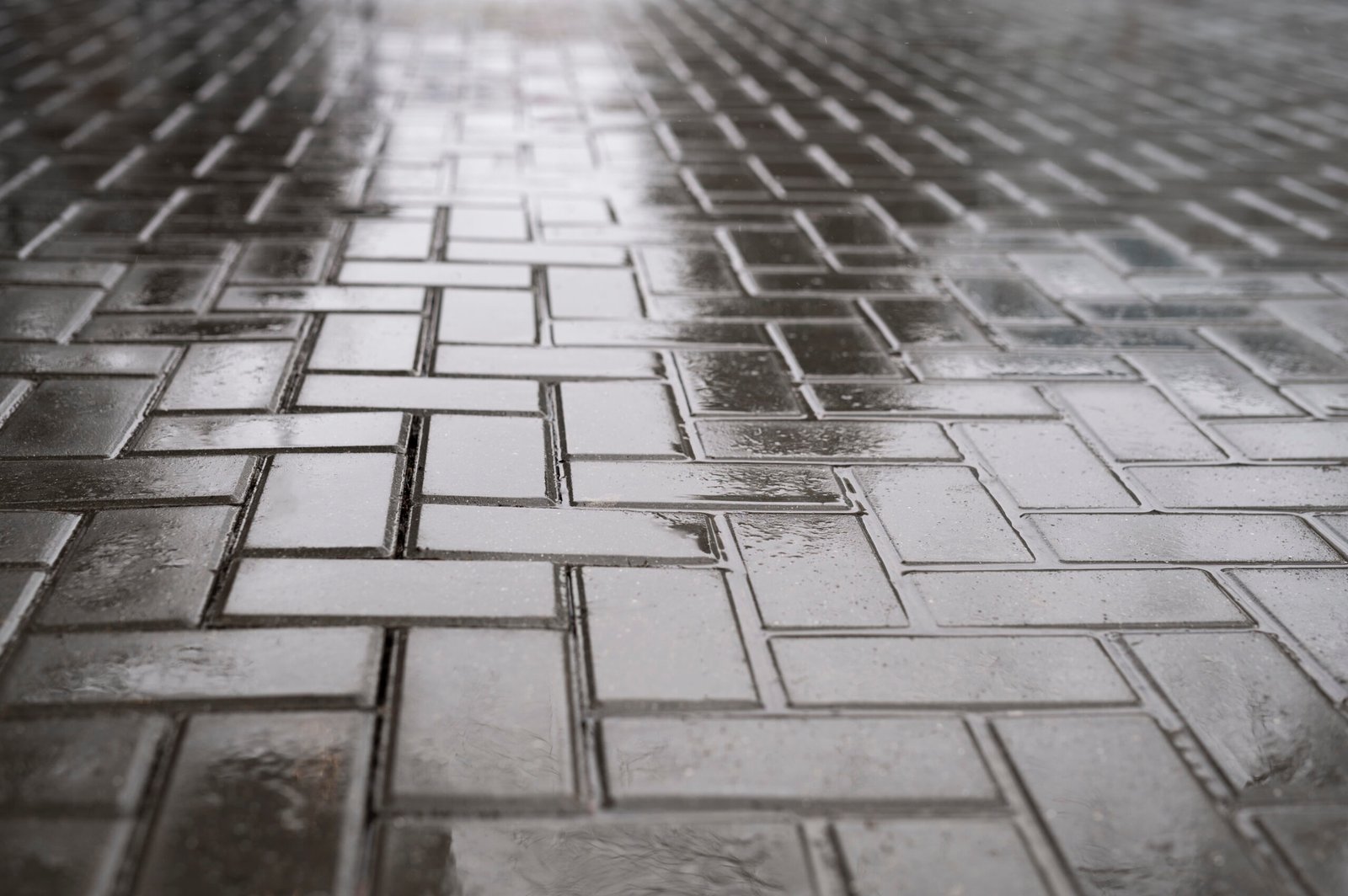
Professional paver installation labor in Central Florida runs approximately $4.00 to $8.00 per square foot. Complex patterns — herringbone, basket weave, or circular fan designs — require more precise cutting and layout time, pushing labor toward the higher end of the range. Similarly, driveways with curves, multiple levels, or significant slope add labor cost relative to a simple rectangular flat installation.
Total Installed Cost: What Florida Homeowners Actually Pay
Combining all components — materials, base, edging, sand, sealing, and labor — produces the true installed cost per square foot. For Central Florida paver driveway installations, that total typically falls between $12 and $25 per square foot depending on material selection and site conditions.
| Driveway Size | Concrete Pavers | Brick Pavers | Travertine Pavers |
|---|---|---|---|
| 400 sq ft | $6,000 – $9,600 | $8,000 – $13,000 | $13,000 – $22,000 |
| 600 sq ft | $9,000 – $14,400 | $12,000 – $19,500 | $19,500 – $33,000 |
| 800 sq ft | $12,000 – $19,200 | $16,000 – $26,000 | $26,000 – $44,000 |
| 1,000 sq ft | $15,000 – $24,000 | $20,000 – $32,500 | $32,500 – $55,000 |
These ranges reflect full installed costs in the Central Florida market under standard site conditions. Difficult access, significant grade changes, existing surface removal, or drainage corrections push totals above these ranges. An on-site assessment always produces a more accurate number than any square footage formula.
Paver Driveway Cost Florida vs Concrete and Asphalt
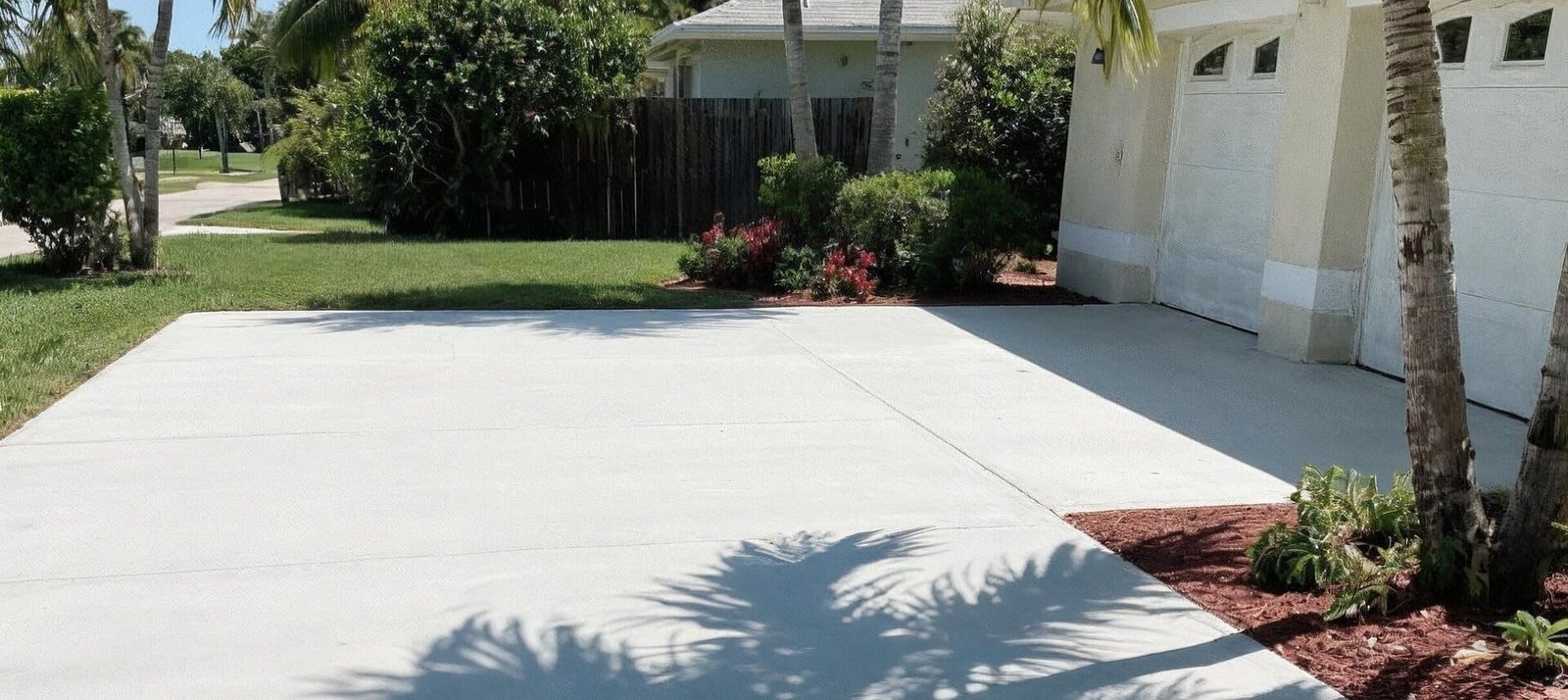
Many homeowners compare paver driveway cost against concrete and asphalt alternatives before committing. The upfront price difference is real — but the total cost picture changes significantly when maintenance, repair, and lifespan factors enter the comparison.
| Factor | Pavers | Concrete | Asphalt |
|---|---|---|---|
| Installed cost (per sq ft) | $12 – $25 | $6 – $12 | $3 – $7 |
| Lifespan in Florida | 25 – 50+ years | 15 – 25 years | 10 – 20 years |
| Crack resistance | Excellent | Moderate | Poor in heat |
| Repair method | Individual unit replacement | Patch or resurface | Patch or overlay |
| Heat performance | Good (travertine: excellent) | Moderate | Poor (softens) |
| Curb appeal impact | High | Moderate | Low |
| HOA acceptance | High | High | Variable |
When viewed over a 25-year horizon, paver driveways consistently deliver a lower total cost of ownership than asphalt — and compete closely with concrete when repair and resurfacing costs factor in. Additionally, pavers add measurable curb appeal value that appraisers and buyers recognize in Florida’s competitive real estate market. For a deeper comparison of paver options versus concrete specifically, our post on patio pavers vs concrete in Florida covers the material tradeoffs in detail.
Factors That Increase Paver Driveway Cost in Florida
Several site-specific and design-related factors push paver driveway costs above the standard range. Identifying these early allows for accurate budgeting and prevents mid-project surprises.
Existing Surface Removal
Removing an existing concrete or asphalt driveway adds $1.50 to $3.00 per square foot to the project cost. Concrete removal requires breaking, hauling, and disposal — all of which involve equipment and labor that asphalt removal does not always require. Therefore, replacement projects cost more than new installations on bare ground, and homeowners should factor this clearly into their budget before requesting quotes.
Drainage Corrections
Florida driveways that direct water toward the home foundation, neighboring properties, or public rights-of-way require drainage correction as part of the installation. This may involve channel drains, French drains, or regrading the base to redirect flow appropriately. Drainage work adds $500 to $3,000 or more depending on the correction required. For related context on driveway drainage specifically, our post on driveway drainage solutions in Florida covers the most common issues and fixes across Central Florida properties.
Complex Patterns and Custom Cuts
Intricate laying patterns require more precise cutting, longer layout time, and higher material waste factors. Herringbone and circular fan patterns typically add 15 to 25 percent to labor cost compared to a standard running bond or stacked pattern. Additionally, curved driveway edges require custom cuts along the entire perimeter — further increasing both labor time and material consumption.
Apron and Curb Transitions
Where the driveway meets the public street, a curb cut or apron transition connects the paver surface to the road edge. In many Florida municipalities, this transition must meet specific grade and material requirements — and may require a separate permit. Consequently, the apron work adds both cost and lead time to the overall project if permit review is involved.
Paver Driveway Cost Florida: Choosing the Right Paver Material
Material selection influences not just upfront cost but long-term performance, maintenance requirements, and aesthetic outcome. Each paver type performs differently under Florida’s specific conditions.
Concrete Pavers
Concrete pavers offer the broadest range of colors, shapes, and price points — making them the most popular choice for Florida residential driveways. They handle vehicle loads well when installed over a properly compacted base. However, color-through concrete pavers hold their tone better than surface-colored options, which can fade under Florida’s UV intensity over time. For driveways with heavy traffic or large vehicles, thicker 80mm pavers outperform the standard 60mm units significantly.
Brick Pavers
Clay brick pavers carry a classic aesthetic that complements traditional Florida architecture well. Unlike concrete pavers, brick does not fade — its color runs completely through the fired clay body. Furthermore, brick pavers gain character as they age, developing a patina that many homeowners prefer over time. The tradeoff is higher upfront cost and slightly less variety in color and shape compared to manufactured concrete units.
Travertine Pavers
Travertine is the premium choice for Florida driveways where aesthetics and heat performance are both priorities. Its natural porous structure keeps the surface measurably cooler than concrete or brick pavers in direct afternoon sun. Additionally, travertine’s natural color variation means no two installations look identical — a characteristic that resonates strongly with homeowners seeking a distinctive, high-end result. The significantly higher material cost reflects both the natural stone sourcing and the additional cutting precision required during installation.
What to Look for When Comparing Paver Driveway Quotes
Multiple quotes for the same project often vary by thousands of dollars. Understanding what drives those differences helps homeowners evaluate proposals on substance rather than price alone.
- Base depth specification: Ask each contractor to specify the compacted aggregate base depth they include. A quality Florida driveway base runs six to eight inches of compacted aggregate. Quotes that omit this detail or specify less depth are cutting a critical cost item.
- Paver thickness: Driveway applications require 80mm pavers for vehicle loads. Contractors substituting 60mm pavers reduce material cost — but reduce load performance and longevity proportionally.
- Polymeric sand inclusion: Confirm whether the quote includes polymeric joint sand or standard bedding sand only. Standard sand erodes, allows weed growth, and does not lock the field. Polymeric sand is the correct specification for Florida driveways.
- Sealing: Determine whether initial sealing is included or quoted separately. Many contractors exclude sealing from base proposals — meaning the homeowner pays an additional cost after installation completes.
- Warranty terms: Confirm what the workmanship warranty covers and for how long. A reputable installer stands behind the base preparation and installation quality with a clear written warranty.
Maintaining Your Paver Driveway in Florida
Proper maintenance extends paver driveway lifespan and preserves appearance over decades. Florida’s climate creates specific maintenance priorities that differ from northern states.
Resealing every two to three years protects against UV fading, oil penetration, and moisture intrusion. Additionally, inspecting joint sand annually and topping up areas where erosion has occurred prevents weed establishment and paver movement. Pressure washing removes biological growth — algae, mold, and mildew that thrive in Florida’s humidity — before it stains the paver surface permanently. Finally, addressing any rocking or settled units promptly prevents progressive base failure that spreads from a single problem area.
For a detailed look at the full paver driveway installation process — from site assessment through final sealing — our post on paver driveway installation in Florida walks through every stage of a professional installation on Central Florida properties.
The Interlocking Concrete Pavement Institute (ICPI) publishes technical installation standards and contractor certification requirements for interlocking concrete pavement — providing independent benchmarks that help homeowners evaluate contractor qualifications and installation specifications before signing a contract.
Ready to upgrade your driveway or patio? Contact Golden Outdoor Solutions for a free on-site estimate and explore our completed projects gallery to see paver driveway installations across Central Florida. Follow us on Instagram and Facebook for design inspiration and project updates, and read verified client reviews on Google. Reach us anytime via WhatsApp, by phone at +1 (321) 745-9047, or by email at contact@goldenoutdoorsolutions.com — we serve homeowners throughout Central Florida. 🏡✨