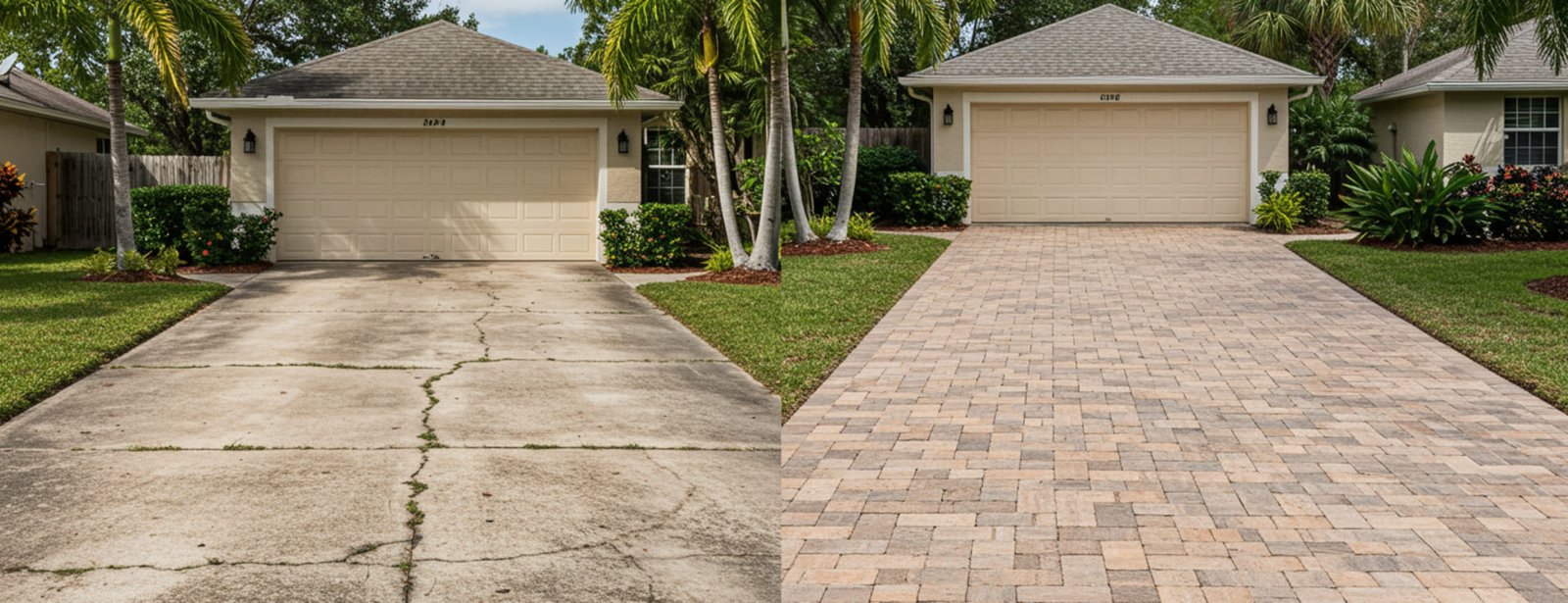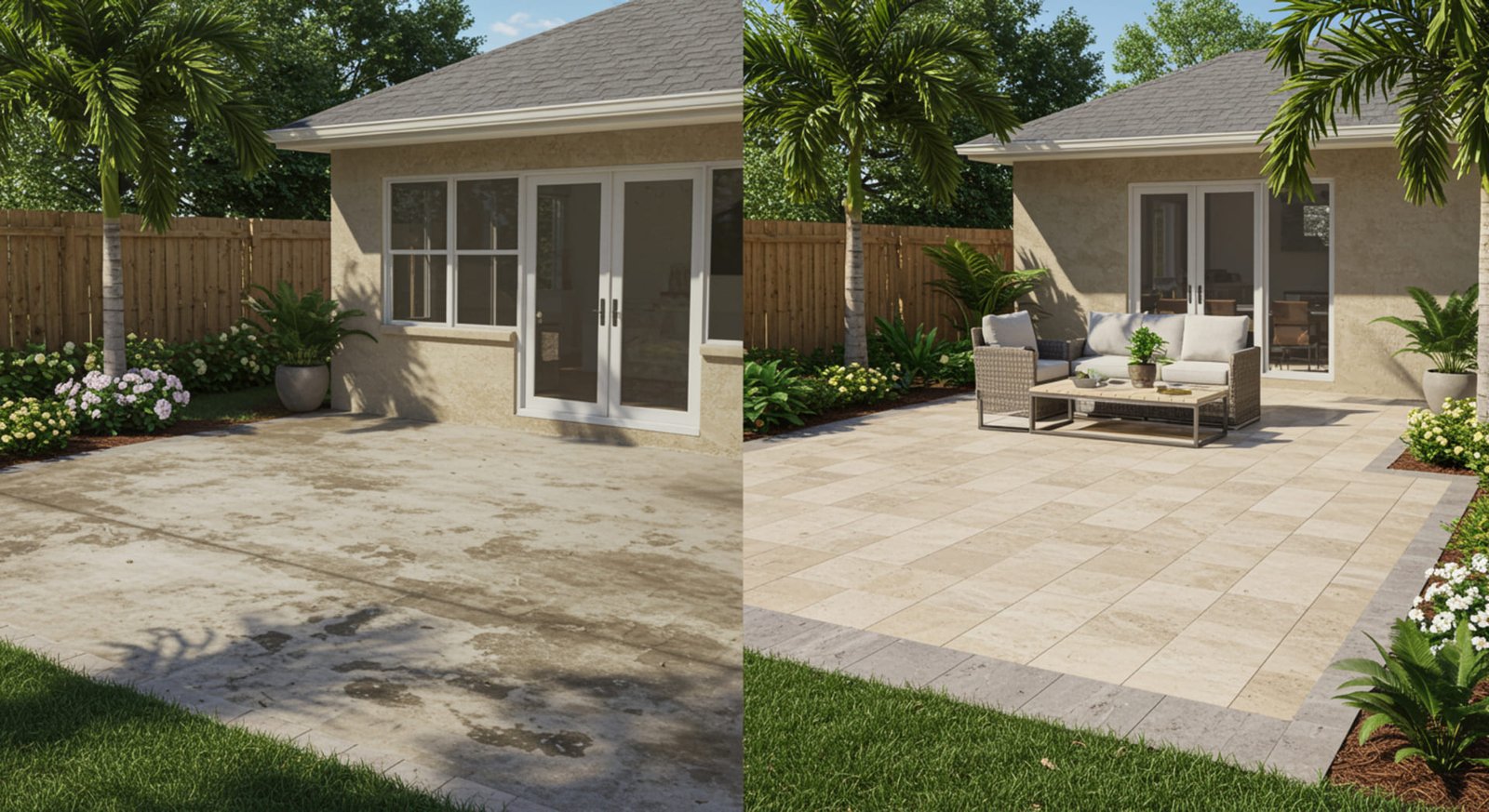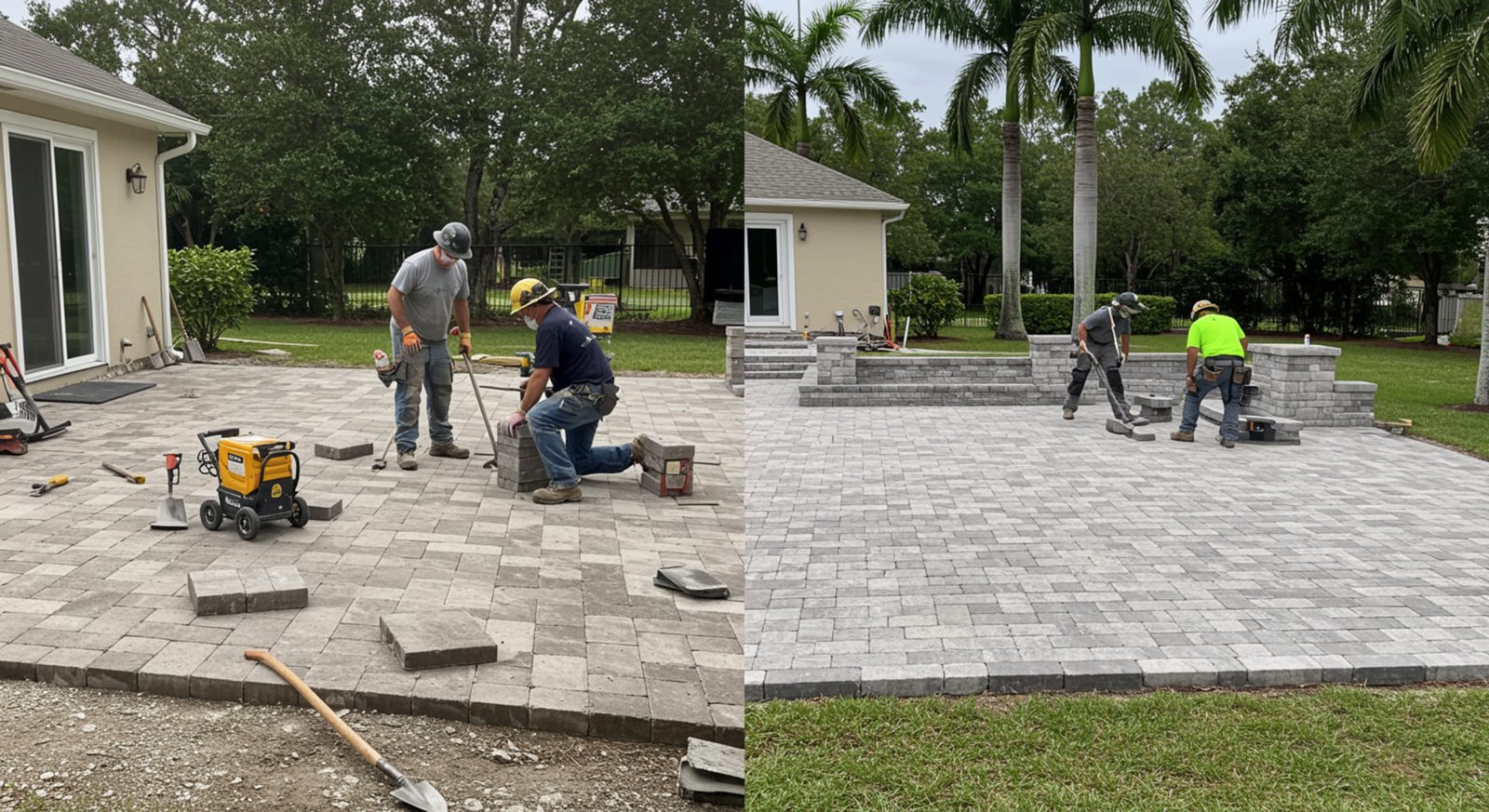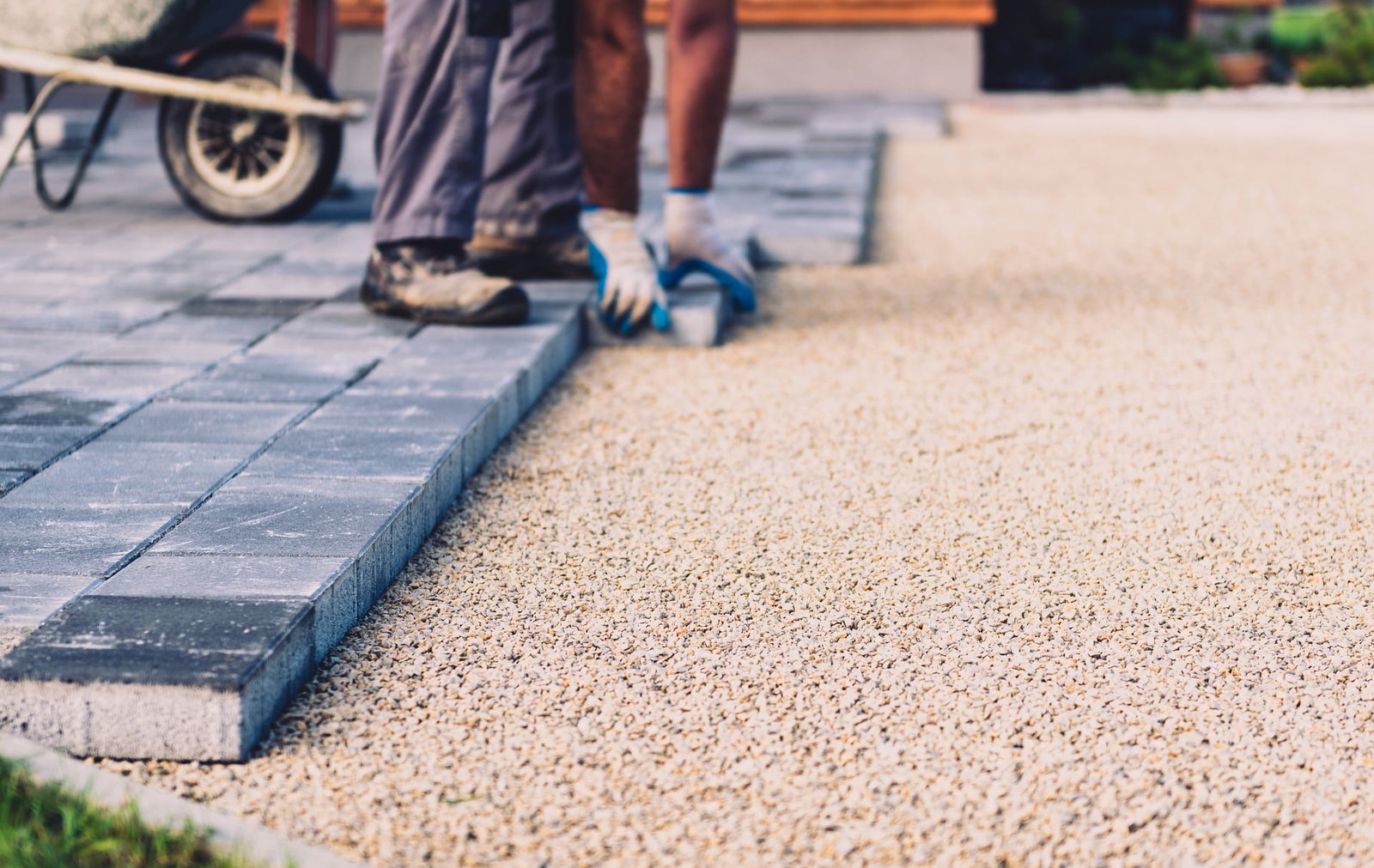
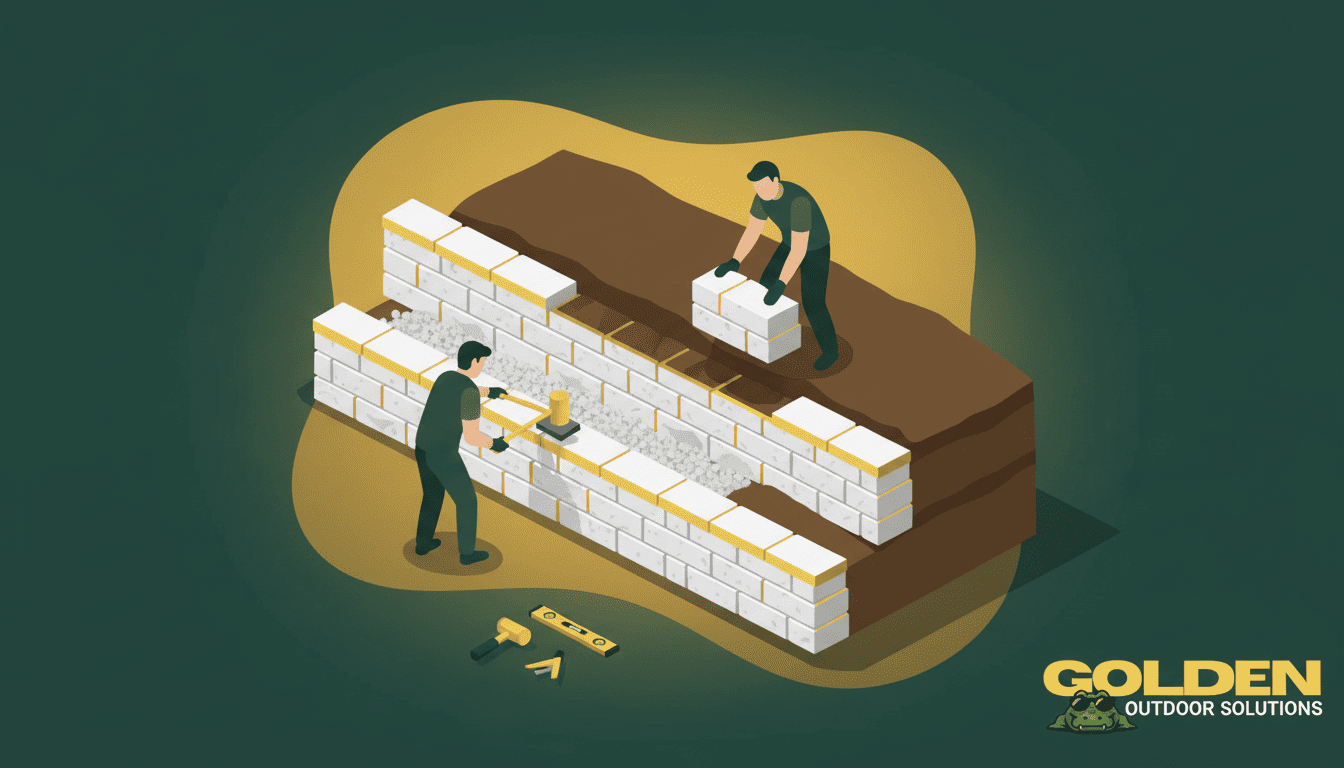
Finding the right retaining wall ideas Florida homeowners can build with confidence requires more than choosing a design you like online. Florida’s sandy soil, heavy rainfall, and high water table create unique structural demands. The right retaining wall solves drainage and erosion problems while adding genuine visual value to the property. This guide covers the best materials, design options, costs, and planning tips for Central Florida retaining wall projects.
Why Retaining Walls in Florida Are a Structural Decision First
In Florida, retaining walls do more than define spaces — they actively manage soil movement and water flow. Sandy soil shifts easily under pressure and after heavy rain. As a result, a poorly designed wall fails faster here than in most other states.
Beyond that, Florida’s water table is exceptionally high in many areas. Hydrostatic pressure builds up behind walls that lack proper drainage. Therefore, drainage design is not optional — it is a core structural requirement for any Florida retaining wall project.
Retaining Wall Ideas Florida: Best Materials
Material choice affects durability, appearance, cost, and maintenance. Each option performs differently in Florida’s specific conditions. Here is a clear breakdown of the most used materials across Central Florida projects.
Concrete Block (CMU)
Concrete masonry units are the most structurally reliable option for Florida retaining walls. They handle hydrostatic pressure effectively when properly reinforced and drained. Additionally, they resist Florida’s moisture, UV exposure, and soil movement better than most alternatives.
However, raw concrete block is not visually appealing on its own. Most projects apply a stucco finish, stone veneer, or decorative facing to achieve the desired look. The result combines structural strength with a polished appearance that complements Florida residential properties.
Segmental Retaining Wall Blocks
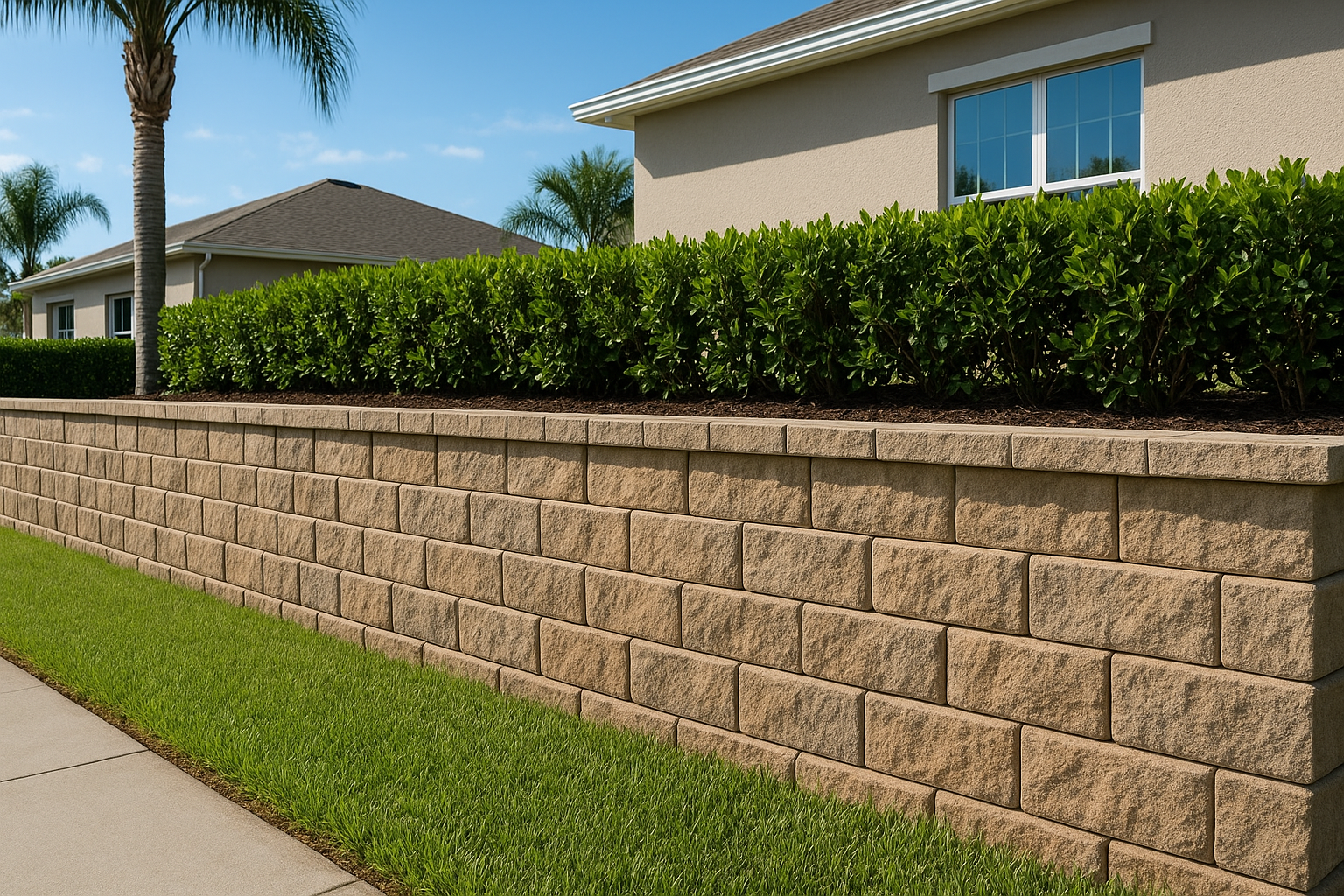
Segmental blocks — such as Allan Block or Versa-Lok — are interlocking concrete units designed specifically for retaining wall construction. They install without mortar and allow natural drainage through the wall face. Furthermore, their modular nature makes repairs straightforward when individual units shift or crack over time.
For walls under four feet, segmental blocks are a practical and cost-effective choice. Taller walls, in contrast, require engineering review and geogrid reinforcement to meet Florida building code requirements.
Natural Stone
Natural stone walls — built with limestone, coquina, or fieldstone — deliver exceptional visual character. They are particularly well suited to properties with a tropical or old Florida aesthetic. Moreover, dry-stacked natural stone allows water to pass through the wall naturally, which reduces hydrostatic pressure without engineered drainage systems.
On the other hand, natural stone requires skilled installation to maintain structural integrity over time. Poorly laid stone walls settle and collapse faster than block walls in Florida’s shifting sandy soil. Professional installation is essential for any natural stone retaining wall project.
Poured Concrete
Poured concrete walls offer maximum structural strength for taller applications. They are commonly used in commercial projects and high-load residential situations — such as retaining walls adjacent to driveways or structures. Similarly, they perform well when engineered drainage is incorporated correctly during the pour.
The limitation is cost and finish. Poured concrete is more expensive than block alternatives. Additionally, the raw surface requires a decorative finish to suit most residential applications. However, for walls over six feet or with significant soil load, poured concrete is often the most appropriate solution.
Timber and Railroad Ties
Timber walls were once common in Florida landscaping. Today, however, they are rarely recommended for new construction. Wood degrades rapidly in Florida’s humidity and pest-rich environment. Termite damage and rot reduce the lifespan of timber walls significantly compared to concrete and stone alternatives. For this reason, most experienced Florida contractors now steer clients toward masonry solutions.
Retaining Wall Ideas Florida: Design Directions
Structure and style do not have to be separate decisions. The right design integrates the wall into the landscape as a visual feature — not just a functional barrier. These are the most requested design directions for Central Florida retaining wall projects.
Tiered Garden Walls
Tiered walls break a steep grade into multiple flat planting levels. Each tier creates a defined horizontal zone. As a result, sloped yards transform into usable terraced spaces. This approach is particularly effective on properties with significant elevation changes across the rear yard.
Curved Accent Walls
Curved retaining walls soften the geometry of a yard. They work well with segmental blocks, which stack naturally into gradual curves. Furthermore, curved walls pair effectively with pool deck surrounds and garden bed borders — adding a flowing, organic quality to the overall landscape design.
Straight Structural Walls With Stone Veneer
A straight concrete block wall with a stacked stone or ledger stone veneer delivers a clean, modern look. This combination is common in Central Florida new construction and renovation projects. In addition, the veneer makes the wall visually consistent with the home’s exterior finishes — which strengthens the overall property aesthetic.
Low Landscape Borders
Not every retaining wall is a tall structural element. Low walls — under two feet — function as raised garden bed borders, driveway edging, or patio frame elements. They require less engineering and permit scrutiny. However, they still need proper base preparation and drainage consideration to perform well in Florida’s soil conditions.
Drainage: The Most Critical Factor in Florida Retaining Walls
No retaining wall discussion in Florida is complete without addressing drainage directly. Water is the primary cause of retaining wall failure in this state. Therefore, every wall — regardless of height or material — requires a drainage strategy.
Behind the wall, a gravel backfill layer allows water to move freely rather than accumulate. Additionally, a perforated drain pipe at the base of the gravel layer directs water away from the wall footing. Weep holes through the wall face — placed every four to six feet — relieve pressure that builds after heavy rain.
Without these elements, hydrostatic pressure pushes walls outward and eventually causes failure. Even well-built walls crack and lean when drainage is ignored. For context on how surface drainage connects to paver and patio systems, our post on paver maintenance in Florida covers the full drainage picture around hardscape surfaces.
Florida Building Code and Permits for Retaining Walls
In Florida, retaining walls over a certain height typically require a building permit and engineering approval. The specific threshold varies by county — but walls exceeding four feet from the base to the top of the wall commonly trigger permit requirements across Central Florida jurisdictions.
Additionally, walls adjacent to property lines, pools, or structures face additional setback and structural review requirements. As a result, working with a licensed contractor who handles the permit process is not just convenient — it is essential for protecting the homeowner from liability and ensuring the wall meets local code.
The Florida Building Commission publishes current residential construction standards that apply to retaining wall projects statewide. Always verify local county requirements before beginning any wall project.
Retaining Wall Cost in Florida: Realistic Ranges
Retaining wall costs in Florida vary based on material, wall height, length, and site conditions. Here is a straightforward cost breakdown for Central Florida projects.
| Material | Installed Cost Range (per linear foot) |
|---|---|
| Segmental Block | $25 – $45 |
| Concrete Block (CMU) | $35 – $60 |
| Natural Stone | $45 – $85 |
| Poured Concrete | $55 – $100+ |
These ranges reflect installed costs including excavation, base preparation, drainage, and labor in the Central Florida market. Taller walls, difficult access, and engineered drainage systems all increase final cost. An on-site assessment always produces a more accurate number than any square footage estimate alone.
How to Plan Your Florida Retaining Wall Project
Start by identifying the primary function of the wall. Is it solving an erosion problem? Creating a flat usable zone in a sloped yard? Framing a garden bed or patio edge? The answer shapes every decision — from material to height to drainage design.
Next, assess the soil and drainage conditions at the site. Florida’s sandy soil drains quickly in some areas and holds water in others — particularly near low-lying lots or properties with high water tables. A professional site visit identifies these conditions before they become problems mid-project.
Finally, verify permit requirements with your local county building department before construction begins. Starting without required permits creates legal and financial risk that is entirely avoidable with proper planning. Our team at Golden Outdoor Solutions manages the full permit process as part of every retaining wall project we deliver across Central Florida.
For a broader view of how retaining walls connect to complete backyard transformations, our resource on Florida backyard projects shows the range of outdoor living environments our team has built for Central Florida homeowners.
Ready to build your retaining wall? Contact Golden Outdoor Solutions for a free on-site consultation. Browse our completed projects gallery to see retaining wall installations across Central Florida. Follow us on Instagram and Facebook for design ideas and project updates. Read client reviews on Google. Reach us via WhatsApp, by phone at +1 (321) 745-9047, or by email at contact@goldenoutdoorsolutions.com — we serve homeowners throughout Central Florida. 🧱✨