Retaining walls in Florida are essential structural systems designed to control soil movement, prevent erosion, and manage drainage in landscapes exposed to heavy rainfall and unstable sandy soil. Florida’s frequent storms and high water tables create conditions where unmanaged elevation changes can quickly lead to property damage.
When properly engineered, retaining walls stabilize slopes, protect foundations, and preserve outdoor spaces. However, poor design or improper drainage often results in wall failure.
Understanding how retaining walls in Florida function helps homeowners avoid structural risk and long-term repair costs.
Why Retaining Walls Are Critical in Florida
Florida landscapes commonly feature:
- Sandy or loose soil
- Sudden heavy rain events
- Rapid water runoff
- High groundwater levels
- Gradual elevation changes
Without structural support, soil shifts and erosion can undermine patios, driveways, and foundations.
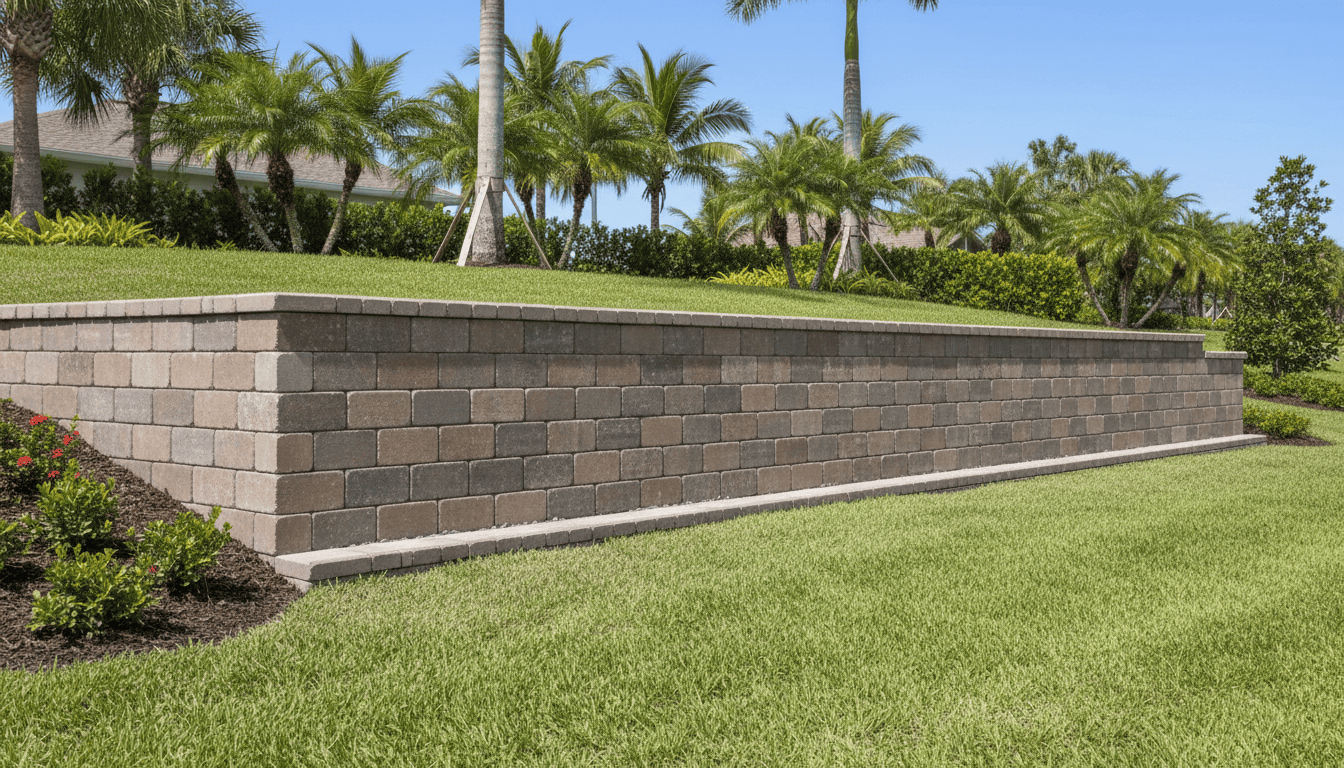
Retaining walls in Florida serve as barriers that resist lateral earth pressure while directing water away from vulnerable areas.
How Retaining Walls Work
A retaining wall is not just a vertical structure. It is a complete system composed of:
- Excavated footing
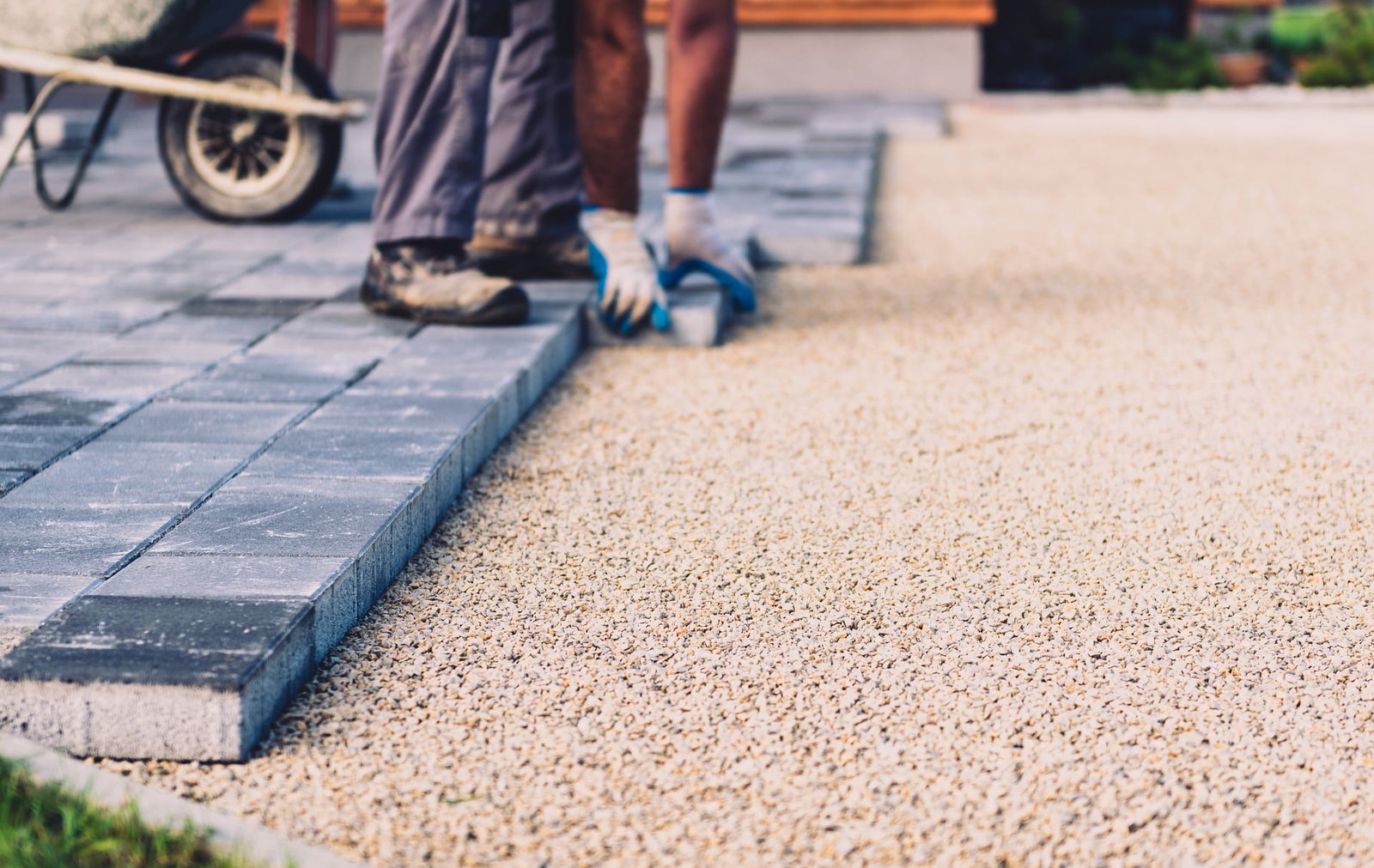
- Compacted aggregate base
- Reinforced wall structure
- Drainage gravel backfill
- Geotextile separation
- Water relief system
These components work together to prevent hydrostatic pressure buildup.
Hydrostatic pressure — the force created by water accumulation behind a wall — is the most common cause of failure.
Drainage: The Most Important Factor
Retaining walls in Florida must include engineered drainage.
Without proper water management, pressure builds behind the wall during storms.
Professional drainage solutions include:
- Perforated drainage pipe
- Gravel backfill
- Drainage fabric
- Proper grading
- Weep holes when necessary
Drainage design determines long-term performance.
Common Causes of Retaining Wall Failure
Homeowners often encounter problems due to:
- Insufficient excavation
- Poor compaction
- Lack of drainage
- Using decorative walls for structural support
- Ignoring soil conditions
Retaining walls in Florida require structural engineering principles — not just decorative block stacking.
Signs Your Property Needs a Retaining Wall
Warning signs include:
- Soil erosion after rain
- Sloped yard instability
- Pooling water near foundation
- Cracks in patios or driveways
- Exposed roots or soil washout
Early installation prevents larger structural damage.
Materials Used in Florida Retaining Walls
Common materials include:
- Segmental concrete blocks
- Reinforced masonry systems
- Engineered stone systems
Material selection depends on height, load requirements, and drainage needs.
Structural Engineering Considerations
Professional retaining walls in Florida must account for:
- Wall height
- Soil composition
- Surcharge loads
- Drainage flow patterns
- Compaction density
Walls retaining more than minor elevation changes often require reinforced systems and precise engineering.
Retaining Walls vs Decorative Garden Walls
Not all walls retain soil.
Decorative garden walls:
- Are lower in height
- Do not resist significant pressure
- Focus on aesthetics
Retaining walls in Florida are structural systems built to resist lateral load.
Using decorative walls for soil retention often leads to collapse.
Long-Term Maintenance
Properly installed retaining walls require minimal maintenance.
Recommended upkeep:
- Monitor drainage outlets
- Check for soil movement
- Inspect after heavy storms
- Maintain surrounding grading
Prevention ensures longevity.
Property Value and Safety
Retaining walls in Florida:
- Protect landscaping
- Preserve patios and driveways
- Improve drainage performance
- Enhance structural safety
- Increase property value
They transform unstable slopes into functional outdoor spaces.
Ready to renew your pool’s surface?
📞 Contact Golden Outdoor Solutions at +1 (321) 745-9047 or email contact@goldenoutdoorsolutions.com for a free resurfacing consultation anywhere in Central Florida.
Conclusion
Retaining walls in Florida are structural necessities in landscapes affected by erosion, heavy rainfall, and soil instability. Proper engineering and drainage planning prevent hydrostatic pressure buildup and long-term failure.
Investing in professionally installed retaining walls protects both your home and your outdoor living environment.