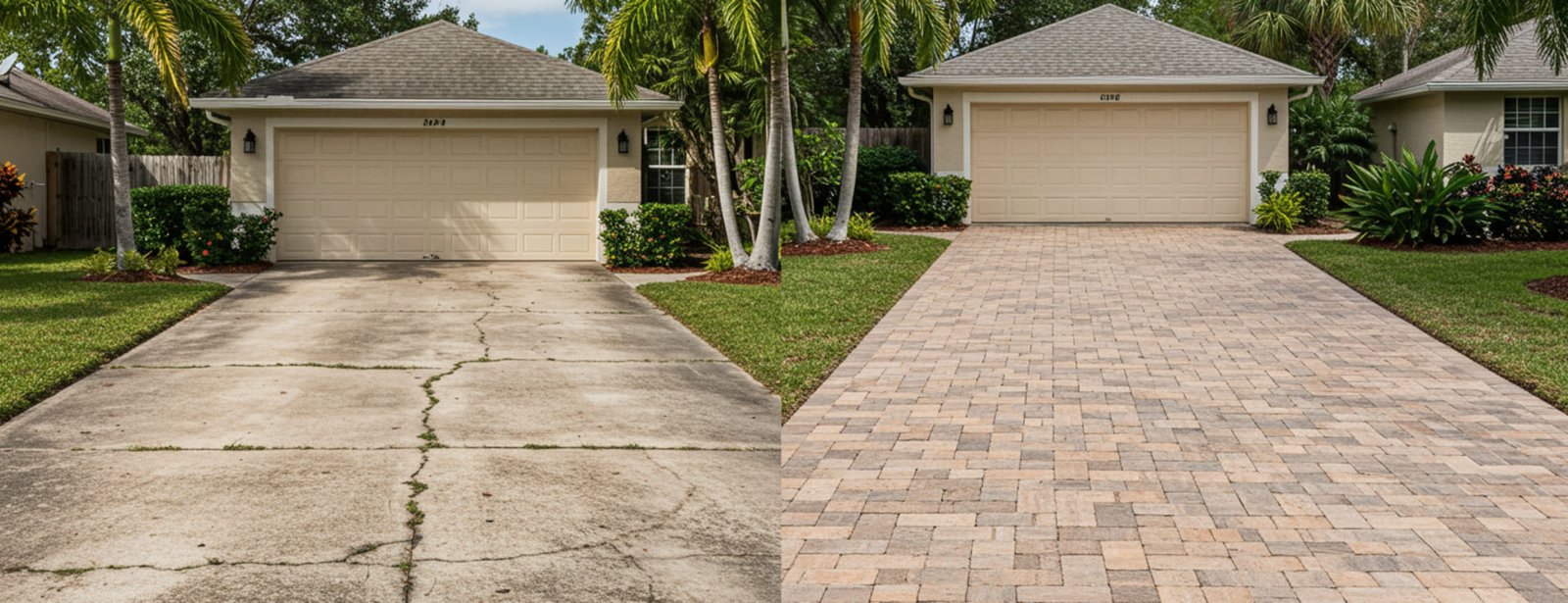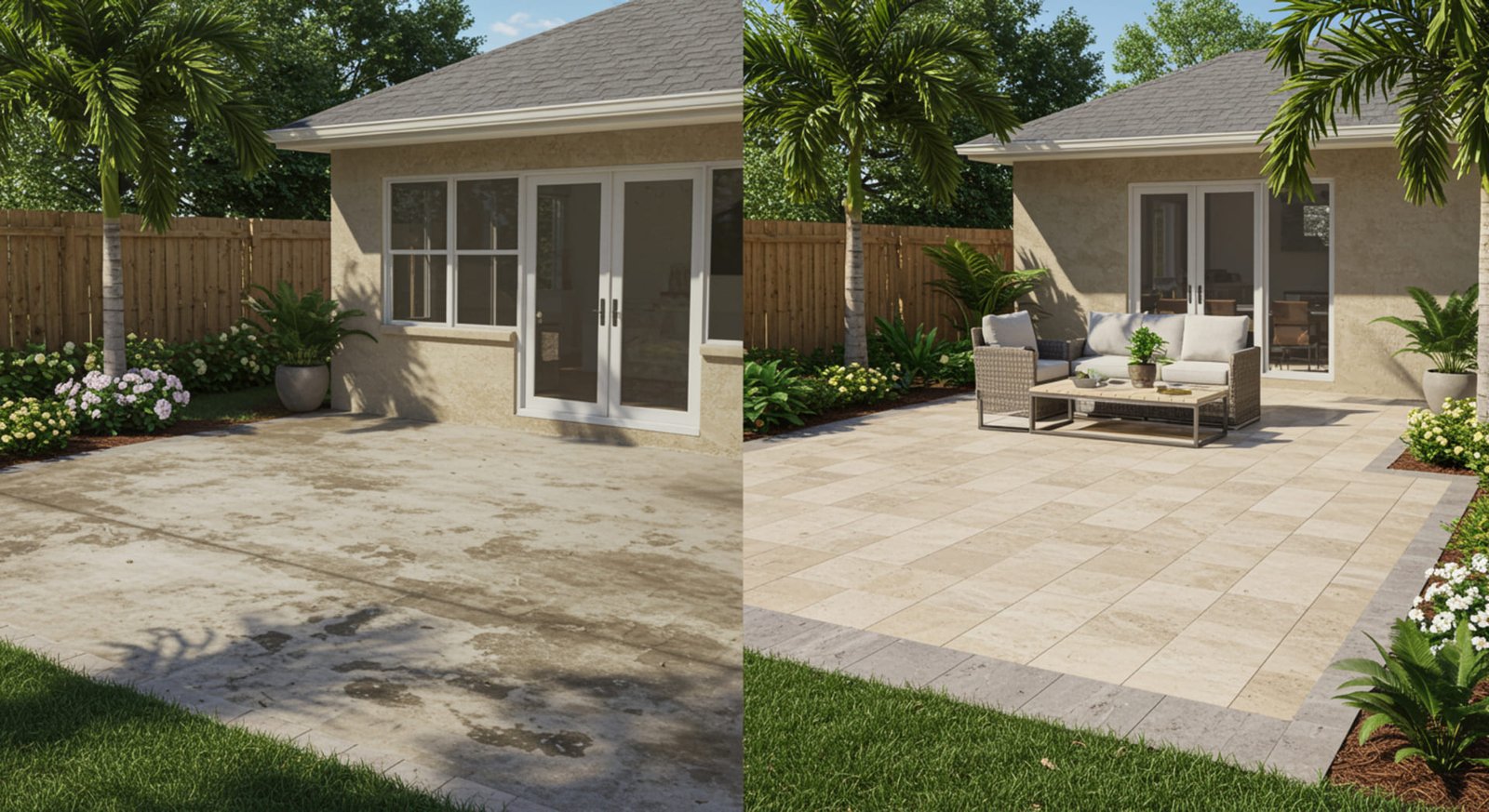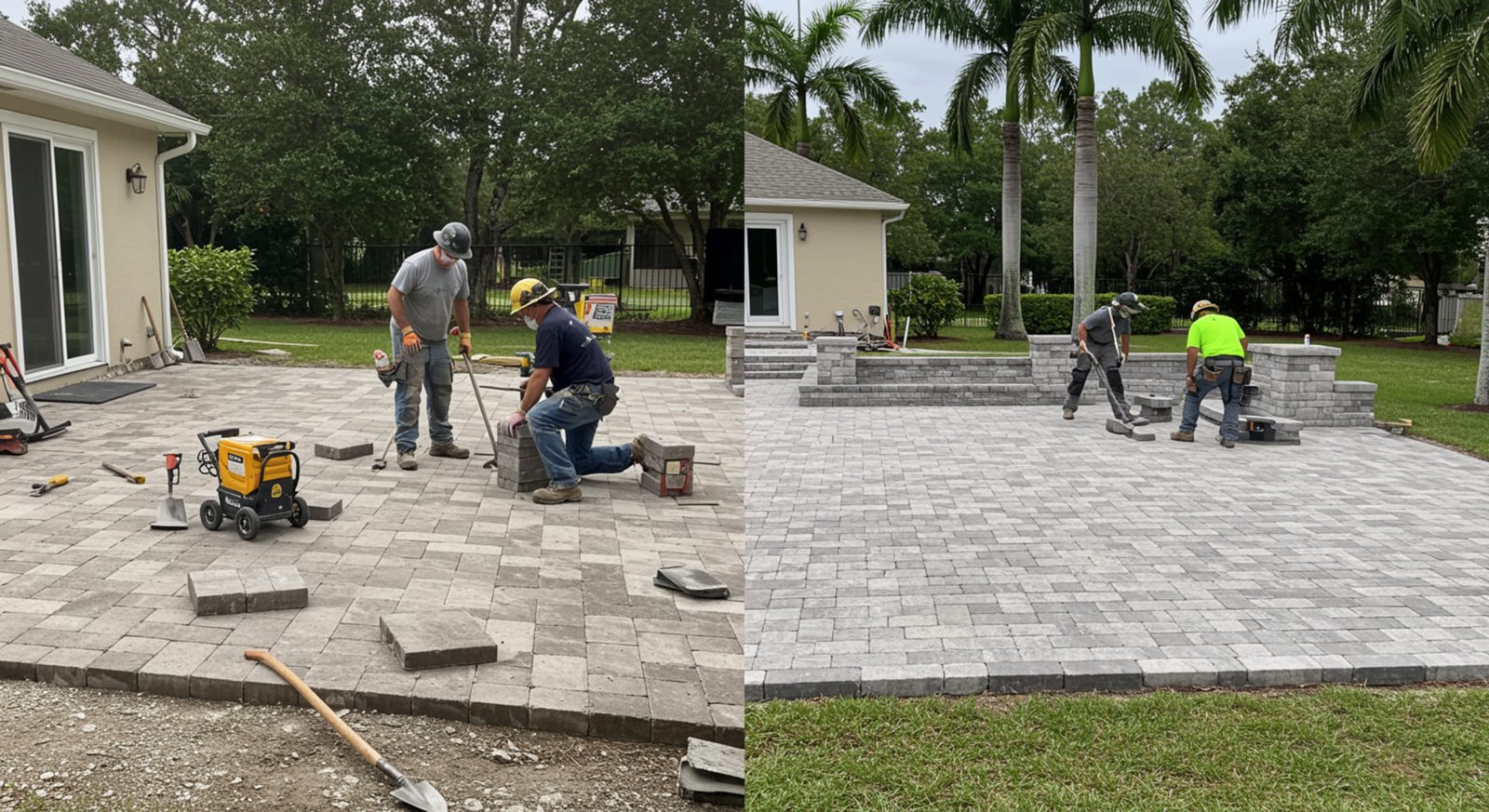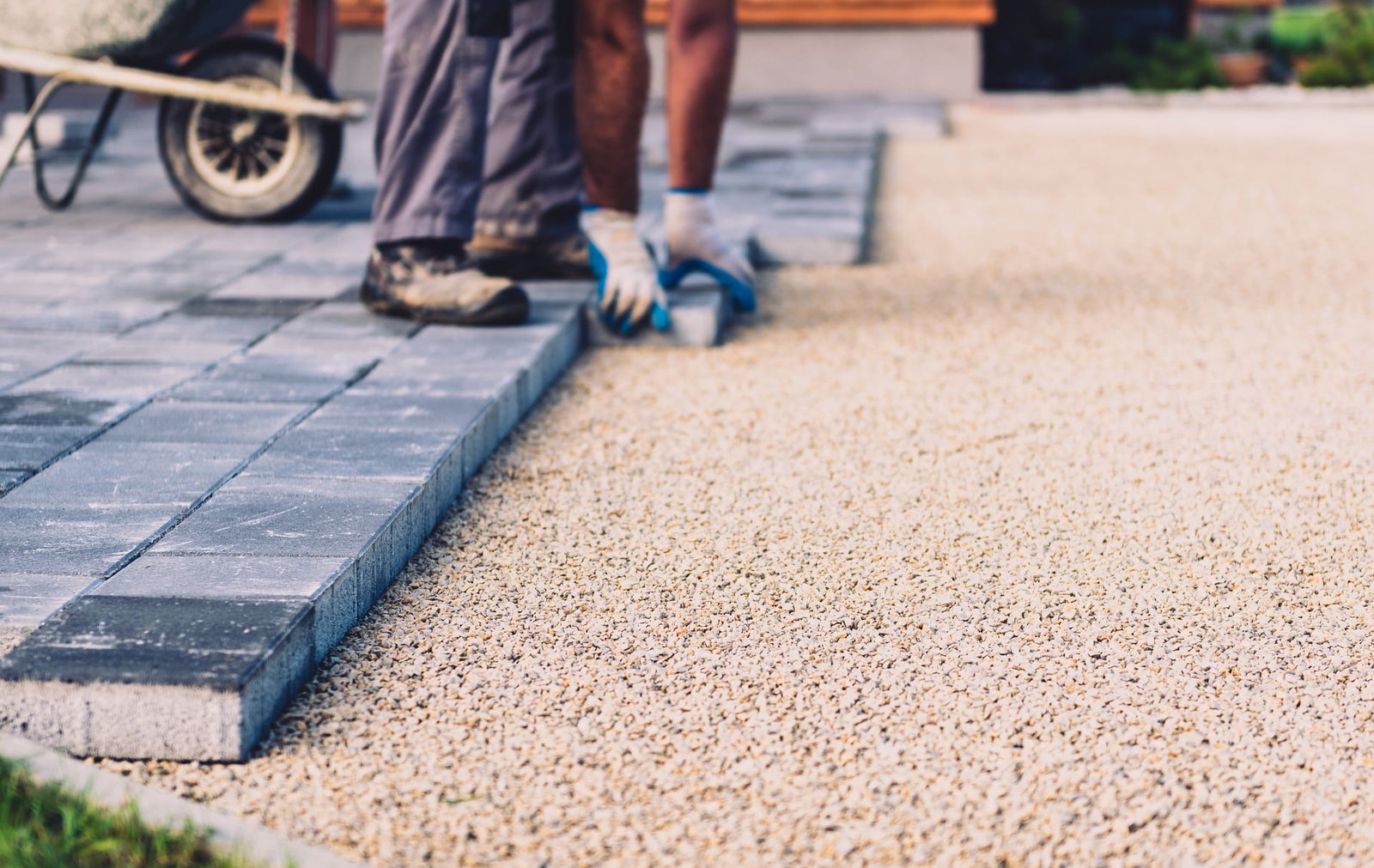

Proper paver maintenance in Florida is the single most important factor in how long your investment lasts and how good it looks over time. Florida’s intense UV exposure, heavy seasonal rainfall, high humidity, and organic growth create a demanding environment for any outdoor surface — and pavers are no exception. However, with a consistent maintenance routine, pavers installed today can look sharp and perform reliably for decades.
This guide covers everything Central Florida homeowners need to know: cleaning methods, sealing schedules, joint sand maintenance, weed and moss control, and how to handle common paver problems before they escalate into expensive repairs. Furthermore, it clarifies which tasks homeowners can handle themselves and which ones benefit from professional attention.
Why Paver Maintenance in Florida Is Different From Other States
Florida’s climate creates maintenance demands that homeowners relocating from northern states rarely anticipate. First, the UV index in Central Florida reaches extreme levels for the majority of the year. Consequently, paver sealers degrade faster here than in cooler climates — often requiring reapplication every one to two years rather than the three to five years typical in other regions. Then, the wet season delivers concentrated, heavy rainfall that saturates joint sand, promotes weed germination, and accelerates biological growth on paver surfaces.
In addition, Florida’s humidity creates near-perfect conditions for algae, mold, and mildew to establish on porous paver surfaces. As a result, a paver surface that looks clean in spring can develop a slippery green film by midsummer without regular attention. Furthermore, Florida’s sandy soil shifts seasonally — meaning pavers installed without proper base compaction or edge restraints gradually shift, sink, or develop uneven joints over time.
Most importantly, maintenance in Florida is not optional — it is structural. Skipping routine care does not just affect appearance. It allows small problems to compound into joint failure, surface staining, weed infestation, and eventually paver displacement that requires professional repair. In other words, a small investment of time and money annually prevents a much larger repair bill every few years.
Paver Maintenance Florida: The Annual Care Schedule
Effective paver maintenance in Florida follows a predictable seasonal rhythm. Understanding what to do and when protects your surface year-round without unnecessary effort or expense.
Spring: Inspection and Preparation
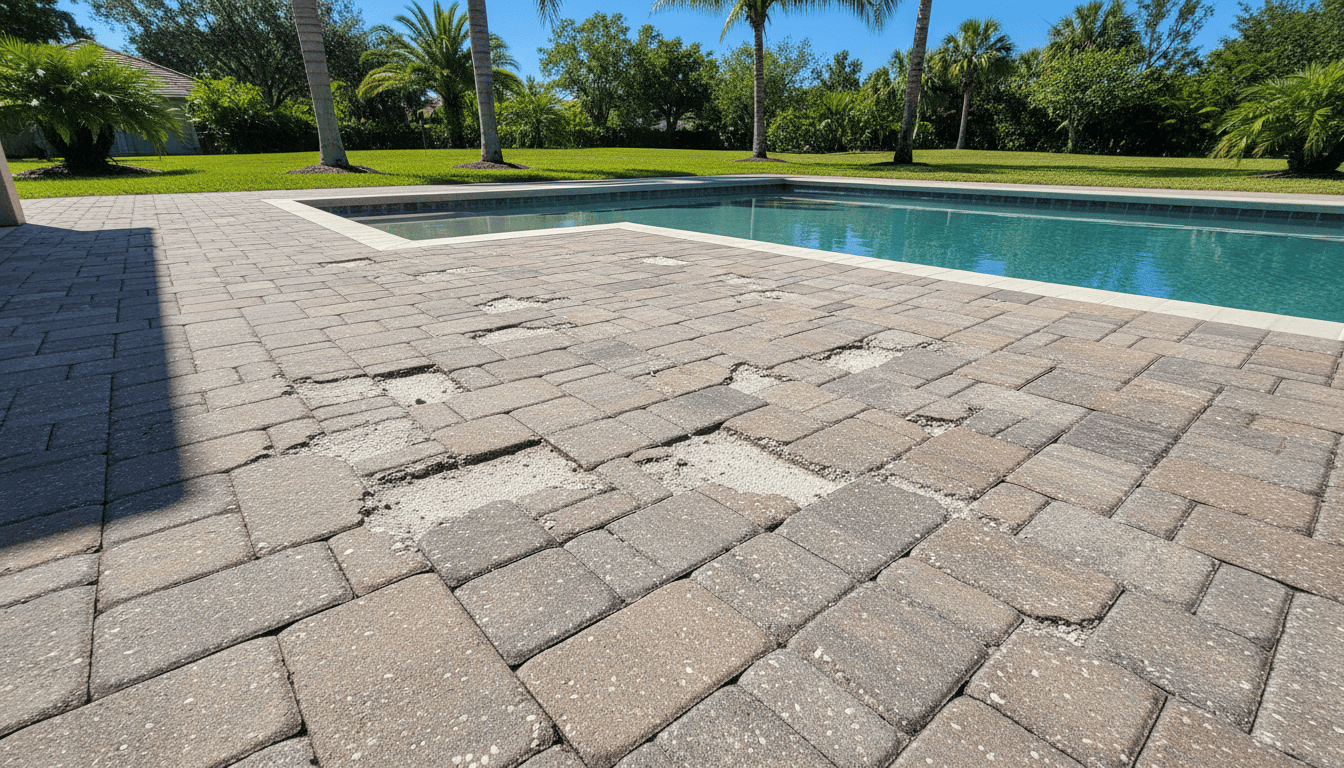
Spring is the ideal time for a thorough paver inspection after the cooler months. First, walk the entire surface and look for shifted or sunken pavers, widened joints, cracked units, and any areas where edge restraints show signs of movement. Then, note any weed growth emerging from joints — early spring is the easiest time to address weeds before they establish deep root systems.
In addition, check the sealer condition across the surface. Pour a small amount of water onto the pavers — if it beads and rolls off, the sealer remains effective. However, if water absorbs immediately into the surface, resealing should move to the top of your spring task list. Furthermore, inspect the perimeter edge restraints for any sections that have shifted, cracked, or separated from the paver field. Addressing these early prevents accelerated spreading during the wet season ahead.
Late Spring to Early Summer: Cleaning and Sealing
Late spring — just before the wet season begins — is the optimal window for pressure washing and resealing. First, pressure wash the entire paver surface using a surface cleaner attachment at moderate pressure. High pressure concentrated directly on joints can dislodge sand and damage softer paver faces. Therefore, keep nozzle pressure appropriate for the paver material — travertine and softer stone require gentler treatment than dense concrete pavers.
Then, allow the surface to dry completely — typically 24 to 48 hours in Florida’s heat. After that, apply polymeric joint sand to any joints that appear low, loose, or depleted. Finally, apply a high-quality paver sealer appropriate for your specific material. Most importantly, never seal pavers while moisture remains in the joints or surface — trapped moisture beneath a sealer coat causes clouding and adhesion failure that requires full stripping to correct.
Wet Season: Monitoring and Spot Treatment
Florida’s wet season runs roughly from June through September. During this period, focus on monitoring rather than major maintenance tasks. After significant rainfall events, check low-lying areas of your paver surface for pooling water. Similarly, look for any joints where sand has washed out — these open joints invite accelerated weed germination and ant colonization.
In addition, spot-treat any algae or moss growth promptly using a paver-safe biological cleaner. Allowing biological growth to establish during the wet season makes end-of-season cleaning significantly harder. Furthermore, remove fallen leaves and organic debris regularly — decomposing organic matter stains light-colored pavers and feeds moss and mildew colonies that thrive in Florida’s humid conditions.
Fall and Winter: Deep Clean and Touch-Up
Florida’s dry season — October through May — provides ideal conditions for deeper cleaning and any repair work that the wet season may have revealed. First, perform a thorough pressure wash to remove biological growth accumulated during summer. Then, address any joints that need sand replenishment and any individual pavers that have shifted or settled during the wet season’s soil movement.
In addition, this is the best time to apply a fresh sealer coat if the spring application has worn through. Dry conditions allow proper curing and maximum sealer penetration. Furthermore, cooler temperatures during Florida’s mild winter make working conditions more comfortable for both homeowners performing light maintenance and contractors completing more involved repair work.
How to Clean Pavers in Florida: Step-by-Step
Cleaning is the foundation of effective paver maintenance in Florida. A clean surface resists biological growth, accepts sealer more effectively, and reveals underlying issues that need attention. However, incorrect cleaning technique damages paver faces and joint integrity — so method matters as much as frequency.
- Step 1 — Remove debris: Blow or sweep loose debris, leaves, and dirt from the entire surface before introducing water.
- Step 2 — Pre-treat stains: Apply a paver-safe degreaser or stain remover to oil stains, rust marks, or organic discoloration. Allow dwell time per product instructions.
- Step 3 — Pressure wash: Use a surface cleaner attachment at 1,200 to 1,800 PSI for concrete pavers. Use lower pressure — 800 to 1,200 PSI — for travertine and natural stone. Work in consistent overlapping passes.
- Step 4 — Rinse thoroughly: Flush all cleaning product residue from the surface and joints completely. Residue left in joints degrades polymeric sand and sealer adhesion.
- Step 5 — Allow full drying: Wait 24 to 48 hours before applying joint sand or sealer. In Florida’s humidity, full drying may require additional time during the wet season.
- Step 6 — Inspect joints: After cleaning, assess joint sand levels while the surface is still visible and damp — low joints appear as dark voids and identify clearly.
Paver Sealing in Florida: Why It Matters and When to Do It
Sealing is the most impactful single maintenance step for paver surfaces in Florida. A quality sealer performs four critical functions simultaneously: it locks joint sand in place, blocks UV degradation that fades color, repels water and chemical staining, and inhibits biological growth by eliminating the porous entry points that algae and mold use to colonize the surface.
In Florida, most paver surfaces benefit from resealing every one to two years. However, high-traffic areas — driveways in particular — may need attention annually. Furthermore, the sealer type matters significantly. Water-based acrylic sealers provide a natural or satin finish with good UV resistance and are the most forgiving for DIY application. Solvent-based sealers deliver a wet-look or gloss finish with stronger stain resistance but require more precise application technique and adequate ventilation.
Most importantly, always test a small inconspicuous area before sealing the entire surface. Some sealers alter color tone noticeably — especially on lighter travertine or cream-toned concrete pavers. In addition, never apply sealer over a previous coat that has not fully worn through — incompatible sealer layers trap moisture and create a cloudy, peeling finish that requires chemical stripping before any corrective resealing.
Joint Sand: The Most Overlooked Part of Paver Maintenance in Florida
Joint sand is the structural glue that holds a paver system together. It locks individual units in place, prevents lateral movement, and blocks weed germination and insect colonization beneath the surface. However, most homeowners give joint sand almost no attention until visible problems — shifting pavers, weed growth, or ant mounds — appear.
In Florida, standard bedding sand in joints depletes over time through rainfall washout, foot traffic, and settling. Therefore, polymeric joint sand — a blend of fine sand and polymer binders that hardens when activated with water — represents the best option for most residential paver surfaces in this climate. Once cured, polymeric sand resists washout, inhibits weed germination, and discourages ant activity far more effectively than plain sand.
Furthermore, reapplying joint sand every three to five years — or immediately whenever joints appear visibly depleted — prevents the accelerating cycle of paver movement that depleted joints enable. In other words, a $150 bag of polymeric sand applied at the right time prevents hundreds or thousands of dollars in paver resetting and repair costs further down the line.
Weed and Biological Growth Control on Florida Pavers
Weed growth through paver joints is one of the most common complaints from Florida homeowners. Florida’s warm climate and year-round growing season mean that weed seeds germinate in joint sand almost continuously. However, the solution is preventive rather than reactive — addressing the conditions that allow weeds to establish is far more effective than pulling weeds repeatedly after the fact.
First, polymeric joint sand dramatically reduces weed germination by eliminating the loose, organic-rich soil environment that seeds need to establish. Then, a quality sealer applied over filled joints blocks both UV light to the joint and moisture infiltration — further discouraging germination. In addition, a paver-safe pre-emergent herbicide applied twice yearly — typically in early spring and early fall — provides chemical protection against the most persistent weed species in Central Florida.
Similarly, algae and moss control requires a two-step approach. First, remove existing growth with a biological cleaner or diluted sodium hypochlorite solution appropriate for the paver material. Then, apply sealer to eliminate the porous surface that biological organisms need to attach and grow. In contrast, spot-spraying weeds with standard herbicide without addressing joint sand or sealing simply delays regrowth by a few weeks — it does not solve the underlying problem.
When to Call a Professional for Paver Maintenance
Many routine paver maintenance tasks fall within homeowner capability. However, certain situations genuinely require professional assessment and intervention to achieve durable results. Recognizing that line prevents both wasted DIY effort and unnecessarily delayed professional repairs.
Paver Maintenance Florida: Professional Situations
Call a professional when pavers show widespread settling or unevenness across multiple areas — this indicates a base or drainage problem that surface maintenance cannot resolve. Similarly, if more than 10 to 15 percent of individual pavers show cracking, chipping, or surface spalling, a professional assessment determines whether targeted replacement or a broader repair approach makes more economic sense.
In addition, persistent drainage issues — pooling water that remains hours after rainfall — require professional drainage correction before any surface maintenance delivers lasting results. Furthermore, if edge restraints have failed and the paver field has spread visibly along perimeter edges, professional resetting with new restraint installation is necessary. Most importantly, attempting to reseal a surface with active drainage problems or failed joints produces a short-lived result regardless of the sealer quality used.
For homeowners dealing with more extensive surface deterioration, our post on outdoor patio renovation in Florida outlines when a renovation approach makes more sense than incremental repairs — and what a full patio upgrade involves from start to finish.
Common Paver Maintenance Mistakes Florida Homeowners Make
Several maintenance mistakes consistently shorten paver lifespan and increase long-term costs for Florida homeowners. First, using a zero-degree pressure washer nozzle directly on pavers causes surface erosion and joint sand removal — always use a rotating surface cleaner or a wider fan tip. Then, applying sealer too frequently without testing the existing coat creates incompatible layer buildup that clouds the surface and requires expensive stripping to correct.
In addition, ignoring individual shifted or sunken pavers allows the surrounding field to destabilize progressively. One settled paver creates an opening for water to undercut the base, which then affects adjacent units — turning a $50 repair into a $500 resetting project within a single wet season. Furthermore, using standard household bleach at full concentration on certain paver materials — particularly natural stone and travertine — causes surface etching and permanent discoloration.
Most importantly, skipping the spring inspection after Florida’s mild winter means entering the wet season with undetected joint failures, depleted sand, and compromised sealer — the three conditions that guarantee accelerated deterioration during the most demanding months of the year. In other words, the spring inspection is the single highest-value maintenance action Florida paver owners can take.
For homeowners managing pavers as part of a broader driveway system, our resource on paver driveway installation in Florida explains the structural foundation details that directly influence how a paver surface ages and what maintenance it requires over time.
For technical guidance on Florida-specific landscape and outdoor surface management, the University of Florida IFAS Extension provides research-backed resources on surface materials, biological growth management, and soil behavior across Florida’s diverse climate zones — a valuable reference for homeowners who want to understand the science behind their maintenance decisions.
Ready to upgrade your driveway or patio? Contact Golden Outdoor Solutions today for a free consultation — you can also browse our completed projects gallery to see real paver installations and maintenance work across Central Florida. Follow us on Instagram and Facebook for seasonal maintenance tips and project inspiration, and read what our clients say on Google Reviews. Reach us directly via WhatsApp, by phone at +1 (321) 745-9047, or by email at contact@goldenoutdoorsolutions.com — we serve homeowners throughout Central Florida and are ready to help you protect and maintain your outdoor investment. 🌿✨