
Paver Driveway Cost in Palm Bay (2026): Prices, Swales, Permits, and What Drives the Number
Paver driveway cost in Palm Bay depends on lot length, the roadside drainage swale, and base prep as much as the pavers. Here is how to budget with confidence.
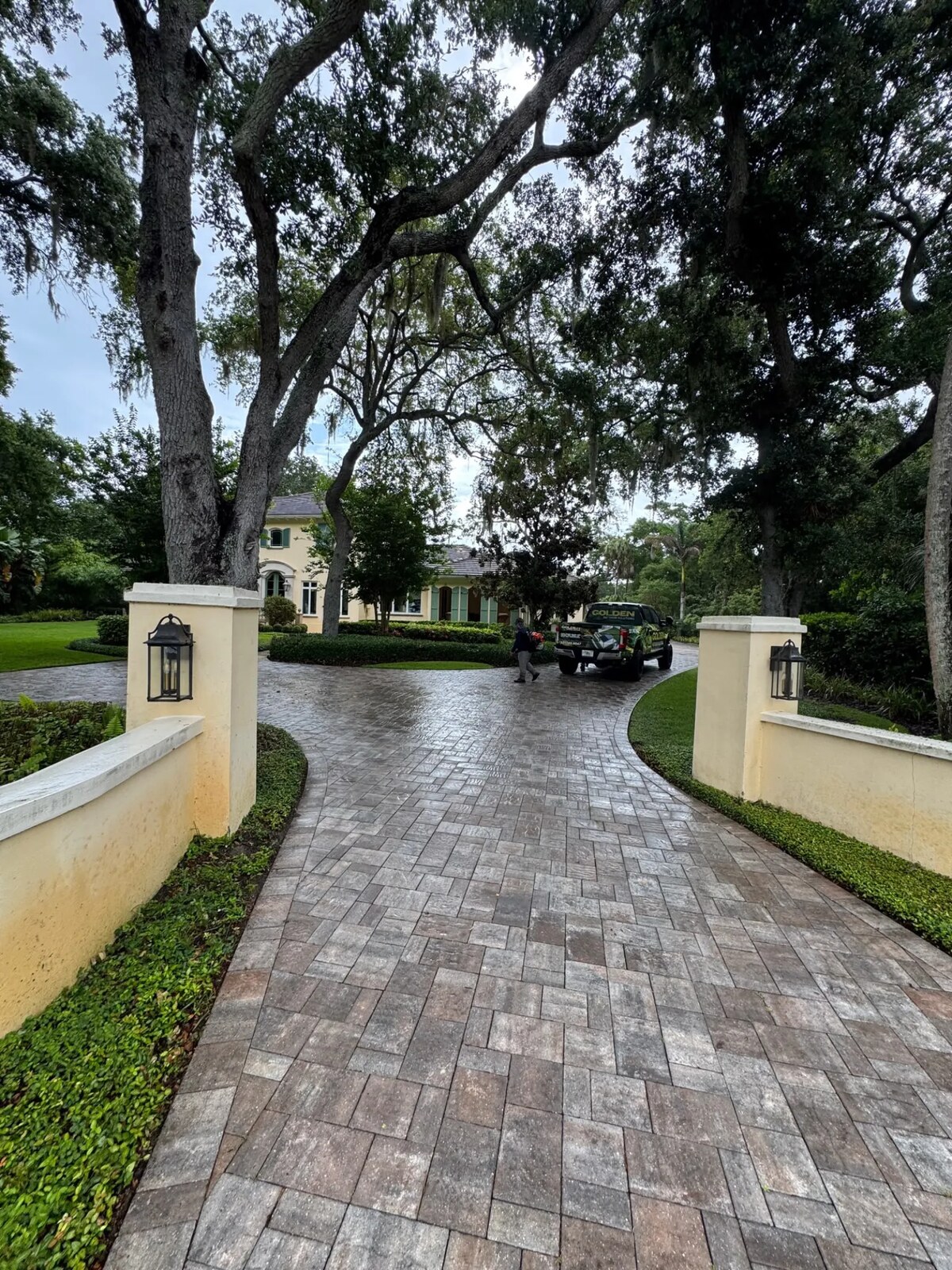
Palm Bay driveways come with a twist most Brevard cities do not share: deep lots, flat sandy ground, and a roadside drainage swale that a paver driveway has to work with, not against. That combination shapes both the size of the job and the price. This guide breaks down 2026 paver driveway costs in plain language.
How much does a paver driveway cost in Palm Bay?
A paver driveway in Palm Bay typically runs $12 to $22 or more per square foot installed, as of 2026. Per square foot the range matches the rest of Brevard, but Palm Bay's long driveways on deep GDC-platted lots mean the total project size, and the total cost, often runs higher than a compact lot elsewhere.
| Driveway scope | Standard install | Mid-range design | Premium build |
|---|---|---|---|
| Single-width approach | $12 – $15 / sq ft | $15 – $18 / sq ft | $18 – $21 / sq ft |
| Two-car width driveway | $13 – $16 / sq ft | $16 – $19 / sq ft | $19 – $22 / sq ft |
| Long lot or driveway with apron and culvert work | $14 – $17 / sq ft | $17 – $20 / sq ft | $20 – $22+ / sq ft |
Wondering what your project would cost? Get a free, no-obligation written quote for your exact space.
Get My Free EstimateThese are 2026 estimates for a professional install with real excavation, compaction, and edge restraint. Because so many Palm Bay lots have a long setback from the street, the smartest way to compare bids is by scope and total footprint together. For how a driveway fits alongside patios, walkways, and other hardscape, see the Brevard Paver & Outdoor Living Cost Guide.
What does the installed price actually include?
The installed price covers far more than the pavers. A professional Palm Bay quote typically includes demolition and haul-off, excavation, a compacted base, bedding sand, the pavers, cutting and edge labor, joint sand, apron work at the street, and cleanup. On many lots it also includes protecting or restoring the drainage swale, which is easy to miss in a rough quote.
That difference matters because Palm Bay's flat, sandy ground and high seasonal water table punish weak prep. A driveway set on a thin base over saturated sand will settle unevenly, and a driveway that blocks the swale will send water where it does not belong. The most useful quote spells out base depth, edge restraint, and how the swale is handled, instead of hiding those steps behind one number.
Do you need a permit for a paver driveway in Palm Bay?
Yes, in most cases. The City of Palm Bay requires a permit for a new, widened, or replaced driveway, and work in the right-of-way near the street is reviewed under the city's Land Development Code. Because Palm Bay drains through roadside swales rather than curb-and-gutter storm drains, the review pays close attention to the driveway apron.
That review is where the swale comes in. Where a drainage swale runs across the front of a lot, the city generally requires that it stay functional and that a correctly sized culvert pipe carry water under the driveway apron. You cannot simply pave over a swale. A contractor who works in Palm Bay regularly will size the culvert, set the apron grade, and handle the permit so the driveway passes inspection and the neighborhood drainage keeps working.
How do Palm Bay's soil and drainage change the job?
Palm Bay sits on flat, deeply sandy ground platted by the General Development Corporation in the 1960s, with a high water table across much of the west and southwest. That means excellent natural infiltration in some spots and standing water in others, so base preparation and grade are more important here than the paver choice itself.
The plan changes by neighborhood. On the older Port Malabar grid, lots are long and flat with roadside swales, so the driveway has to move water to the swale and over the culvert cleanly. In newer HOA communities like Bayside Lakes the grading is engineered but architectural rules apply, and out on the large acreage lots around Deer Run in the southwest, driveways can be long private runs where drainage and base stability over saturated sand matter even more. A paver driveway in Rockledge, by contrast, is more often about oak roots than swales, which is why the two projects are priced differently even at the same per-foot rate.
What factors move the final price the most?
The biggest cost drivers are total driveway length, base preparation, the swale and apron work, and demolition. On a deep Palm Bay lot, sheer footprint often matters as much as any design detail. The list below covers what moves the number most.
1. Lot length and total footprint
Deep GDC lots mean long driveways. More area equals more base, more pavers, and more labor, so the total climbs even when the per-foot rate stays the same.
2. Base preparation over sandy soil
Excavation depth and compaction over flat, sandy, high-water-table ground separate a driveway that stays flat from one that settles. This is not the place to cut corners.
3. Swale, culvert, and apron
Where a drainage swale crosses the front, a correctly sized culvert and a properly graded apron are usually required by the city and add a distinct line to the quote.
4. Demolition and haul-off
Removing an old concrete or asphalt driveway on a long lot adds real volume to haul off before the new base goes in.
5. Pattern, borders, and pavers
Herringbone, soldier-course borders, and premium paver lines raise material and cutting costs over a simple field pattern.
How should you compare quotes without guessing?
Compare by scope and total footprint, not by the headline total. First confirm base depth and compaction. Next verify the paver line, pattern, and any borders. Then check whether demolition, the swale and culvert, apron work, the city permit, and cleanup are listed. Finally ask what could change once the old driveway comes out.
- Preparation: demolition, haul-off, excavation, compaction, and edge restraint
- Core system: base depth, paver grade, and labor across the full driveway length
- Drainage: swale protection, culvert sizing, and apron grade at the street
- Local steps: City of Palm Bay permit and right-of-way review
- Exclusions: water-table corrections, extra grading, or change-order triggers
Because Palm Bay lots are deep, phasing is common. Some homeowners pave the approach and apron first, then extend toward a rear slab or add a paver patio in Viera style backyard build later once the base and drainage logic are set.
What is the most common budgeting mistake here?
The most common Palm Bay mistake is pricing only the visible driveway and ignoring the swale, the culvert, and the sheer length of the lot. A quote that skips the drainage apron may look cheaper until the city inspection flags it, or until the first heavy summer rain pools where the swale used to carry water. Scope clarity protects the budget far more than an optimistic low number.
Trying to save money on base prep is the other frequent misstep. Over flat, sandy, sometimes saturated ground, a shallow base is the fastest route to a driveway that ruts and settles. A smarter budget protects the base, the drainage, and the apron first, and treats decorative upgrades like premium borders as the safer place to trim.
Frequently Asked Questions
How much does a paver driveway cost in Palm Bay in 2026?
A paver driveway in Palm Bay typically costs $12 to $22 or more per square foot installed, as of 2026. The per-foot range matches Brevard County overall, but Palm Bay's long driveways on deep GDC lots mean the total project cost is often higher than on a compact lot, because there is simply more area to build.
Do I need a permit and a culvert for a paver driveway in Palm Bay?
Usually, yes. The City of Palm Bay requires a driveway permit, and where a roadside drainage swale crosses the front of a lot, a correctly sized culvert under the apron is typically required so the swale keeps carrying water. You cannot pave over a swale, so a local contractor should confirm the culvert and apron detail before work begins.
Why are Palm Bay driveways often more expensive overall?
Not because the price per square foot is higher, but because Palm Bay lots platted by the General Development Corporation tend to be long and deep. A driveway that runs a long way from the street to the garage covers more area, which means more base, more pavers, and more labor, raising the total even at a standard rate.
Will a paver driveway settle in Palm Bay's sandy soil?
Not if the base is built correctly. Palm Bay's flat, sandy ground and high water table make excavation depth and compaction critical. A properly compacted base with edge restraint keeps the surface stable, and because they are individual units, pavers can be lifted and reset if a section ever moves, which a poured slab cannot.
How do you make the final decision with confidence?
In Palm Bay, a good paver driveway decision comes down to three things the cheapest quote often ignores: the base over sandy soil, the drainage swale and culvert at the street, and the true length of your lot. Get those right and the driveway stays flat, passes inspection, and moves water where it belongs. Golden Outdoor Solutions provides a free, no-pressure on-site estimate with the full scope written down, so you can compare bids honestly and budget for the driveway your lot actually needs.
Lucas Furtado
Owner, Golden Outdoor Solutions
Lucas Furtado leads Golden Outdoor Solutions, a Brevard County paver and outdoor living contractor with 7+ years and 1,100+ completed projects across the Space Coast. Every quote is written after an on-site visit, with no pressure.
Ready to start your project?
Get a free, on-site estimate.
We measure on-site, look at your space, and send a clear written quote — no pressure, no runaround.
Part of our Paver & Outdoor Living Cost Guide for Brevard County (2026).