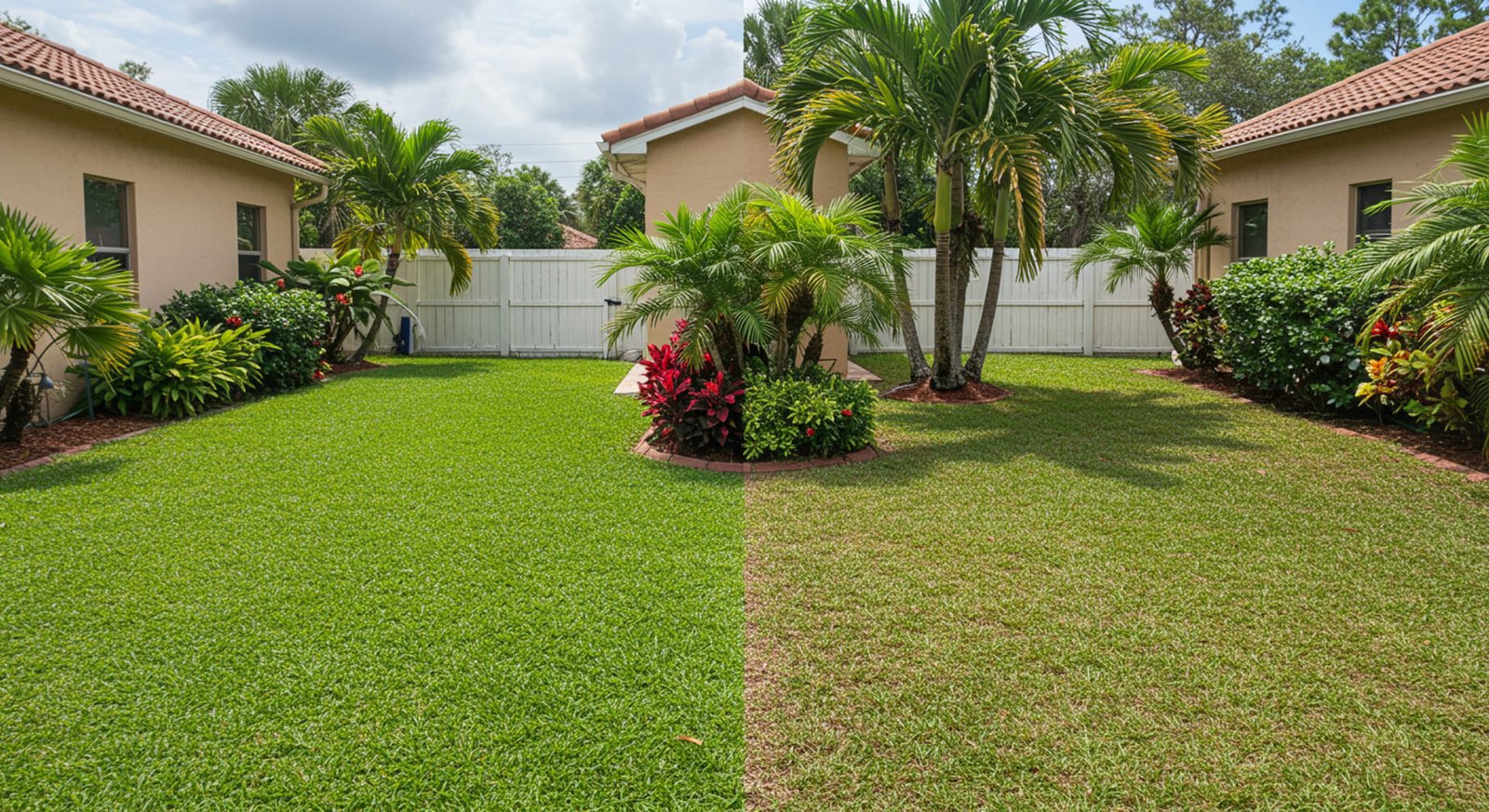
When planning a new lawn in Florida, many homeowners face the big question: Should I choose artificial turf or natural grass? Both have unique benefits and trade-offs — especially in Florida’s warm, humid climate. Let’s explore each option in detail so you can make the best choice for your home.
The Case for Artificial Turf
Artificial turf has evolved tremendously in recent years. Today’s synthetic grass looks natural, feels soft, and is built to last.
Advantages include:
- Low Maintenance: No mowing, watering, or fertilizing.
- Durability: Stands up to heavy use and Florida’s rainy weather.
- Cost Savings: Higher upfront investment, but lower long-term maintenance costs.
Because of these advantages, artificial turf is ideal for busy homeowners or rental properties where minimal upkeep is a priority.
The Appeal of Natural Grass
On the other hand, natural grass remains the classic choice for Florida landscapes.
Benefits include:
- Natural Cooling: Reduces heat absorption, creating a cooler yard.
- Aesthetic Value: Offers a soft, organic texture and scent.
- Eco-Friendly Options: Certain grasses like Bahia or Zoysia thrive with less water.
However, natural lawns require regular mowing, fertilization, and pest control — especially during Florida’s rainy season.
Cost Comparison and Longevity
Although artificial turf costs more upfront (typically 2–3 times more than sod installation), it can last up to 15–20 years with minimal upkeep. Conversely, natural lawns cost less initially but require ongoing maintenance that adds up over time.
For many Florida homeowners, the decision depends on lifestyle. Those who enjoy lawn care and natural beauty may prefer grass; those seeking low effort may lean toward turf.
Climate and Drainage Considerations in Florida
Florida’s sandy soil and intense rainfall create unique challenges. Proper drainage is critical for both turf and grass installations:
- Artificial Turf: Must include a permeable base for water flow.
- Natural Grass: Requires aeration and grading to prevent puddling.
Golden Outdoor Solutions designs both systems with Florida’s conditions in mind, ensuring longevity and performance.
Sustainability and Environmental Impact
Artificial turf saves water but uses synthetic materials. Natural grass supports ecosystems but consumes more water and fertilizers. To strike a balance, some homeowners use a hybrid approach — turf for shaded or high-traffic areas, and grass for open, scenic spaces.
Final Thoughts
Ultimately, the choice between artificial turf and natural grass in Florida depends on your budget, maintenance preferences, and aesthetic goals. Both can create beautiful, usable lawns when installed professionally.
Ready to transform your outdoor space?
Contact Golden Outdoor Solutions at +1 (321) 745-9047 or email contact@goldenoutdoorsolutions.com for expert advice and a custom quote.