Choosing between concrete vs pavers in Florida is one of the most common decisions homeowners face when upgrading a driveway, patio, or backyard living space. Both materials are widely used across Central Florida — and both have genuine advantages. However, Florida’s climate, soil conditions, and long-term maintenance demands make this comparison very different from what homeowners in other states encounter. This guide covers both surfaces across both applications — driveway and patio — so you can make a fully informed decision before committing to either option.
Why Florida Changes This Comparison
Most concrete vs pavers comparisons treat the two materials as roughly equivalent across different climates. In Florida, that framing misses the point. Several specific conditions push the comparison in a clear direction for most homeowners.
Florida’s sandy soil shifts seasonally — especially after heavy rain events. Rigid concrete slabs cannot flex with that movement, which is why cracking is so common in Florida driveways and patios within the first decade. Florida also receives some of the highest annual rainfall in the continental United States, making surface drainage critical. UV exposure is intense and year-round, affecting both color and material integrity. And Florida’s humidity accelerates staining, efflorescence, and surface deterioration in ways that cooler, drier climates do not produce.
Understanding those four climate factors makes the rest of this comparison much clearer.
Concrete vs Pavers: Driveway Applications in Florida
Concrete Driveways in Florida
Poured concrete driveways typically cost between $6 and $12 per square foot installed — making them the lower upfront investment for most projects. Installation generally completes in two to three days, with a cure period before vehicle traffic resumes. For homeowners with a tight initial budget and a large driveway footprint, concrete offers a practical entry point.
However, Florida’s climate creates specific long-term challenges. The combination of sandy soil movement and seasonal thermal expansion causes concrete slabs to crack — often within the first ten years. Once cracking begins, repair options are limited. Patching is visible and rarely blends with the original pour. Full resurfacing or replacement becomes necessary earlier than most homeowners expect. Concrete also absorbs and retains heat — surface temperatures on a Florida concrete driveway in summer can reach levels uncomfortable to walk on barefoot.
Decorative options like stamped or stained concrete raise the cost to $8–$15 per square foot — narrowing the price gap with pavers considerably while also introducing additional sealing requirements every two to three years.
Paver Driveways in Florida
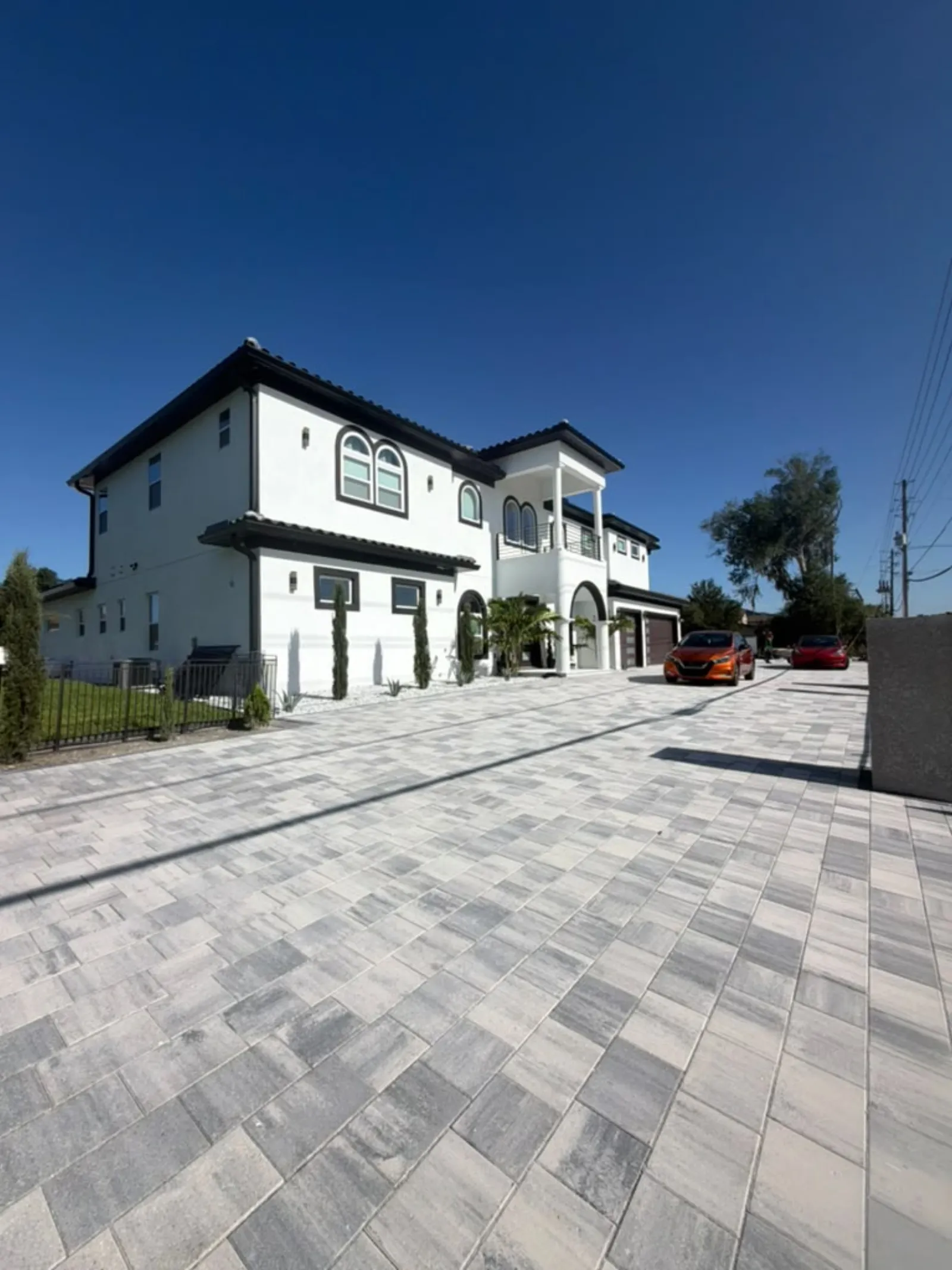
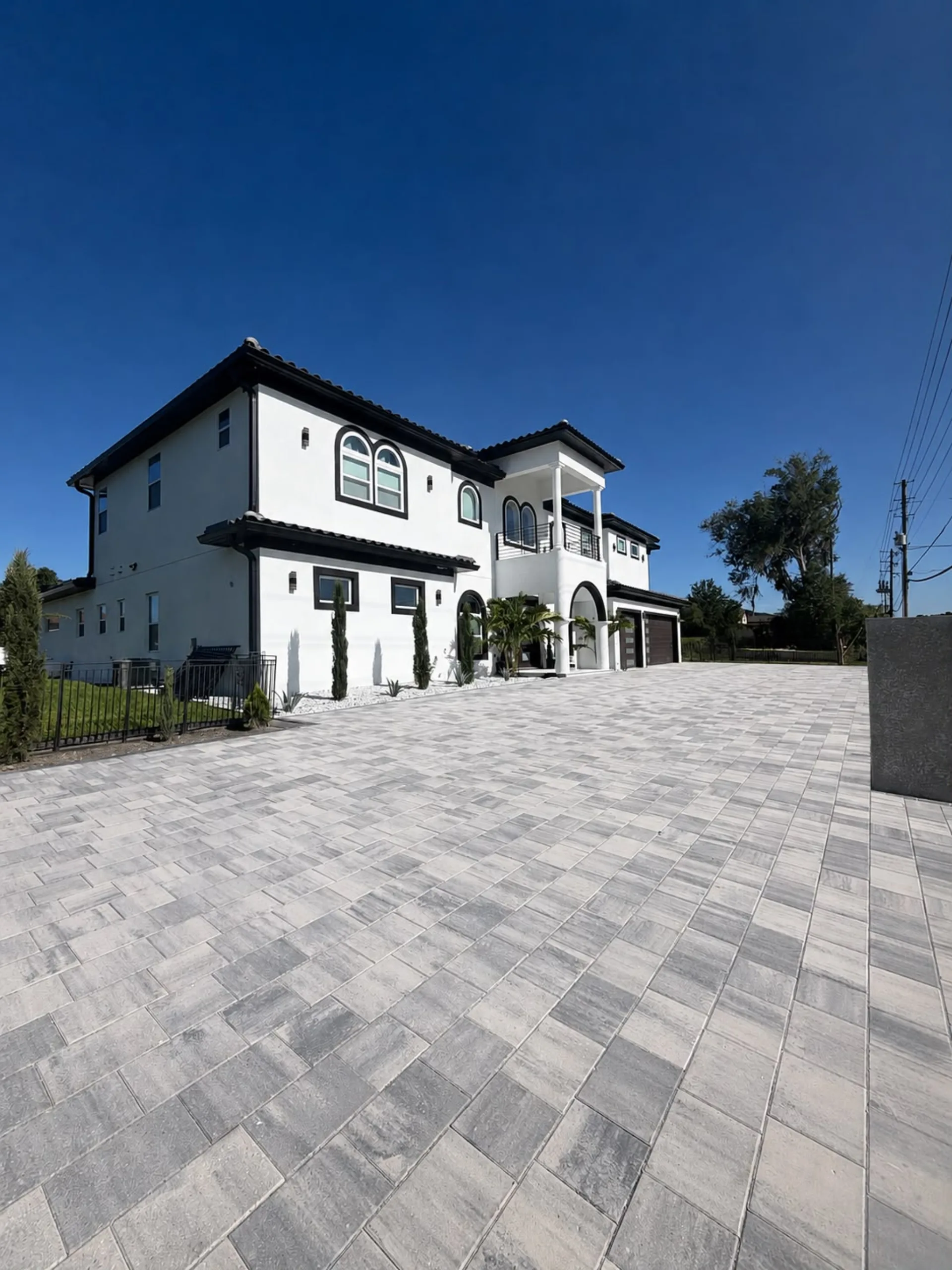
Paver driveways typically cost between $12 and $25 per square foot installed in Central Florida, depending on the material selected — concrete pavers, brick pavers, or travertine — and the complexity of the layout pattern. That higher upfront number often causes hesitation. Nevertheless, when evaluated over a 20-year period, paver driveways frequently prove less expensive than concrete on a total cost basis.
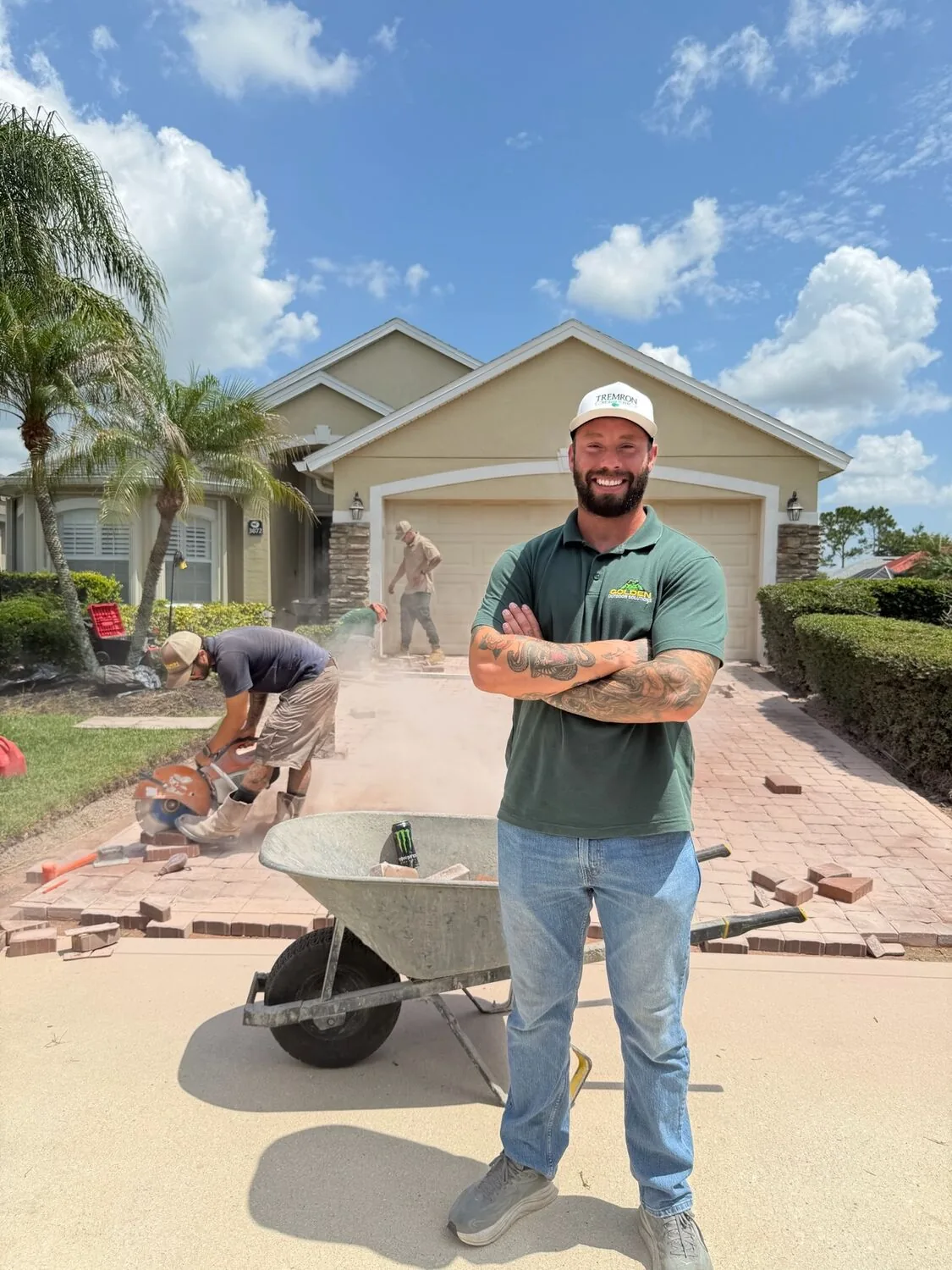
The structural reason pavers outperform concrete in Florida is flexibility. Individual pavers are laid over a compacted aggregate base and sand setting bed, allowing each unit to shift slightly with soil movement rather than crack under stress. When a single paver does become damaged, replacing it requires removing and resetting one unit — not resurfacing an entire slab.
Drainage is another meaningful advantage. The joints between individual pavers allow surface water to permeate downward rather than sheet across the driveway surface. In Florida’s wet season, that drainage performance reduces pooling, runoff, and the erosion that often undermines concrete slab edges over time.
Concrete vs Pavers: Patio and Backyard Applications in Florida
Concrete Patios in Florida
Poured concrete patios follow the same cost logic as driveways — lower upfront cost, faster installation, and a smooth surface that suits certain furniture arrangements. For homeowners planning a simple, functional patio without strong aesthetic requirements, basic brushed concrete is a serviceable starting point.
The limitations are more visible in a patio context. Cracking disrupts the aesthetic of an outdoor living space more noticeably than a driveway. Florida’s intense sun fades concrete finishes faster than in cooler climates — and without regular resealing, the surface begins to look worn and stained within five to seven years. Heat retention on a concrete patio also makes it uncomfortable to use barefoot during Florida’s summer afternoons — a significant drawback for families who want an outdoor space they can enjoy daily.
Paver Patios in Florida
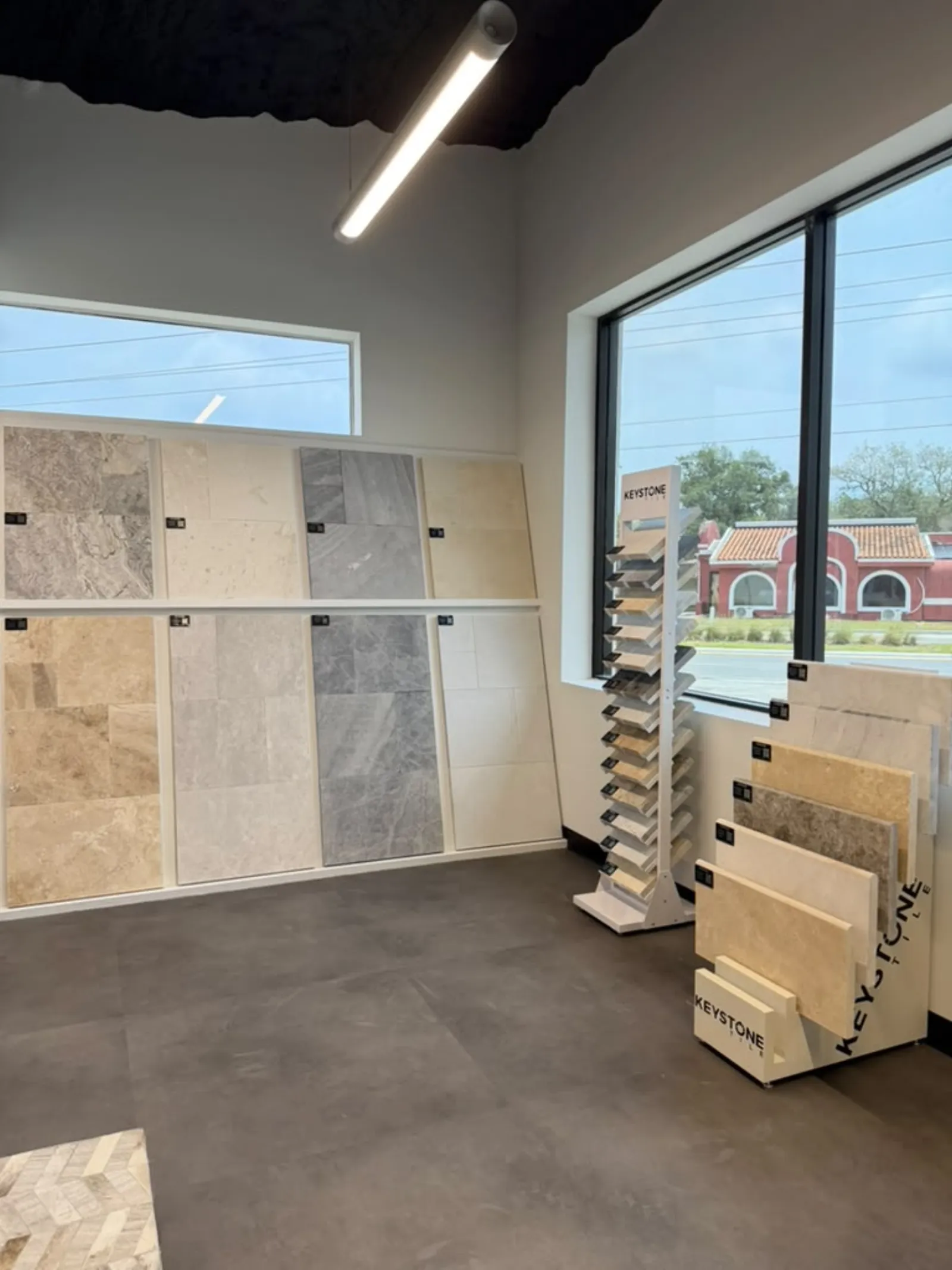
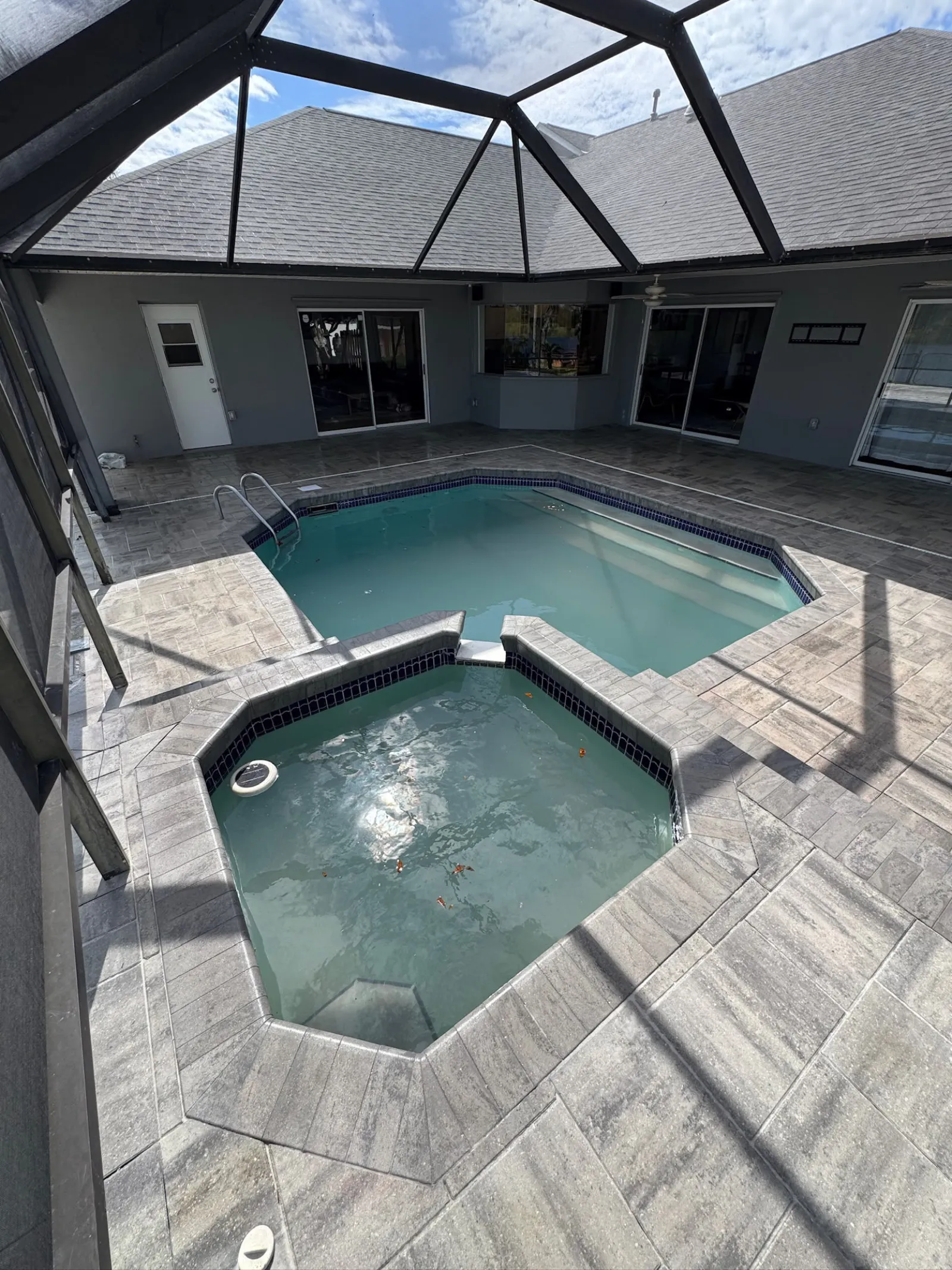
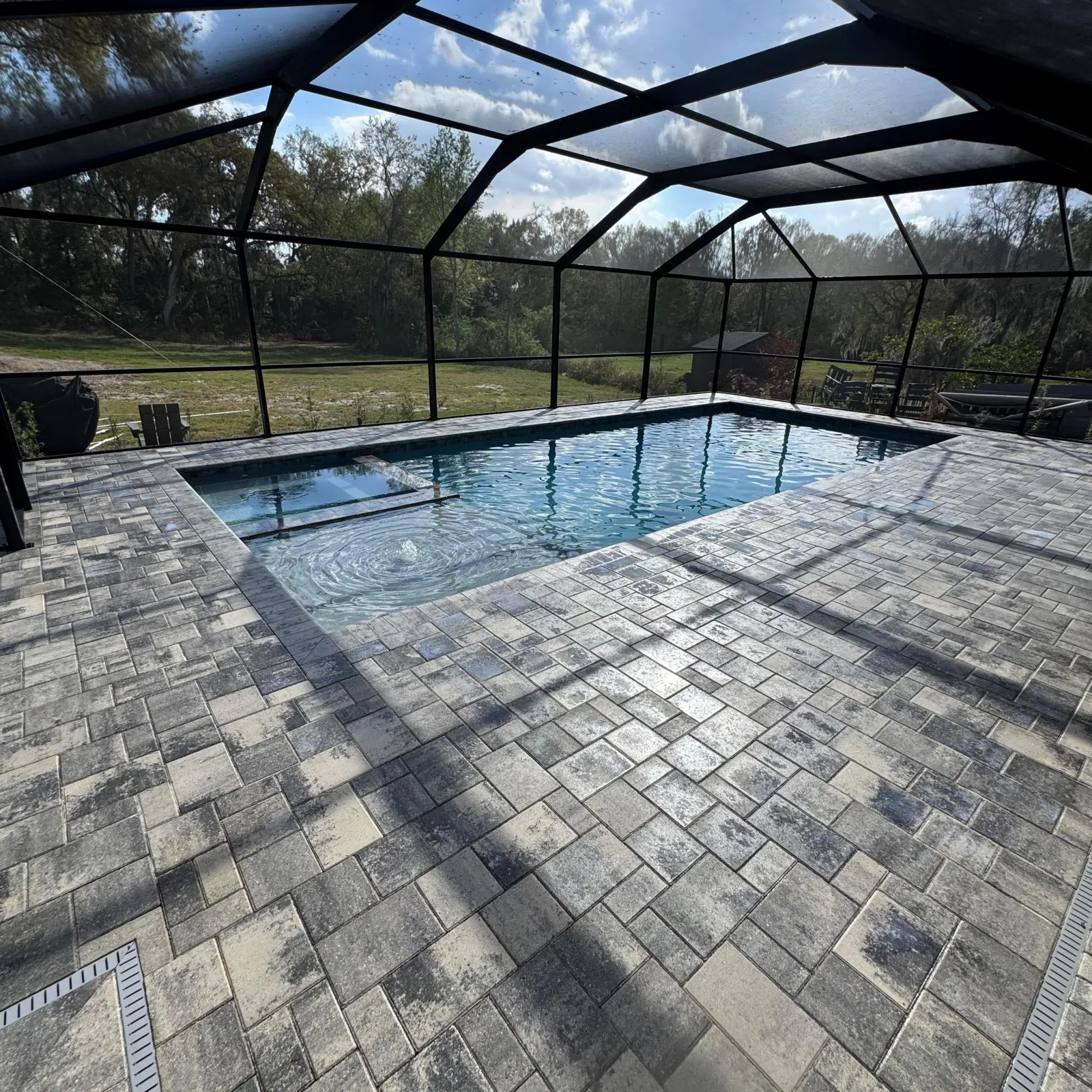
Paver patios deliver two advantages over concrete that matter especially in Florida’s outdoor living context: surface temperature and design versatility. Certain paver materials — particularly travertine — stay measurably cooler underfoot in direct sun compared to poured concrete. That thermal difference is the reason travertine pavers are the dominant choice around Florida pool decks. For a patio used during Florida’s hottest months, that comfort difference is not marginal.
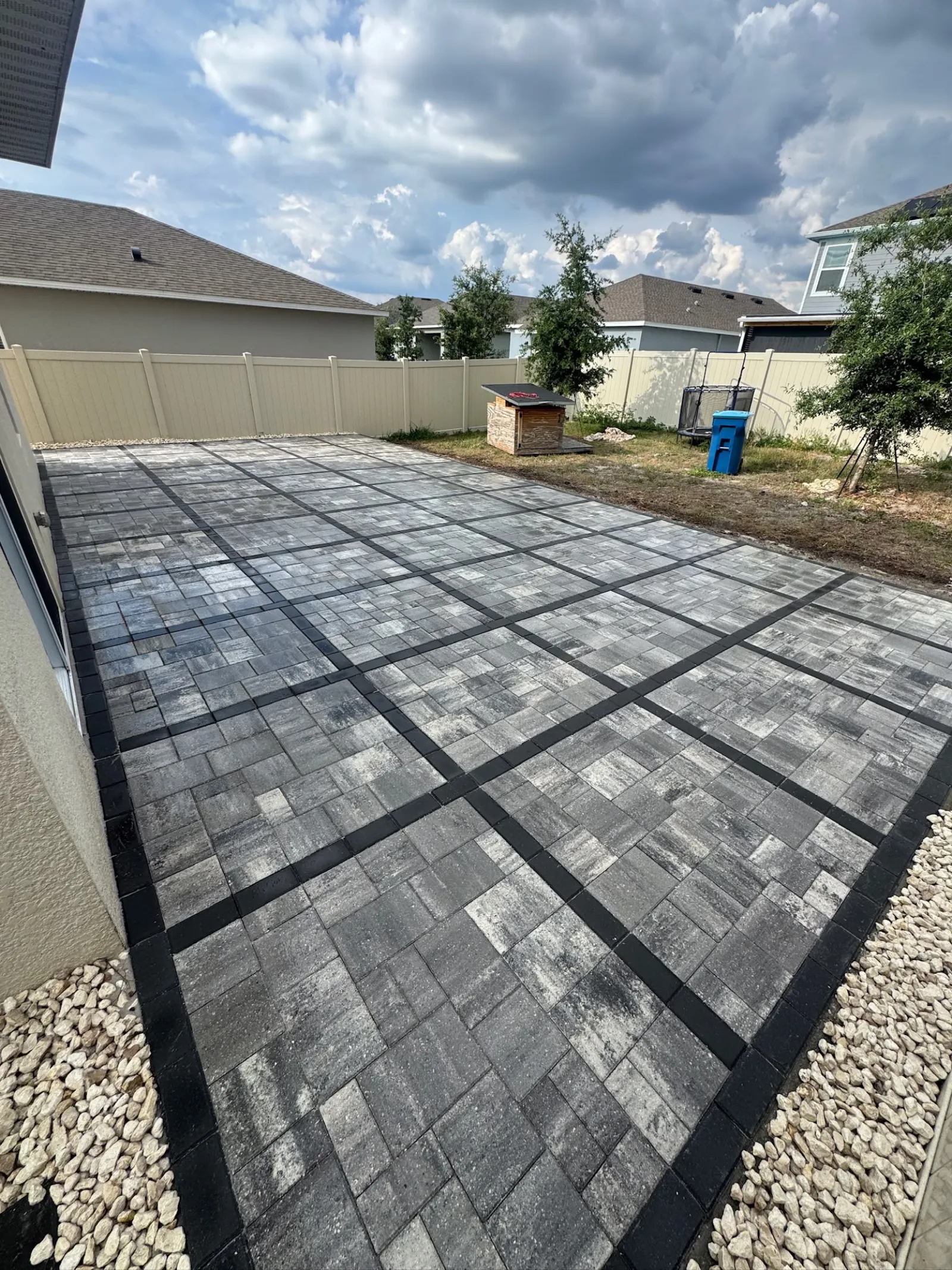
Design flexibility is equally significant. Paver patios can be laid in multiple pattern configurations — running bond, herringbone, basket weave, or custom designs — using a range of colors, sizes, and finishes that a poured concrete slab cannot match without expensive decorative treatments.
Repair and modification are also simpler with pavers. If a section of the patio needs to be opened for irrigation, electrical, or drainage work — a common need in Florida — pavers can be lifted, the work completed, and the surface reset without leaving a visible patch. Concrete requires cutting and patching, which rarely matches the original surface cleanly.
Concrete vs Pavers: Side-by-Side Comparison
| Factor | Poured Concrete | Pavers |
|---|---|---|
| Upfront cost (installed) | $6–$12/sq ft (plain) $8–$15/sq ft (stamped) |
$12–$25/sq ft depending on material |
| Lifespan in Florida | 15–25 years (with maintenance) | 30–50 years (individual unit replacement) |
| Crack resistance | Low — rigid slab cracks with soil movement | High — flexible system accommodates ground shift |
| Repair method | Patching or full resurfacing (visible seam) | Individual unit replacement (seamless) |
| Surface drainage | Sheet drainage across surface | Joint permeation — reduces pooling |
| Heat retention | High — uncomfortable barefoot in Florida summers | Lower — especially travertine & light-toned pavers |
| Design options | Limited (stamped adds cost & sealing requirements) | Extensive — patterns, colors, materials, sizes |
| Maintenance | Sealing every 2–3 years; crack repair as needed | Joint sand refresh; occasional resealing; simple repairs |
| 20-year total cost (400 sq ft) | ~$11,600 (install + maintenance) | ~$9,600 (install + maintenance) |
| Home resale value added | $3,000–$5,000 (typical driveway) | $8,000–$12,000 (typical driveway) |
Which Option Is Right for Your Project?
Choose Concrete When:
- The budget is genuinely limited and upfront cost is the primary constraint
- The project covers a very large surface area where paver labor costs become prohibitive
- The installation timeline is tight and a fast-cure slab serves the need
- A smooth, flat surface is specifically required for the intended use (basketball court, heavy equipment access)
Choose Pavers When:
- Long-term value and durability matter more than the lowest upfront number
- The surface will be used daily as an outdoor living space — especially barefoot
- Design aesthetics and curb appeal are priorities
- The property has sandy or shifting soil (as most Central Florida properties do)
- Future access to underground utilities, irrigation, or drainage is likely
- The project is a patio, pool deck, or backyard space where comfort and appearance are central to the investment
Combining Both Surfaces
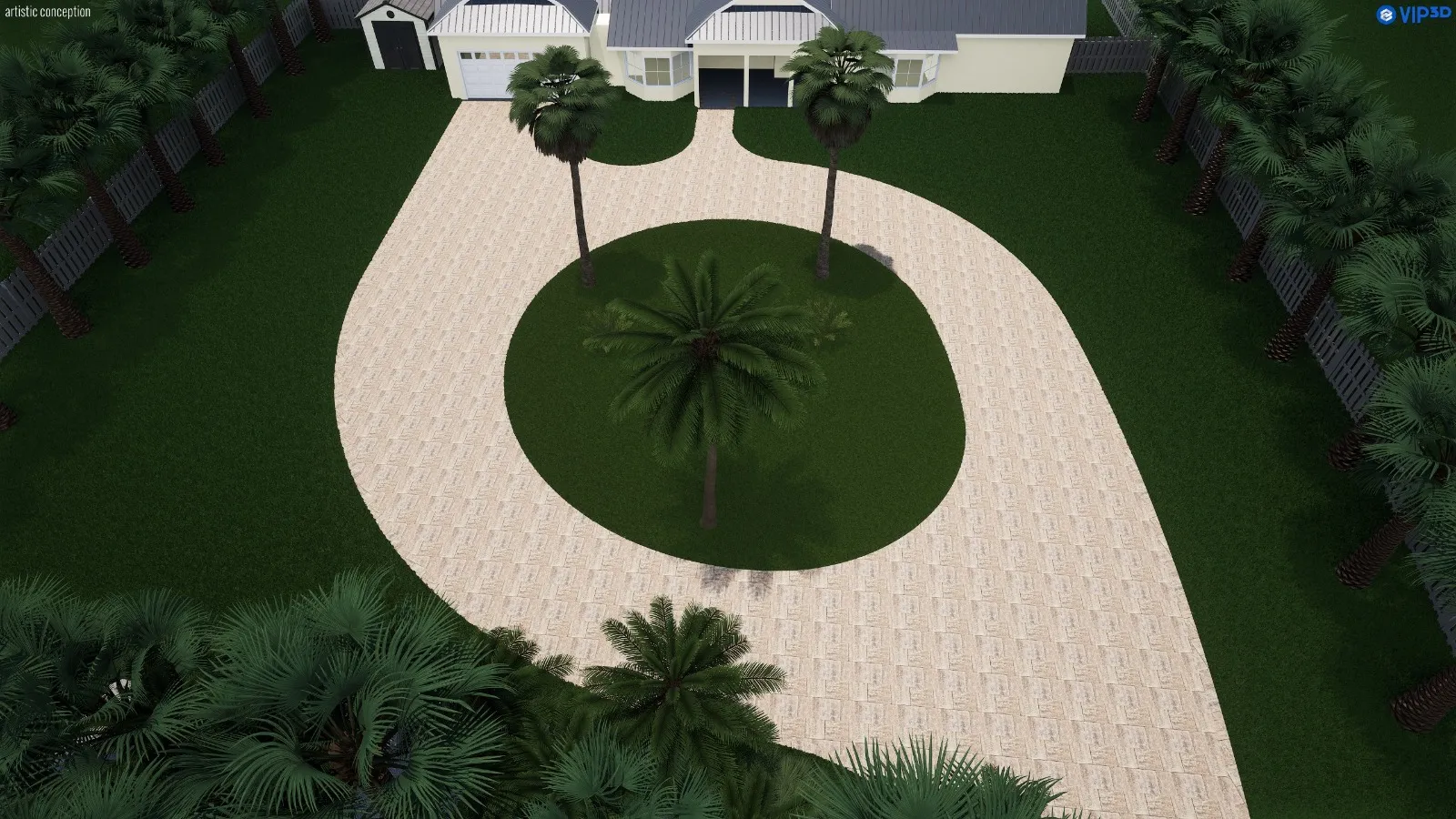
Some projects benefit from using both materials strategically. A concrete base may work in a utility area or side yard, while pavers handle the primary driveway and patio surfaces visible from the street and living spaces. Pavers combined with artificial turf — as seen in several of our completed Central Florida projects — creates a ground plane that balances hardscape and soft surface without the maintenance demands of natural grass. That combination works particularly well for families who want a yard that is both functional and visually polished year-round.
What Florida Homeowners Should Prioritize
Across every concrete vs pavers project in Central Florida, three factors consistently determine long-term satisfaction: material quality, base preparation, and installation standard. A premium paver installed over a poorly compacted base will fail. A well-mixed concrete slab poured over unstable sandy soil will crack regardless of the mix design. The contractor’s knowledge of Florida soil conditions and local drainage patterns matters as much as the surface material selected.
When evaluating proposals, ask specifically how the base will be prepared, what compaction standards will be used, and how drainage will be managed at the perimeter of the project. Those questions separate informed contractors from those offering a price-first, quality-second approach.
Ready to Compare Options for Your Project?
Whether you are leaning toward concrete, pavers, or a combination of both — the right decision starts with a site-specific evaluation. Soil conditions, drainage, existing grade, and your long-term goals all factor into which surface performs best for your property. Contact our team for a free consultation and on-site assessment across Central Florida.