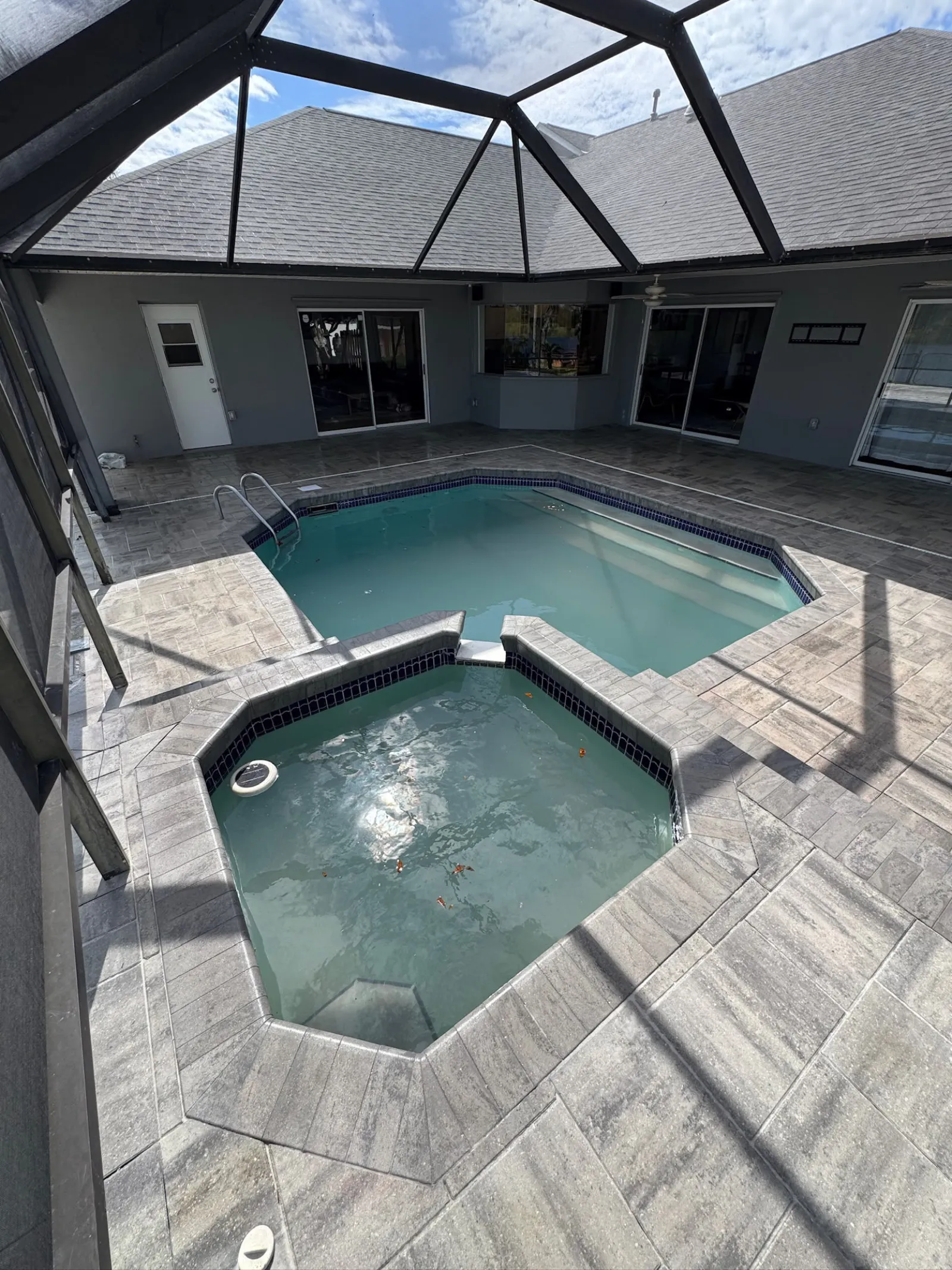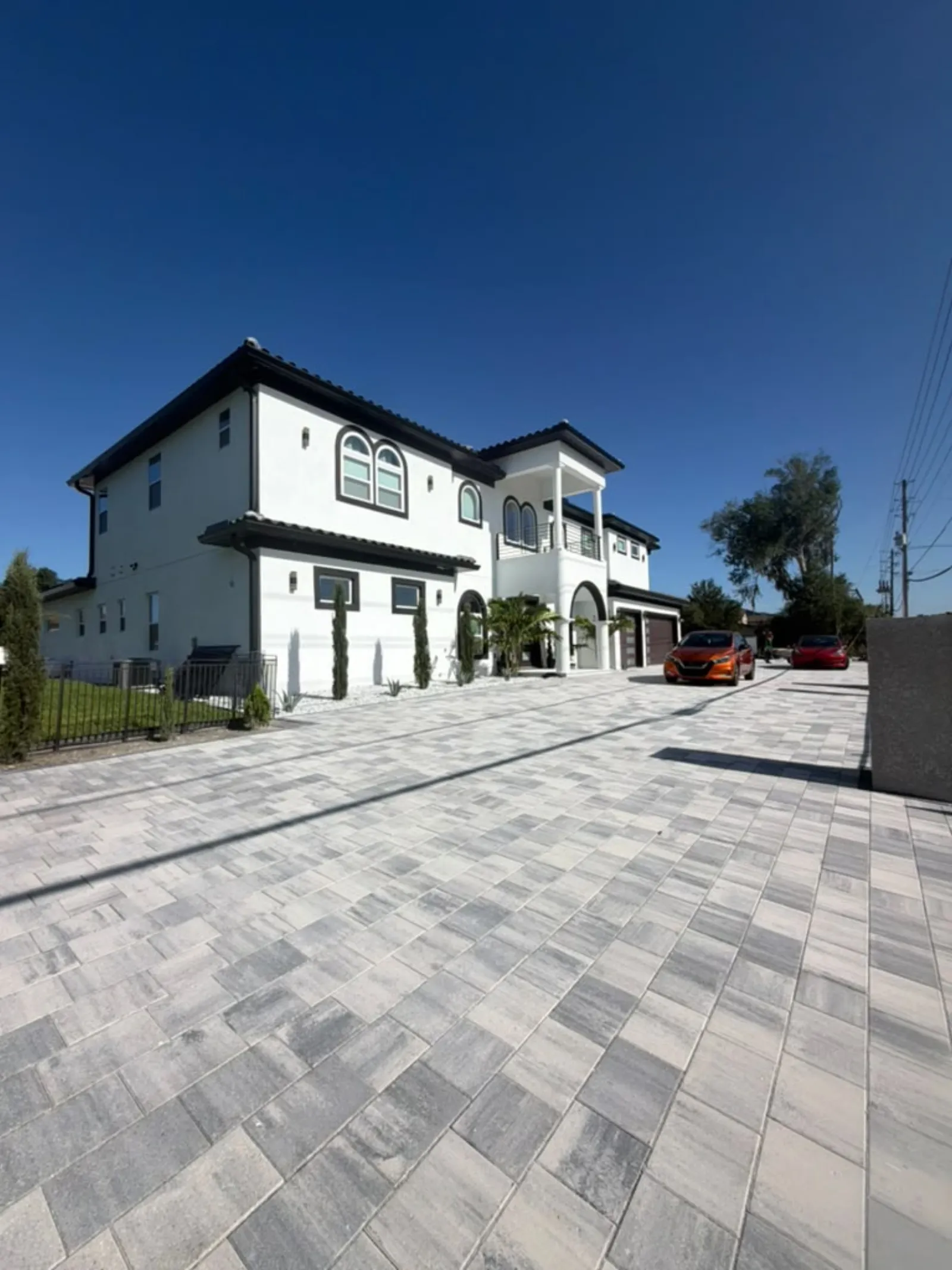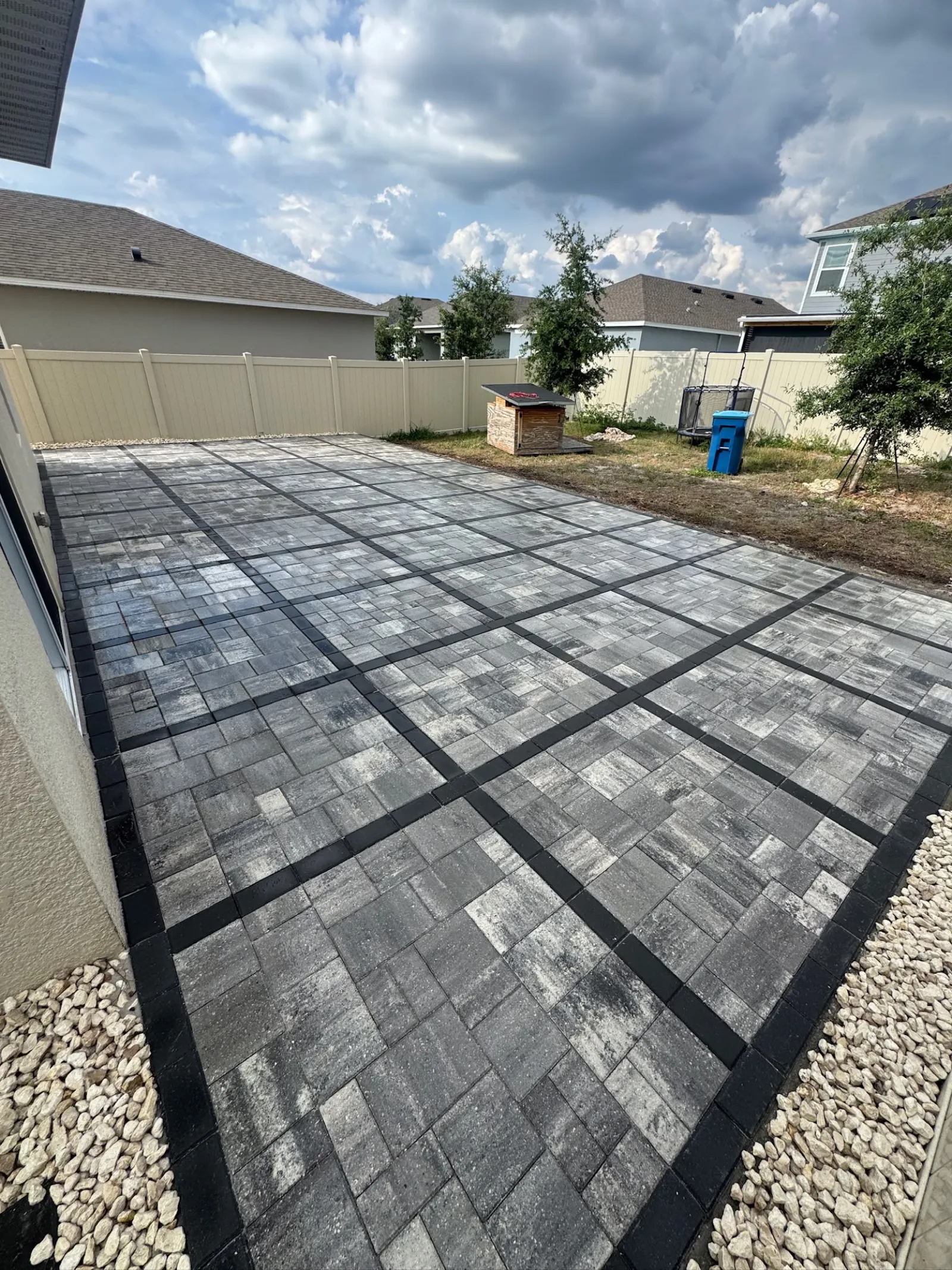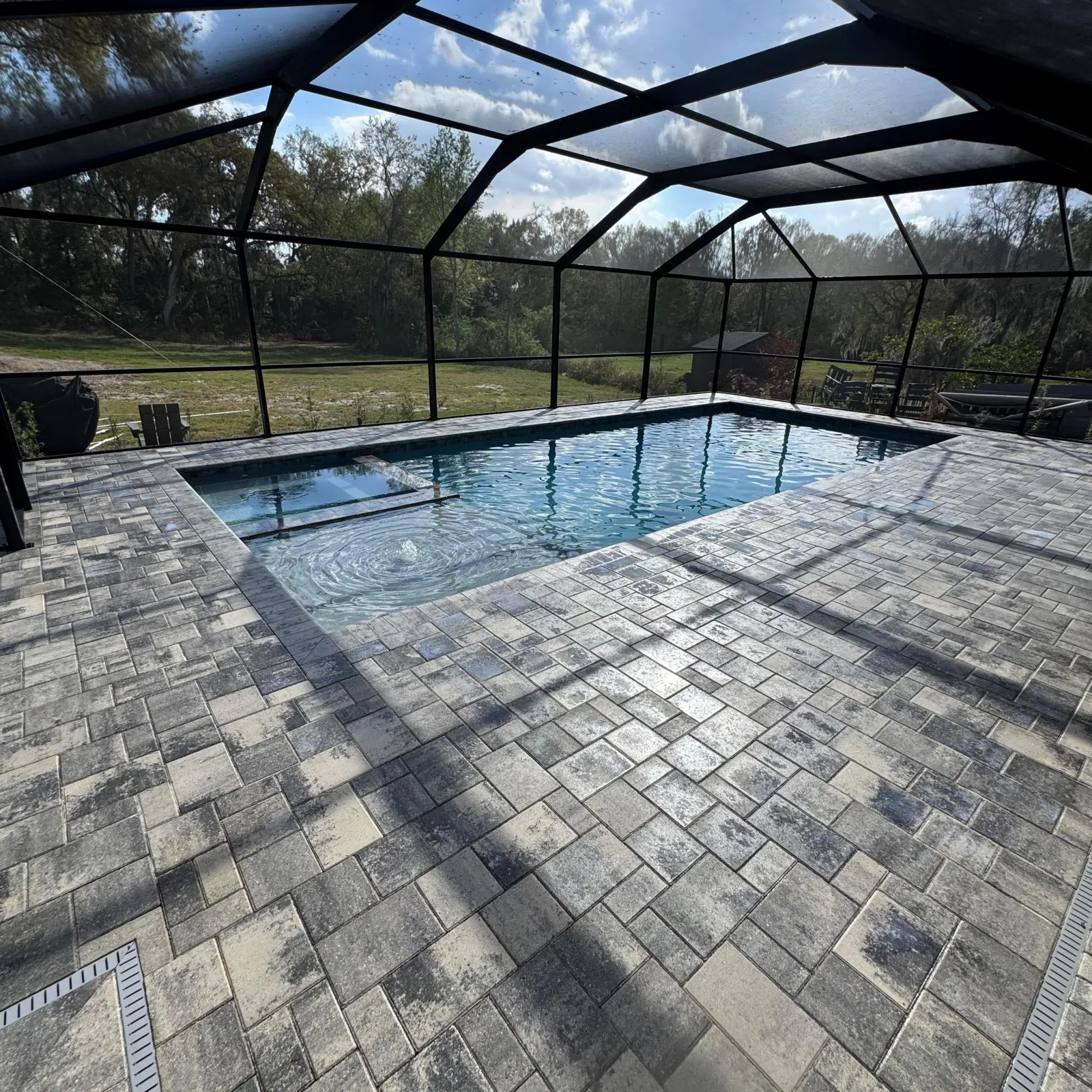
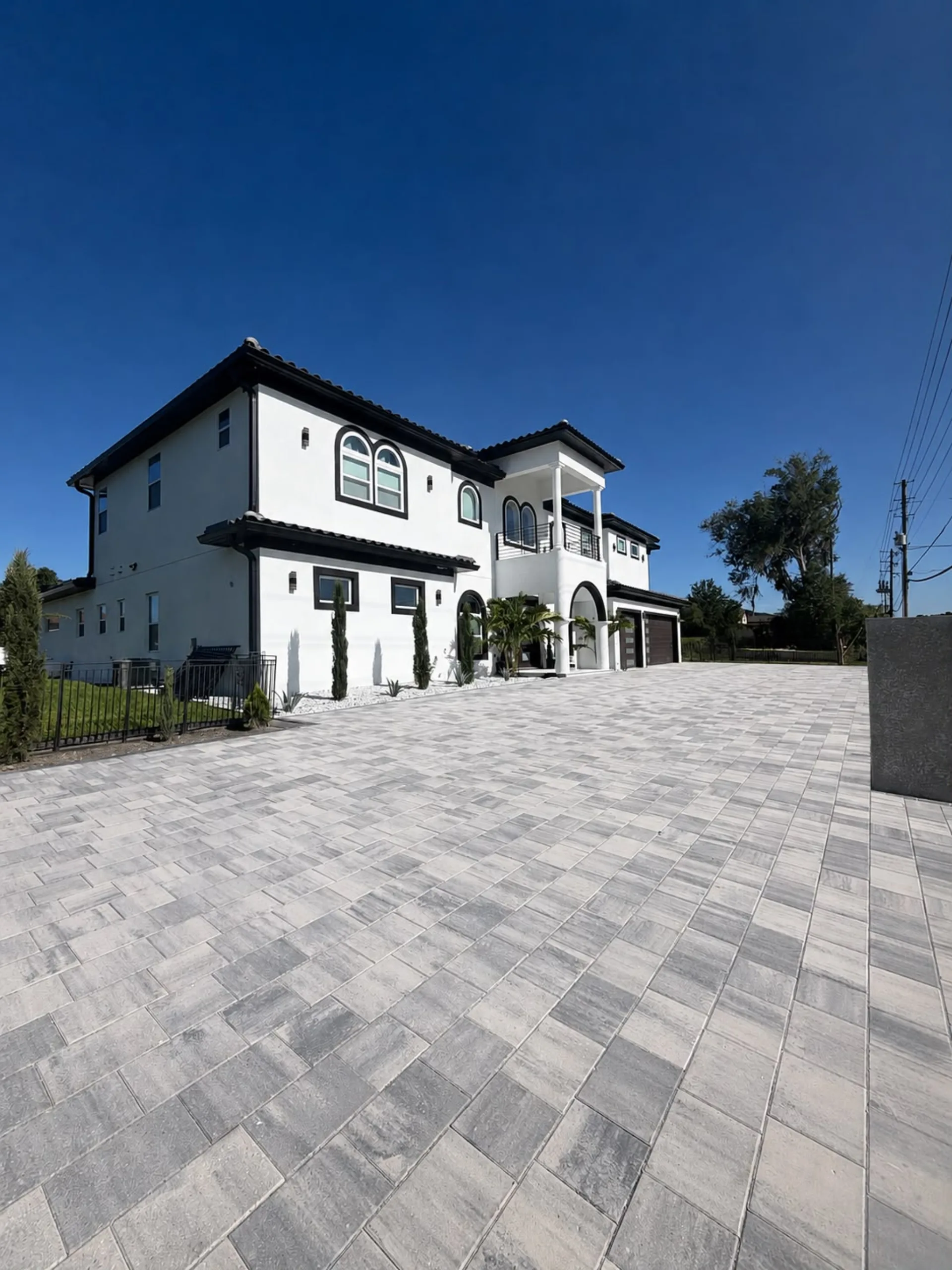
Choosing the right pool deck ideas Florida homeowners can rely on means going beyond aesthetics. Florida’s intense UV exposure, heavy rainfall, and high humidity demand surfaces that stay cool underfoot, resist algae growth, and hold up through years of wet-dry cycles. This guide covers the best materials, layouts, design styles, and costs for pool decks across Central Florida.
Why Pool Deck Choice Matters More in Florida
Florida pools are used year-round. That means pool decks take more foot traffic, more UV exposure, and more wet cycles than almost anywhere else in the country. A surface that looks great on day one but turns slippery, stained, or faded within two seasons is a liability — not an asset.
The right deck surface stays cool barefoot even in direct July sun. It drains fast after afternoon storms. It resists algae and mold growth in Florida’s humidity. And it holds its color and texture through years of chlorine splash and heat cycling. Material selection is where most pool deck projects succeed or fail.
Pool Deck Ideas Florida: Best Surface Materials
Each material has trade-offs in cost, comfort, maintenance, and durability. Here are the most used options in Central Florida pool projects.
Travertine Pavers
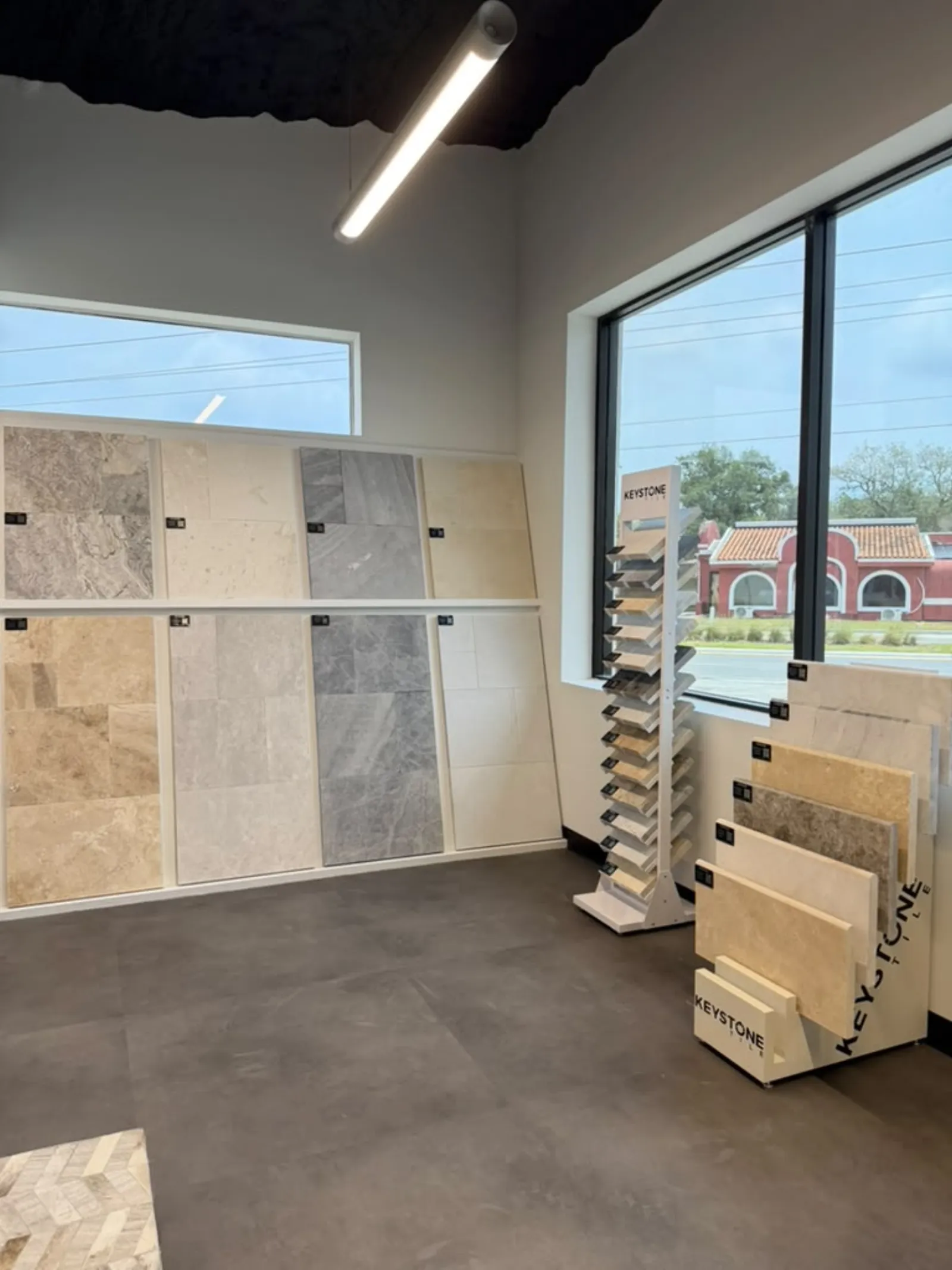
Travertine is the top choice for Florida pool decks. It stays naturally cool underfoot — even in direct afternoon sun. Its porous surface provides grip when wet. It resists heat absorption better than concrete or porcelain. And it delivers a high-end look that photographs exceptionally well.
Travertine does require periodic sealing to prevent staining. It is also one of the higher-cost options per square foot. However, for homeowners prioritizing comfort and appearance, it consistently outperforms alternatives in Florida’s conditions.
Porcelain Pavers
Porcelain pavers are a strong modern alternative to travertine. They are non-porous — which means zero water absorption and virtually no maintenance. They resist staining, algae, and chlorine damage. They also come in a wide range of textures and finishes that mimic natural stone or wood.
The trade-off is heat retention. Dark porcelain tiles absorb and hold heat in direct sun. Light-colored and textured finishes reduce this significantly. For Florida pool decks, always specify light tones and a slip-resistant surface texture.
Concrete Pavers
Concrete pavers offer flexibility and value. They come in dozens of shapes, colors, and textures. They are durable, replaceable individually, and widely available across Central Florida. Sealed concrete pavers perform well around pools when properly maintained.
They absorb more heat than travertine. They also require more consistent sealing to resist staining from pool chemicals and organic debris. For homeowners on a mid-range budget who want design flexibility, concrete pavers are a practical and reliable choice.
Cool Deck and Spray Texture Coatings
Cool Deck is a spray-applied coating applied over existing concrete surfaces. It reflects heat and provides a textured slip-resistant finish. It is one of the most affordable pool deck surface options in Florida. Many older Florida pools have Cool Deck finishes that have held up for decades.
The limitation is longevity. Spray coatings eventually crack, chip, and fade — especially under Florida’s UV intensity. Recoating every five to eight years is typical. It is a strong option for renovating an existing concrete deck on a limited budget.
Natural Stone
Coquina, limestone, and other natural stones appear in higher-end Florida pool projects. They deliver unique character and texture. However, they require professional sealing, careful maintenance, and expert installation to perform correctly around pools. They are typically reserved for premium custom projects.
Pool Deck Ideas Florida: Layout Options
Layout shapes how the pool deck connects to the pool, yard, and home. The right layout depends on pool shape, yard size, and how the space will be used.
Full Perimeter Deck
A full perimeter deck wraps the entire pool edge. It maximizes usable surface area for lounging, furniture, and movement around the pool. This is the most common layout in Florida residential pools. It works best with rectangular and oval pool shapes.
Partial Deck With Lawn or Landscape Zone
Some homeowners prefer a partial deck on two or three sides with a lawn or landscape buffer on the remaining sides. This reduces surface area cost. It also softens the visual transition between pool and yard. However, grass adjacent to pool edges creates maintenance challenges in Florida — particularly with mud and organic debris entering the water.
Extended Entertainment Deck
An extended deck connects the pool area to an outdoor kitchen, dining zone, or lounge space. This layout treats the pool deck as the foundation of a complete outdoor living environment. It is increasingly popular in Central Florida homes that invest in full backyard transformations. For outdoor kitchen integration ideas, our post on outdoor kitchen ideas for Florida covers compatible layouts and materials in detail.
Raised Deck With Steps
A raised deck elevates the pool surround above grade level. It creates visual drama and can solve drainage challenges on sloped lots. Steps become a design feature rather than a functional afterthought. This layout requires more structural work but delivers a resort-style result.
Key Performance Requirements for Florida Pool Decks
Beyond material and layout, several performance factors determine how safe and functional a Florida pool deck is over time. These are non-negotiable in this climate.
Slip Resistance
All pool deck surfaces must provide reliable grip when wet. Smooth polished finishes are unsafe around pools. Specify a minimum COF (coefficient of friction) rating of 0.6 or higher for wet conditions. Textured pavers, brushed finishes, and tumbled stone surfaces all meet this requirement.
Heat Reflectivity
Light-colored surfaces reflect more heat. Dark surfaces absorb and hold heat — which makes barefoot comfort impossible in Florida’s summer sun. Always prioritize light tones or materials with natural heat-reflective properties like travertine. This is one of the most important comfort factors for a Florida pool deck.
Drainage
Florida pools receive daily water from splash, rain, and hosing. The deck surface must drain quickly and completely. Standing water creates slip hazards and promotes algae growth. Proper slope — typically a quarter inch per foot away from the pool — is required. Good joint spacing in paver surfaces also contributes to fast drainage.
Chemical Resistance
Pool chemicals — chlorine, salt, and pH adjusters — splash onto deck surfaces regularly. The surface material must resist chemical staining and surface degradation. Travertine, porcelain, and sealed concrete pavers all perform well here. Unsealed natural stone and standard concrete without a protective sealer deteriorate faster under repeated chemical exposure.
Pool Deck Ideas Florida: Design Styles
Material and layout establish function. Design style establishes feel. These are the three directions most requested for Central Florida pool deck projects.
Resort Tropical
Travertine or light natural stone, warm neutral tones, and wide open deck areas. This style references Florida’s luxury resort aesthetic. It pairs well with freeform pool shapes and lush surrounding landscaping. It is the most requested style in high-end Central Florida pool renovations.
Modern Geometric
Large-format porcelain pavers in light gray or white. Crisp rectangular pool shapes. Minimal ornamentation. This style suits contemporary homes with clean architectural lines. It photographs exceptionally well and feels spacious even in smaller yards.
Old Florida Coastal
Textured concrete or coquina-look surfaces. Warm sand and cream tones. Casual and relaxed layout. This style leans into Florida’s coastal heritage. It works well with older homes and properties near natural landscapes. It feels lived-in and comfortable from day one.
Pool Deck Cost in Florida: Realistic Ranges
Pool deck costs in Florida depend on surface material, deck size, and site conditions. Here is a straightforward breakdown for Central Florida projects.
| Surface Material | Installed Cost Range (per sq ft) |
|---|---|
| Cool Deck / Spray Coating | $3 – $6 |
| Concrete Pavers | $8 – $14 |
| Travertine Pavers | $14 – $22 |
| Porcelain Pavers | $16 – $26 |
| Natural Stone | $20 – $40+ |
A typical Central Florida pool deck ranges from 600 to 1,200 square feet. Total project costs commonly fall between $8,000 and $30,000 depending on material choice and deck size. Site preparation, drainage work, and demolition of existing surfaces add to final cost. Always get an on-site estimate — square footage alone does not capture the full scope of a pool deck project.
Pool Deck Maintenance in Florida
Every pool deck surface requires some maintenance in Florida’s climate. The level varies significantly by material. Here is what to expect.
- Travertine: Seal every one to two years. Clean regularly to prevent organic staining. Fill any natural voids that open over time.
- Porcelain: Low maintenance. Clean with mild detergent and rinse. No sealing required. Inspect joints annually.
- Concrete pavers: Seal every one to two years. Treat algae growth promptly. Replenish joint sand as needed.
- Cool Deck coating: Recoat every five to eight years. Repair cracks promptly to prevent water intrusion beneath the coating.
- Natural stone: Seal twice yearly. Clean with stone-safe products only. Professional assessment recommended annually.
For a complete guide to paver surface care around pool decks and patios, our post on paver maintenance in Florida covers the full seasonal schedule and step-by-step cleaning process.
How to Start Your Florida Pool Deck Project
Start with a clear picture of how you use the pool. Families with children prioritize slip resistance and easy maintenance. Homeowners focused on entertaining prioritize layout flow and design impact. Clarifying your primary use case shapes every decision that follows.
Then assess the existing deck condition. A deck that is structurally sound but dated may need resurfacing only. A deck with drainage problems, cracking, or settlement may need full demolition and replacement. A professional site visit distinguishes between the two — and prevents costly over- or under-specification.
Finally, work with a contractor who knows Florida’s specific permit requirements and soil conditions. Pool deck projects in Florida often require permits. An experienced local contractor navigates that process as part of the project — not as an afterthought. The Florida Building Commission publishes current residential construction standards relevant to pool deck installations statewide.
Ready to upgrade your pool deck? Contact Golden Outdoor Solutions for a free on-site consultation. Browse our completed projects gallery to see pool deck installations across Central Florida. Follow us on Instagram and Facebook for design inspiration. Read client reviews on Google. Reach us via WhatsApp, by phone at +1 (321) 745-9047, or by email at contact@goldenoutdoorsolutions.com — we serve homeowners throughout Central Florida. 🏊✨